

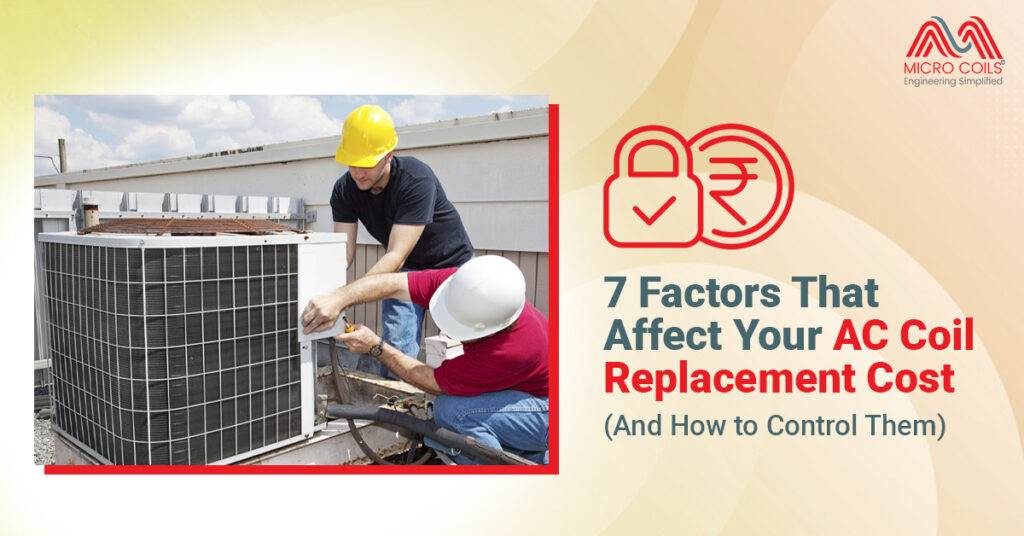
Wildly varying quotes between contractors can make evaporator coil replacement feel overwhelming. What drives these differences? Understanding the factors puts you in control, helping you make informed decisions rather than simply accepting whatever number appears on an estimate.
The cost to change AC coil components depends on multiple variables. Some you can’t control; others you can influence significantly. Smart property managers and facility operators who understand these factors negotiate better deals, avoid unnecessary expenses, and make decisions serving their long-term interests.
Factor 1: System Size and Capacity Requirements
Tonnage directly impacts replacement expenses. Larger coils use more material, weigh more, require additional labor to handle, and often need specialized equipment for installation. A 3-ton residential unit needs a smaller, simpler coil than a 50-ton commercial rooftop unit.
Commercial systems present additional complexity—buildings with multiple air handlers might need several coils replaced, each potentially different in size and configuration. Equipment in office buildings, retail centers, and industrial facilities often ranges from 5 tons to over 100 tons per unit.
Many existing systems were initially oversized by contractors who believed bigger is always better. Replacing an oversized coil with a properly sized unit can reduce both immediate replacement expense and long-term operating costs.
How to control this factor: Request a proper load calculation before replacement. Manual J calculations for residential buildings or equivalent commercial load analysis determines your actual cooling needs. Building improvements—new insulation, efficient windows, LED lighting generating less heat—may have reduced your actual cooling load since the original installation. You might discover your existing 5-ton system only needs a 4-ton replacement, saving substantially.
Factor 2: Coil Type, Configuration, and Material Selection
AC Evaporator coil units come in multiple configurations, affecting both performance and expense. A-coils form an “A” shape, fitting well in vertical air handlers with limited width. N-coils create an “N” pattern, offering more surface area in the same footprint. Slab coils sit in a single flat plane, typically used in horizontal applications. Each design carries different manufacturing complexity affecting final expense.
Cased coils include their own metal housing with mounting flanges, simplifying installation but adding material expense. Uncased coils integrate directly into air handler cabinets, reducing material expense but requiring precise field fabrication.
Standard copper tubing with aluminum fins offers excellent heat transfer characteristics. All-aluminum construction reduces expense but provides lower heat transfer efficiency. The choice depends on your specific operating environment and performance requirements.
Coil coatings add expense but extend service life dramatically in corrosive environments. Coastal facilities, industrial plants with chemical exposure, or buildings in areas with high atmospheric pollution benefit from protective coatings:
- Phenolic resin coating provides moderate protection at modest expense increase
- Epoxy coating offers superior corrosion resistance with higher premium
- E-coating delivers the most comprehensive protection at highest expense
- Heresite coating specializes for extreme chemical environments at premium pricing
Standard uncoated coils work fine in benign environments. Modern office buildings with good filtration in moderate climates don’t need expensive protective coatings—specifying them wastes money without delivering value.
How to control this factor: Match coil specifications to your actual operating environment rather than buying maximum protection for every application. Request itemized quotes showing base coil expense separate from coating options. This transparency reveals exactly what you’re paying for protective treatments.
Consider all-aluminum coils for applications where copper’s superior heat transfer isn’t critical. Light commercial applications, backup systems, or facilities in mild climates may operate perfectly well with aluminum coils at reduced expense.
Factor 3: Refrigerant Type and System Compatibility
Your system’s refrigerant significantly affects replacement planning. R-22 (Freon) systems present the most challenging scenario—production ceased in 2020, making this refrigerant increasingly scarce. If your existing system runs R-22, you face a critical decision: replace the coil with another R-22 unit or upgrade the entire system to modern refrigerant.
Replacing an R-22 coil with another R-22 unit makes sense only if the rest of your system remains in excellent condition with years of service life remaining. Limited availability may inflate pricing beyond reasonable levels. Even then, securing R-22 coils becomes increasingly difficult as manufacturers discontinue production.
R-410A represents current standard refrigerant for most residential and light commercial applications. Systems designed for this refrigerant operate at higher pressures than R-22, requiring coils specifically rated for these conditions. You cannot install an R-410A coil in an R-22 system or vice versa without complete system replacement.
Newer refrigerants like R-32 and R-454B are entering the market as the industry transitions toward lower global warming potential options. Early adoption carries premium pricing as these products represent newer technology with limited production volumes.
How to control this factor: If replacing a coil in an R-22 system, seriously evaluate complete system replacement instead. Calculate total expense over the next 5-10 years, including increasingly expensive R-22 refrigerant for repairs and recharging. Often, full system replacement to R-410A proves more economical long-term despite the higher immediate expense.
For R-410A systems, verify that replacement coils come from reputable heat exchanger manufacturer sources with proper certification. Avoid generic imported coils lacking AHRI certification, as these may fail prematurely despite lower initial expense.
Factor 4: Accessibility and Installation Complexity
Where your coil sits and how easily technicians can access it dramatically affects labor requirements. Two identical coils might carry vastly different total replacement expenses based purely on installation difficulty.
Coils in basement air handlers with clear working space represent straightforward replacements. Coils in cramped attic installations accessed through small openings demand significantly more time and effort. Attic installations present multiple challenges:
- Limited working space restricting technician movement
- High ambient temperatures making physical work more difficult
- Access limitations requiring coils disassembled, lifted through openings, and reassembled in place
- Insufficient headroom preventing use of normal tools
- Distance from truck requiring multiple trips
Commercial rooftop units require roof access, often needing cranes, rigging equipment, or specialized lifting gear to remove old coils and install replacements. Large coils weighing several hundred pounds cannot be manually carried up ladders. Equipment rental, certified operators, and additional safety measures all add expense.
Building access restrictions affect commercial installations significantly. Some facilities require contractors to work after hours or weekends to avoid disrupting operations—premium rates for off-hours work increase labor expenses substantially.
How to control this factor: Schedule replacements during optimal conditions rather than emergency situations. Planned replacement allows contractors to bid competitively rather than charging emergency premiums. You can schedule work during normal business hours at standard labor rates.
Request detailed explanation of access plans before accepting quotes. Understanding how contractors plan to physically accomplish installation reveals potential problems and allows you to address access issues proactively.
Consider providing building access assistance. If you have maintenance staff or building engineers familiar with the facility, coordinate with contractors to streamline access to mechanical rooms, rooftops, or crawlspaces—reducing contractor time reduces billable hours.
Factor 5: Matching Components and System Integration
Evaporator coils don’t operate in isolation—they function as integrated components within complete systems. Proper matching with other components affects both immediate replacement expense and long-term system performance.
The evaporator coil must match your outdoor condensing unit’s capacity and refrigerant flow characteristics. Mismatched components reduce efficiency, shorten equipment life, and may void manufacturer warranties. Proper matching requires attention to:
Capacity matching—the evaporator and condenser must handle identical cooling capacities. Installing a 3-ton evaporator with a 4-ton condenser creates imbalance causing poor performance and potential compressor damage.
SEER rating compatibility matters too. Modern high-efficiency condensing units require matching high-efficiency evaporator coils to achieve rated performance. Installing a standard efficiency evaporator with a high-efficiency condenser wastes the condenser’s potential while failing to deliver promised energy savings.
The expansion valve or orifice controlling refrigerant flow into the evaporator must match the new coil’s characteristics. Many coil replacements require new expansion devices adding parts and labor expenses.
Evaporator coils require specific airflow volumes for proper operation. Older blower motors or ductwork restrictions that barely worked with the original coil may prove inadequate for a new coil with different pressure drop characteristics—upgrading blowers or modifying ductwork adds expense beyond the coil itself.
How to control this factor: Request documentation proving the proposed replacement coil matches your existing outdoor unit according to manufacturer specifications. AHRI (Air Conditioning, Heating, and Refrigeration Institute) publishes certified combinations showing which indoor and outdoor units work together properly.
Verify AHRI certification numbers for your specific combination. Contractors sometimes recommend “close enough” pairings that aren’t factory certified—these combinations may work adequately but won’t deliver rated performance and typically void manufacturer warranties.
Resist pressure to upgrade beyond your actual needs. If your existing system uses standard efficiency components, replacing only the failed coil with an equivalent standard efficiency unit makes economic sense unless you’re simultaneously upgrading the entire system.
Factor 6: Labor Rates, Contractor Overhead, and Market Competition
Geographic location, contractor business model, and local market conditions create significant variation in the labor portion of your total expense.
Metropolitan areas with high costs of living and strong construction markets command premium labor rates. Rural areas with lower costs and less competition typically offer lower rates.
Contractor business models affect pricing substantially. National franchise operations carry higher overhead—franchise fees, national advertising contributions, corporate management layers—that must be recovered through higher pricing. They offer brand recognition, standardized processes, and often more extensive warranties.
Regional contractors with multiple locations balance moderate overhead with established reputations and service capacity, typically pricing between national chains and small local operators.
Small local contractors operate with minimal overhead, often owner-operated with one or two technicians. They frequently offer the lowest pricing but may lack capacity for large projects or extended warranty support.
Specialization influences efficiency and pricing. Companies specializing in commercial HVAC typically handle commercial coil replacement more efficiently than residential-focused contractors occasionally working commercial projects—and vice versa for residential work.
Seasonal demand fluctuates dramatically in HVAC. Peak cooling season sees elevated pricing as contractors operate at capacity with full schedules. Off-season winter months often bring discounted pricing as contractors seek work to keep technicians employed.
How to control this factor: Obtain multiple competitive quotes—at least three, ideally five for significant commercial projects. Competitive bidding reveals market rates and identifies outliers pricing far above or below reasonable ranges.
Schedule replacements during shoulder seasons (spring and fall) when demand moderates. Contractors often discount work during slower periods to maintain steady workflow.
Separate emergency service from planned replacement. Emergency calls command premium pricing—nights, weekends, holidays, or immediate response during heat waves all carry surcharges. Planning replacement before complete failure allows standard-rate scheduling.
Factor 7: Building Code Compliance, Permits, and Regulatory Requirements
Regulatory requirements add expenses many property owners don’t anticipate. Understanding what’s legally required versus what contractors suggest protects against both overcharges and code violations.
Permit requirements vary by jurisdiction but typically apply to coil replacement in most areas. Permits ensure work meets safety and building codes while providing documentation of proper installation.
Some contractors operate without pulling permits, offering lower quotes by skipping this regulatory requirement. This creates several problems—code violations discoverable during future property sales, lack of inspection verification, potential insurance claim denials, and liability if improperly installed equipment causes damage.
Detailed Permit and Code Compliance Requirements:
Municipal permit applications and fees:
- Building departments require detailed plans showing existing conditions, proposed changes, equipment specifications, and installation methods before beginning work
- Permit fees typically run 1-3% of total contract amount, though minimum and maximum fees often apply
- Plan reviews take 3-14 business days in most areas, potentially delaying urgent replacements unless expedited review fees are paid
- Post-installation inspections must be scheduled and passed before legally operating new equipment
Electrical code compliance modifications:
- Modern efficiency standards may require dedicated electrical circuits that older installations lack, necessitating new wiring from electrical panel to equipment location
- New coils paired with modern condensing units may draw different electrical loads requiring circuit breaker upgrades or new disconnect switches
- Recent code changes in some jurisdictions require ground fault protection for HVAC equipment in certain locations
- Local codes specify acceptable wiring methods, potentially requiring conduit upgrades or wire gauge changes from original installation standards
Refrigerant handling and environmental compliance:
- Only EPA-certified technicians may legally handle refrigerants, ensuring proper recovery, recycling, and disposal
- Contractors must document refrigerant recovered from old systems, including type, quantity, and disposal method
- Systems losing significant refrigerant require documentation and reporting to environmental agencies in some jurisdictions
- Old coils containing residual refrigerant require proper disposal at licensed facilities with documentation
Energy code compliance for replacement equipment:
- Local energy codes often require replacement equipment meeting or exceeding current efficiency minimums
- Some jurisdictions require duct leakage testing when replacing major HVAC components
- Buildings with both heating and cooling may require combustion air verification and carbon monoxide testing
- Progressive jurisdictions require documented load calculations proving equipment sizing appropriateness
How to control this factor: Verify permit requirements with your local building department directly rather than relying solely on contractor representations. Understanding actual requirements prevents both overcharges for unnecessary permits and violations from skipped required permits.
Include permit responsibility in contract specifications—clarify whether the contractor obtains and pays for permits (typical) or if you’ll handle this separately. Ensure permits appear as line items in quotes rather than buried in vague “installation” charges.
Request copies of all permits and final inspection approvals. These documents prove work was performed legally and may be required for property sales, insurance claims, or future service work.
Don’t pay premium prices for “code upgrades” without verification. Contractors sometimes suggest extensive modifications claiming code requirements when alternatives meeting code exist at lower expense.
Taking Control of Your Replacement Expense
The cost to change an AC coil component reflects multiple factors, but you’re not helpless. Understanding what drives pricing reveals where you can influence outcomes and where you simply need to accept market realities.
System size, refrigerant type, and accessibility represent largely fixed factors—you can’t change your building’s layout or your equipment’s refrigerant. Strategic decisions about timing, material selection, contractor choice, and specification details, however, create meaningful opportunities to control expenses without sacrificing quality.
Obtain multiple competitive quotes. Verify actual requirements rather than accepting contractor recommendations blindly. Schedule work strategically to avoid premium pricing periods. Match specifications to actual operating needs rather than over-specifying protective features your environment doesn’t require.
The lowest quote rarely delivers the best value. The goal isn’t minimizing immediate expense—it’s optimizing total cost of ownership over the equipment’s service life. Sometimes spending moderately more upfront for better materials, superior installation quality, or enhanced warranty coverage delivers better financial outcomes.
Approach coil replacement as a business decision requiring analysis rather than an emergency requiring immediate action. Even when facing failed equipment, taking time to understand options, verify requirements, and negotiate competitively serves your interests better than panicked acceptance of the first available quote.
Control what you can, understand what you can’t, and make informed decisions that serve your operational and financial objectives.
Simultaneous replacement makes sense primarily when both coils are similarly aged (10+ years) or when upgrading refrigerant types requires complete system conversion. Mismatched coil ages create warranty complications—new coils typically carry 10-year warranties while aging coils may fail soon after, requiring another service call and installation expense. However, if one coil remains relatively new (under 5 years) and compatible with the replacement, single-coil replacement proves more economical.
Technically possible, but most reputable contractors decline installation-only work due to liability concerns and warranty complications. When contractors supply equipment, they warranty both parts and labor. Installing customer-supplied equipment transfers all performance risk to the homeowner—if the coil fails or doesn’t perform properly, determining whether installation errors or defective equipment caused the problem becomes contentious. Additionally, you lose wholesale contractor pricing advantages and assume responsibility for verifying correct model selection and compatibility.
Stainless steel systems are more corrosion-resistant but can suffer from stress corrosion cracking in chloride environments – watch for hairline cracks near welds. Exotic materials like titanium or Hastelloy are highly resistant to chemical attack but may show different thermal expansion behaviors. Adjust your baseline parameters accordingly. The key is understanding your specific material’s vulnerabilities and focusing inspection efforts there. Document material specifications when purchasing from pillow plate manufacturers so your maintenance team knows exactly what they’re working with.
Contractor financing typically carries higher interest rates than personal loans or home equity lines of credit, sometimes reaching 18-24% APR after promotional periods end. Cash payments often qualify for 3-5% discounts. Credit card payments avoid financing charges if paid within billing cycles but may incur processing fees. Evaluate total financing costs over the entire repayment period—a moderately higher quoted price paid in cash may cost less overall than a lower quoted price with expensive financing terms.
Reputable contractors provide written change order procedures detailing how unexpected conditions get handled. Common surprises include corroded refrigerant lines requiring replacement, electrical deficiencies needing correction, or structural damage around the air handler. Require contractors to stop work, document the issue photographically, explain necessary repairs with itemized pricing, and obtain your written approval before proceeding. Never authorize vague “do whatever’s necessary” instructions—this creates billing disputes over whether additional work was truly required.

