

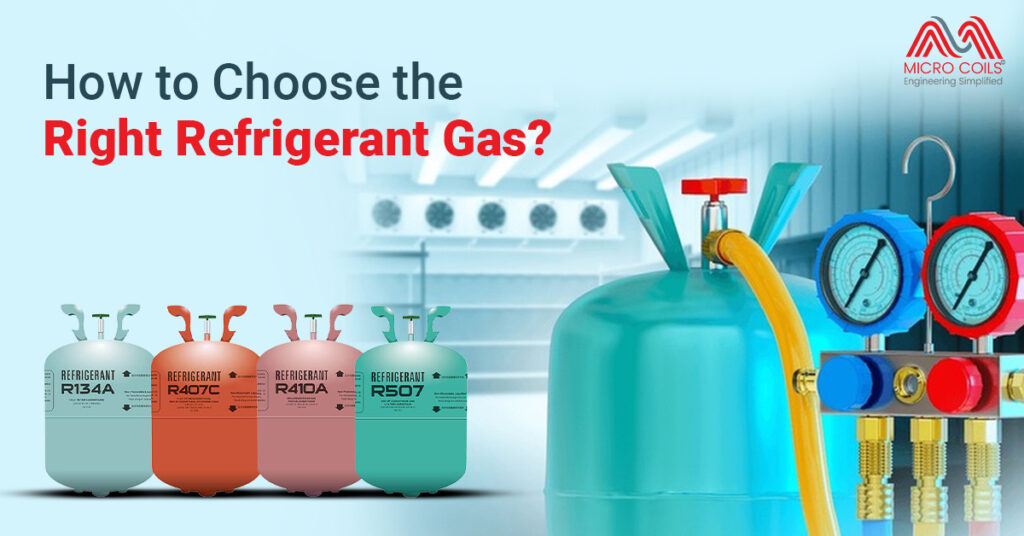
Choosing the wrong refrigerant gas can quietly create long-term problems. Cooling systems may consume more power than expected, performance may fluctuate, and maintenance issues can surface far sooner than planned. In some cases, an unsuitable refrigerant can even shorten equipment life or expose businesses to regulatory risks.
These problems often appear only after the system is installed and running. By then, making changes is expensive and disruptive. For commercial facilities, cold storage operators, or industrial plants, even a small inefficiency can result in higher operating costs every single day. For homes, it usually means unreliable cooling and rising electricity bills.
The good news is that these issues are avoidable. When you understand how refrigerant gases work and how to match them with the right application, you can make informed decisions that improve efficiency, ensure safety, and support long-term performance. This blog explains how to choose the right refrigerant gas in a clear and practical way.
What Is a Refrigerant Gas and Why Does It Matter?
A refrigerant gas is the working fluid inside a refrigeration or air conditioning system. Its main job is to absorb heat from one area and release it elsewhere. It continuously circulates through the system, changing between liquid and gas states, which makes cooling possible.
The choice of refrigerant affects almost everything. It influences how efficiently heat is absorbed, how much electricity the system uses, how much pressure builds up inside the pipes, and how safe the system is to operate. It also determines how environmentally friendly the system will be over its lifespan.
In simple terms, a refrigerant is not just a cooling agent. It is the foundation on which the entire system operates.
Why Choosing the Right Refrigerant Is Critical?
Not all refrigerants behave the same way. Some perform better in low temperatures, while others are designed for moderate cooling. Certain refrigerants operate at high pressure, and others at much lower levels. If the refrigerant does not match the system design, performance suffers.
Using the wrong refrigerant can cause excessive compressor wear, higher energy consumption, and unstable cooling. In extreme cases, it can even lead to system failure. Beyond performance, refrigerant choice also affects compliance with environmental regulations, which are becoming stricter across the world.
This is why selecting the correct refrigerant should never be an afterthought.
Common Types of Refrigerant Gases
Refrigerants can be broadly grouped based on their chemical composition and environmental impact.
CFCs (Chlorofluorocarbons)
These were widely used in older refrigeration and air conditioning systems. They offered good cooling performance but were found to severely damage the ozone layer. Due to their environmental impact, CFCs have been completely phased out in most countries.
HCFCs (Hydrochlorofluorocarbons)
HCFCs were introduced as a transitional replacement for CFCs. They cause less ozone depletion but still have a negative environmental impact. Many regions are gradually eliminating HCFCs under global environmental agreements.
HFCs (Hydrofluorocarbons)
HFCs do not damage the ozone layer and are commonly used in modern refrigeration and air conditioning systems. However, they have a high global warming potential, which has led to increasing regulatory pressure to limit their usage.
HFOs (Hydrofluoroolefins)
HFOs are newer refrigerants developed to reduce environmental impact. They have very low global warming potential and break down quickly in the atmosphere. These refrigerants are gaining popularity in commercial and industrial applications.
Natural Refrigerants
This category includes substances like ammonia, carbon dioxide, and hydrocarbons. Natural refrigerants have low environmental impact and high efficiency. Their use depends on safety requirements, system design, and operator expertise.
Blended Refrigerants
Blended refrigerants combine two or more gases to achieve specific performance characteristics. They are designed to improve efficiency, reduce environmental impact, or match the behavior of older refrigerants. Proper handling is important to maintain their composition.
Understanding Refrigerant Applications
Different cooling applications demand different refrigerant properties. A refrigerant suitable for a domestic refrigerator may not work well in a supermarket freezer or an industrial cold storage facility.
For household appliances, people often ask about the refrigerator gas name because it determines how efficiently the fridge runs and how safe it is inside a living space. Domestic refrigerators usually use refrigerants that operate quietly, safely, and with low energy consumption.
When consumers wonder which gas is present in fridge, they are often concerned about safety, power usage, and environmental impact. Modern household refrigerators typically use refrigerants designed to meet these expectations while complying with global standards.
Commercial and industrial systems, however, operate under very different conditions.
Refrigerant Selection for Commercial and Industrial Systems
Large refrigeration systems handle higher cooling loads and often run continuously. In such environments, efficiency and reliability become critical. The refrigerant must perform consistently under heavy demand and varying temperatures. This is especially important for industrial cooling systems, where uninterrupted operation, thermal stability, and long equipment life directly impact operating costs and production efficiency.
In industrial setups, many engineers still refer to guidelines stating that the refrigerant used in heavy refrigeration is chosen primarily for its thermal efficiency and stability under high pressure and extended operation. These systems are designed with robust safety mechanisms and trained personnel, allowing the use of refrigerants that may not be suitable for residential use.
The key takeaway is simple. Refrigerant selection must always match the scale and purpose of the system.
Key Factors to Consider When Choosing a Refrigerant Gas
Cooling Capacity and Temperature Range
Different refrigerants are optimized for different temperature ranges. Some perform better at low temperatures, while others are ideal for air conditioning and medium cooling.
If a refrigerant is used outside its ideal range, the system has to work harder. This leads to increased power consumption and faster wear on components.
Energy Efficiency
Energy efficiency is one of the most important factors today. A refrigerant that transfers heat effectively allows the compressor to run less frequently, reducing electricity usage. This becomes even more relevant in applications like dry cooling systems, where air-based heat rejection depends heavily on refrigerant performance to maintain efficiency under higher ambient temperatures.
Even a small improvement in efficiency can result in significant savings over the lifetime of the system, especially in commercial applications.
Environmental Impact
Modern refrigerant selection must consider global warming potential and ozone depletion potential. Regulations across many countries restrict or ban refrigerants with high environmental impact.
Choosing a compliant refrigerant protects businesses from future legal issues and costly system modifications.
Safety Considerations
Some refrigerants are flammable, while others may be toxic in high concentrations. Safety requirements depend on where the system is installed and who operates it.
Residential systems prioritize low toxicity and low flammability. Industrial environments may allow different refrigerants, provided safety protocols are followed.
System Compatibility
Refrigerants are not interchangeable. Each system is designed for a specific refrigerant, including compressor type, lubricant compatibility, and pressure ratings.
Using the wrong refrigerant can damage seals, reduce lubrication efficiency, and compromise system integrity.
Regulatory and Compliance Considerations
Governments and international bodies regulate refrigerant usage to reduce environmental harm. These regulations influence which refrigerants can be manufactured, sold, and serviced.
When choosing a refrigerant, it is important to consider not just current regulations, but also future restrictions. Selecting a refrigerant that is likely to be phased out can lead to higher maintenance costs and early system replacement.
Forward-thinking refrigerant choices help future-proof refrigeration investments.
Refrigerant Cost Versus Long-Term Value
Initial refrigerant cost is often misleading. A cheaper refrigerant may result in higher electricity bills, frequent servicing, and reduced equipment life.
On the other hand, a refrigerant with slightly higher upfront cost may deliver better efficiency, lower maintenance needs, and longer system lifespan. Over time, the total cost of ownership becomes much lower.
This long-term view is essential, especially for commercial and industrial operators.
Maintenance and Availability
A refrigerant should be readily available in the market. If a refrigerant is difficult to source, routine maintenance and emergency repairs become challenging.
Technicians should also be trained to handle the chosen refrigerant. Specialized refrigerants may require additional safety measures and certified personnel.
Ease of servicing is an often-overlooked factor that can significantly affect downtime and operating continuity.
Retrofitting Existing Systems
In some cases, businesses consider switching refrigerants in existing systems. While retrofitting can improve efficiency and compliance, it must be done carefully.
Not all systems can be retrofitted easily. Changes may be required in compressors, seals, oils, and control settings. A professional assessment is essential before attempting any refrigerant change.
Improper retrofitting can cause more harm than good.
Refrigerants and Sustainability Goals
Sustainability is no longer optional. Many organizations now include energy efficiency and environmental responsibility as part of their core strategy.
Choosing the right refrigerant supports these goals by reducing carbon footprint and energy consumption. It also enhances brand credibility and aligns operations with global sustainability standards. Refrigerant choice is a technical decision with strategic implications.
The Role of Experts in Refrigerant Selection
While general guidelines are helpful, refrigerant selection often requires expert input. HVAC engineers and refrigeration specialists analyze system design, load requirements, and operating conditions before recommending a refrigerant.
Their expertise ensures that performance, safety, and compliance are all addressed together, rather than in isolation.
Common Misconceptions About Refrigerant Gases
Many people believe that all refrigerants cool the same way. In reality, their performance varies widely.
Another misconception is that newer refrigerants are always better. While modern refrigerants are more environmentally friendly, they must still match the system design to deliver optimal results.
Final Thoughts
Choosing the right refrigerant gas is a critical decision that affects efficiency, safety, cost, and environmental impact. It requires more than just knowing what is commonly used. It demands a clear understanding of application needs, regulatory requirements, and long-term operational goals.
Whether selecting a refrigerator cooling gas for a household appliance or specifying a refrigerant for a large industrial system, informed choices lead to better performance and fewer problems over time.
By evaluating key factors carefully and seeking expert guidance when needed, you can ensure that your refrigeration system delivers reliable cooling, sustainable operation, and long-term value.
The right refrigerant depends on system design, cooling capacity, operating temperature, and safety requirements. Manufacturer recommendations should always be followed. Environmental regulations and energy efficiency goals also play an important role in making the final choice.
In some cases, yes, but not all systems are designed for refrigerant changes. Retrofitting may require changes to compressors, lubricants, seals, and control settings. A professional assessment is essential to avoid performance loss or equipment damage.
Not necessarily. Many modern refrigerants are designed to deliver high efficiency while reducing environmental impact. When matched correctly with system design, these refrigerants can perform as well as or better than older options.
Certain refrigerants harm the ozone layer or contribute significantly to global warming. International agreements and national regulations aim to reduce these environmental impacts by restricting or banning such refrigerants over time.
Yes. Residential systems prioritize refrigerants with low toxicity and low flammability. This ensures safe operation in enclosed living spaces and reduces risk during maintenance or accidental leaks.

