

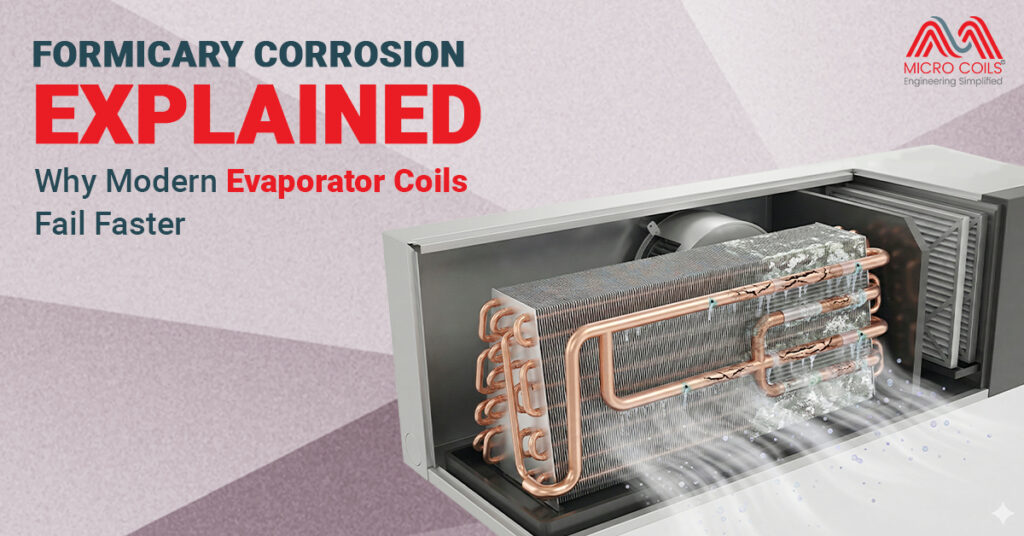
Walk into any home or commercial building and you’ll find the air conditioner quietly doing its job. It cools the space, reduces humidity, and keeps people comfortable. But behind this familiar comfort lies a part that often fails far earlier than it should: the evaporator coil. And one of the biggest culprits behind premature failure is something tiny, slow, and almost invisible — formicary corrosion.
Most people have never heard the term. Many technicians struggle to diagnose it. Homeowners only discover it when the AC stops cooling. And manufacturers continue to refine designs as they try to keep the problem under control.
So what exactly is formicary corrosion, and why does it cause modern coils to fail faster than expected? Let’s break it down in a simple, practical way.
What Exactly Is Formicary Corrosion?
Formicary corrosion refers to a very specific type of copper corrosion that looks like tiny ant-nest tunnels inside metal. The word “formicary” itself comes from “formica,” meaning ants. When this form of corrosion attacks a copper tube, it creates micro-tunnels too small to see with the naked eye.
Unlike regular corrosion, which creates visible damage on the surface, formicary corrosion works from the inside. It digs small pathways through the copper wall and eventually leads to pin-sized leaks. These leaks cause refrigerant loss, weak cooling, and eventually AC failure.
This means a coil can look perfectly normal on the outside while quietly failing from within.
Why Is Formicary Corrosion More Common Today?
Older air conditioners rarely faced this issue. So why do modern coils seem more vulnerable? Several industry changes come together to create the perfect environment for this problem.
1. Thinner Copper Tubing
To improve energy efficiency and reduce manufacturing costs, modern AC units use copper tubing that is much thinner than older generations.
Thinner metal corrodes faster. It’s easier for a tiny tunnel to break through the wall. And it means fewer years of reliable service.
2. More Chemical Exposure Indoors
Today’s buildings have more synthetic materials. Adhesives, cleaning sprays, furniture varnish, plywood, paints, disinfectants, and room fresheners all release organic acids into the air.
When these vapors circulate through the AC system, they cling to the coil’s moisture and slowly begin attacking the copper.
This environment simply did not exist a decade or two ago in the same intensity.
3. High Efficiency Units Run Colder and Longer
Energy-efficient units cycle more frequently and maintain lower coil temperatures.
Lower temperatures mean more condensation.
More condensation means a moist, acidic environment — the perfect breeding ground for formicary corrosion.
4. Tight Indoor Spaces and Poor Ventilation
Modern homes and buildings are sealed tightly for insulation. While great for saving energy, this traps chemicals and pollutants indoors. With nowhere to escape, these vapors settle around the coil and accelerate corrosion.
How Does Formicary Corrosion Actually Start?
The process begins with three common acids:
- Formic acid
- Acetic acid
- Carbon dioxide mixed with moisture
These acids are released from everyday household products and materials.
Over time, these vapors mix with moisture that naturally forms on the coil. The combination slowly forms microscopic channels in the copper. They grow unpredictably. They don’t follow a straight line. And they spread silently.
Eventually, one of these tunnels reaches the outer surface of the copper tube and creates a leak so tiny it may take months before the AC shows noticeable symptoms.
This is why formicary corrosion is often called a “hidden” AC killer.
Symptoms in an AC That Hint at Formicary Corrosion
Since the damage doesn’t show on the surface, you need to look for performance clues. Here are the most common signs:
1. AC takes longer to cool
Because the system is slowly losing refrigerant, it has to work harder to reach the desired temperature.
2. Higher electricity bills
A struggling system consumes more power.
3. Ice forming on the coil
Low refrigerant can cause freezing.
4. Hissing or subtle bubbling sounds
This is a rare but possible sign of micro-leaks.
5. Frequent refrigerant top-ups
If you’re repeatedly adding refrigerant, the problem is almost certainly a leak — and formicary corrosion is a strong suspect.
6. Reduced airflow (indirect sign)
This happens when the coil becomes too cold due to insufficient refrigerant.
Most homeowners think the problem is low gas. The real issue is the coil itself.
Why Formicary Corrosion Matters for Homeowners and Technicians?
A leaking coil is more than just an annoyance. It creates multiple long-term issues.
1. It drastically reduces the AC’s lifespan.
Modern coils should last 10 years or more, but formicary corrosion can kill them in as little as 3–5 years.
2. Frequent breakdowns increase maintenance costs.
Gas refills, inspections, cleaning — it all adds up.
3. It wastes energy.
An AC running on low refrigerant uses far more electricity.
4. Leaks can damage other components.
Low refrigerant puts additional strain on the compressor, which is the most expensive part to replace.
5. Environmental impact.
Refrigerant leaks contribute to greenhouse emissions.
In short, ignoring corrosion doesn’t just damage your AC — it damages your wallet.
How Technicians Diagnose Formicary Corrosion in an AC?
Since the corrosion happens inside the copper, visual inspection is not enough. Technicians use several methods:
1. Electronic leak detectors
These tools sniff refrigerant in the air to pinpoint tiny leaks.
2. UV dye tracing
A dye is added to the system and glows under UV light when it leaks.
3. Nitrogen pressure test
This test pressurizes the coil and detects drops in pressure.
4. Soap solution
Bubbles form where leaks exist.
However, because formicary corrosion creates micro-tunnels, sometimes the leak is so tiny that even these tools struggle to detect it. In those cases, the coil may need to be removed for lab testing or replaced directly.
Can Formicary Corrosion Be Prevented?
While you can’t eliminate the risk completely, the problem can be greatly reduced with proper care. Here are practical steps that genuinely make a difference:
1. Improve indoor ventilation
Allow fresh air to circulate. Use exhaust fans when using chemicals, cleaning solutions, or paints.
2. Reduce chemical vapors
Avoid overusing sprays, deodorants, and strong cleaners near the AC unit.
3. Keep the coil clean
Dust holds contaminants. A clean coil reduces corrosion risk.
4. Use high-quality air filters
Filters trap particles and chemical vapors before they reach the coil.
5. Maintain humidity levels
Too much moisture accelerates corrosion.
6. Schedule annual AC service
Regular inspections help identify issues early.
While these steps won’t stop formicary corrosion entirely, they slow it down significantly and extend the coil’s lifespan.
Copper vs Aluminium: Does Material Matter?
Manufacturers have shifted from copper coils to aluminium and mixed-metal designs. This change happened partly because aluminium is more resistant to formicary corrosion.
However, aluminium coils come with their own challenges — mainly difficulties in repair.
Both materials have pros and cons. But the trend toward mixed-metal or microchannel coils aims to reduce corrosion while balancing cost and performance.
When Replacement Is the Only Option?
If formicary corrosion is confirmed, replacing the coil is usually the best long-term solution. Repairing micro-leaks is difficult, temporary, and often not worth the effort.
Replacing the coil restores system efficiency, protects the compressor, and prevents repeated service visits.
When replacing, ensure the technician checks:
- Coil compatibility
- Correct tonnage
- Proper airflow
- Clean refrigerant lines
- Quality insulation
A well-installed coil can give you a decade or more of reliable cooling.
How Formicary Corrosion Impacts the Entire Cooling System?
A damaged coil affects more than just one part.
Once micro-leaks begin, the effects spread quickly across the AC system:
- Compressor overworks
- System overheating increases
- Indoor air quality drops
- Moisture control becomes poor
- Cooling becomes uneven
- Running costs rise
This is why a small leak often becomes an expensive repair if ignored.
Is It Just the Evaporator Coil?
No. While the indoor coil is more exposed to chemical vapors, other parts can also be affected. The ac condenser coil, located outdoors, faces different threats — pollution, humidity, and salts — but rarely faces formicary corrosion to the same extent.
Some systems also show wear in the ac cooling coil located in packaged or split systems. However, the evaporator coil remains the most vulnerable component.
Final Thoughts: Tiny Corrosion, Big Consequences
Formicary corrosion is a small problem that creates massive damage. It hides inside the copper, works silently, and reveals itself only when your AC suddenly struggles. Modern coils, though more efficient, are also more delicate. Thinner copper, chemical-rich indoor environments, and long operating cycles all make them more susceptible.
But awareness is the first step. With better ventilation, cleaner indoor air, regular maintenance, and the right materials, you can significantly delay corrosion and extend the life of your AC.
If you’ve been dealing with repeated gas top-ups or unexplained cooling loss, it might not be just a minor issue — it may be the early signs of formicary corrosion. And the sooner it’s addressed, the better your system will perform in the long run.
Repeated gas loss usually means there is a refrigerant leak, and one of the most common causes is formicary corrosion. These leaks are extremely tiny, so they often go unnoticed during regular service. Until the leaking coil is repaired or replaced, the gas will continue to escape.
You won’t see it with the naked eye. Instead, you will notice symptoms — longer cooling time, weak airflow, higher electricity bills, or ice on the coil. A technician can perform a leak test using nitrogen, UV dye, or an electronic detector to confirm the issue.
Only in very early stages. Once the tunnels in the copper become deep, repairs become temporary or ineffective. In most practical cases, coil replacement is the long-term solution because new leaks can appear even after patching one spot.
It mainly occurs due to organic vapors released from cleaning sprays, plywood, varnishes, glue, paints, perfumes, aerosol fresheners, and disinfectants. When these fumes mix with moisture on the coil, they create corrosive acids that attack copper from the inside.
Improve ventilation, use high-quality air filters, avoid heavy use of chemical sprays, keep indoor humidity in check, and ensure yearly servicing. These steps reduce chemical buildup around the coil and slow down the corrosion process.

