

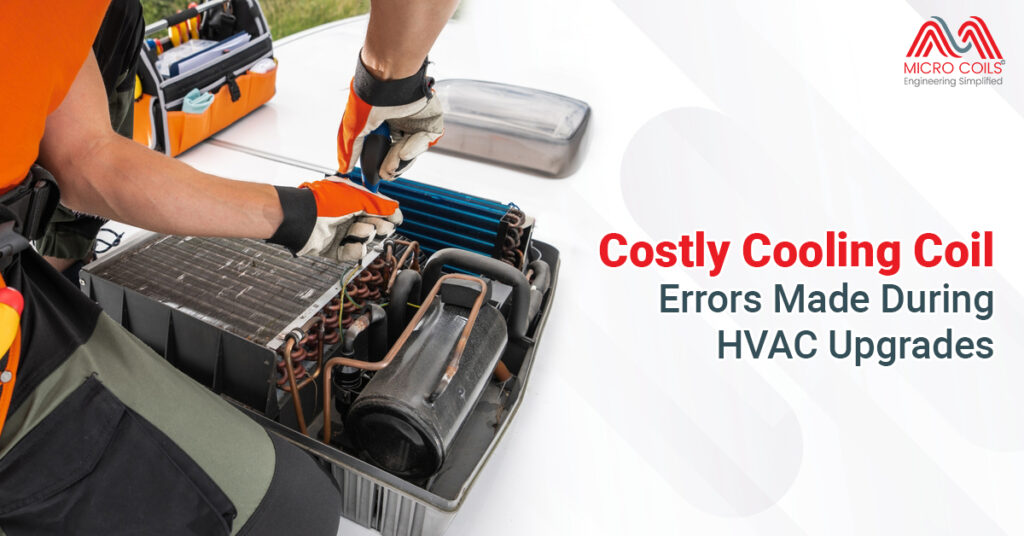
HVAC upgrades are often driven by rising energy costs, aging equipment, or changing building usage. In the middle of these upgrades, cooling coils are frequently treated as secondary components rather than performance drivers. This oversight creates long-term inefficiencies that surface only after commissioning. Once operational issues appear, correcting them becomes expensive and disruptive.
Cooling coils sit at the intersection of airflow, heat transfer, and moisture control. Any mismatch between coil design and system requirements affects the entire HVAC chain. Many upgrade projects focus heavily on chillers or compressors while assuming coils will adapt automatically. That assumption leads to performance gaps that are difficult to diagnose later.
Treating Cooling Coils as Standard, Interchangeable Components
One of the most common mistakes during HVAC upgrades is assuming all cooling coils behave the same. Engineers sometimes replace coils based solely on size compatibility, ignoring thermal and airflow requirements. This shortcut appears efficient during procurement but creates performance mismatches during operation. Over time, these mismatches show up as poor cooling consistency and higher power usage.
Cooling coils must be selected based on actual load conditions rather than catalog ratings. A coil that physically fits the air handling unit may still fail thermally. This error is especially costly in retrofit projects where ducting and fan capacity remain unchanged. The result is an HVAC system that technically works but never performs optimally.
Ignoring Changes in Building Heat Load
Building usage often changes long before HVAC upgrades are initiated. Office spaces become denser, operating hours increase, and equipment loads grow quietly over time. When cooling coils are replaced without reassessing heat load, the system becomes undersized by design. The coil then operates continuously near its limits.
An undersized coil leads to longer run times and uneven cooling across zones. Occupants compensate by lowering setpoints, which further strains the system. This cycle accelerates wear while inflating energy costs. The upgrade, instead of improving performance, locks inefficiency into the system.
Overlooking Airflow Compatibility During Coil Replacement
Cooling coil performance depends as much on airflow as it does on surface area. During upgrades, airflow assumptions from the original design are often reused without verification. Fan curves change, filters evolve, and duct resistance increases over time. These changes alter the airflow reaching the coil.
When airflow is lower than required, heat transfer drops sharply. The coil may appear adequate on paper but underperform in real conditions. Excessive pressure drop can also overload fans, increasing maintenance frequency. This hidden mismatch quietly erodes system efficiency.
Selecting the Wrong Fin Density for Real Conditions
Fin density is often chosen based on thermal efficiency targets alone. In practice, environmental conditions should guide this decision more strongly. High fin density coils perform well in clean environments but struggle in dusty or industrial settings. They clog faster and become maintenance liabilities.
Low fin density coils may appear less efficient initially but maintain performance longer in harsh conditions. Ignoring this trade-off leads to rapid fouling and airflow restriction. Maintenance teams then face frequent cleaning cycles. The operational cost soon outweighs the perceived efficiency gain.
Misjudging Moisture Removal Requirements
Cooling coils do more than lower air temperature. They also play a critical role in dehumidification. During upgrades, latent load requirements are often underestimated or ignored. This leads to coils that cool air but fail to control humidity effectively.
Poor humidity control causes discomfort, condensation, and indoor air quality issues. In commercial spaces, it can damage equipment and finishes. Occupants respond by adjusting thermostats, which worsens energy consumption. A properly selected evaporator coil balances sensible and latent cooling without compromise.
Focusing on First Cost Instead of Lifecycle Cost
Budget pressure during upgrades often drives teams toward the lowest upfront option. Cooling coils are no exception to this pattern. A cheaper coil may meet basic specifications but lack durability or corrosion resistance. Over time, repair and replacement costs exceed the initial savings.
Lifecycle cost analysis reveals these trade-offs clearly. Coils designed for longevity reduce downtime and maintenance frequency. They also sustain performance over years rather than months. Ignoring lifecycle considerations turns short-term savings into long-term losses.
Overlooking Coil Material Compatibility
Material selection is frequently reduced to availability rather than suitability. In corrosive or coastal environments, standard materials degrade rapidly. When coil materials fail prematurely, refrigerant leaks and capacity loss follow. These failures are costly and disruptive.
Material compatibility should align with air quality, humidity, and chemical exposure. Protective coatings and specialized alloys extend coil life significantly. During upgrades, this decision is often rushed or delegated without analysis. The cost of rework later is far higher.
Failing to Validate Coil Performance Under Part Load
HVAC systems rarely operate at full load for extended periods. Yet many coil selections focus on peak conditions only. Under part-load operation, mismatched coils cycle inefficiently and struggle with humidity control. This inefficiency dominates annual energy consumption.
Modern cooling solutions must perform consistently across load variations. Coil geometry, circuiting, and surface area all influence part-load behavior. Ignoring these factors locks inefficiency into daily operation. The system appears upgraded but behaves unpredictably.
Common Cooling Coil Errors During HVAC Upgrades
The following mistakes repeatedly appear across commercial and industrial projects. Each error seems minor during design or procurement, but becomes costly during operation.
- Reusing old coil specifications without revalidation
This approach ignores changes in load, airflow, and operating conditions. What worked years ago may no longer be suitable. - Ignoring pressure drop limitations
Excessive pressure drop strains fans and reduces airflow. This reduces heat transfer and increases energy use. - Choosing coils without considering maintenance access
Poor access leads to deferred cleaning. Dirty coils lose capacity faster than most components. - Overlooking corrosion protection requirements
Environmental exposure shortens coil life significantly when materials are mismatched.
These errors are avoidable with proper evaluation and coordination. Each one compounds operational cost over time. Addressing them early protects system performance and budget integrity.
Misalignment Between Coil and Refrigerant Characteristics
Refrigerant properties directly influence coil design requirements. During HVAC upgrades, refrigerant changes are common due to regulations or efficiency goals. When coils are not optimized for the new refrigerant, heat transfer efficiency drops. This mismatch forces compressors to work harder.
An AC evaporator coil must align with refrigerant pressure, temperature glide, and flow characteristics. Reusing coils designed for older refrigerants creates subtle inefficiencies. These inefficiencies often go unnoticed during commissioning. Over time, they inflate energy bills and reduce equipment lifespan.
Ignoring Installation Quality During Tight Upgrade Schedules
Even a well-selected coil fails if installation quality is poor. Upgrade timelines are often compressed, increasing the risk of misalignment or air bypass. Improper sealing allows air to escape around the coil rather than through it. This reduces the effective heat transfer area.
Installation errors also create uneven airflow distribution across the coil face. Portions of the coil remain underutilized while others overload. Performance drops without obvious mechanical faults. Correcting these issues later requires system shutdowns.
Underestimating the Impact of Coil Fouling Over Time
All cooling coils foul gradually due to airborne contaminants. During upgrades, fouling rates are rarely modeled or discussed. Coil designs that look efficient initially may degrade rapidly in real environments. Performance loss accumulates quietly.
Designing for fouling tolerance improves long-term reliability. Allowing margin for dirt loading preserves airflow and heat transfer. Maintenance intervals become more predictable. Ignoring fouling leads to unexpected efficiency loss and rising service costs.
Assuming Controls Can Compensate for Poor Coil Selection
Modern HVAC systems rely heavily on automation and controls. This creates a false sense of security during upgrades. Controls can optimize operation, but they cannot fix fundamental hardware mismatches. A poorly selected ac cooling coil limits performance regardless of software sophistication.
When coils underperform, controls respond by increasing run time or adjusting setpoints. These compensations mask the root problem while increasing energy use. Over time, the system becomes expensive to operate. Hardware decisions must support control strategies, not undermine them.
Conclusion: Getting Cooling Coil Decisions Right the First Time
Cooling coil errors during HVAC upgrades rarely announce themselves immediately. They reveal their cost slowly through inefficiency, discomfort, and maintenance burden. Each overlooked detail compounds over years of operation. The true cost often exceeds the upgrade budget itself.
Successful upgrades treat cooling coils as performance-critical components. Selection must reflect real loads, airflow, environment, and operating patterns. When done correctly, coils enhance system reliability and efficiency. Getting this right once prevents years of avoidable expense.
FAQs
Cooling coils often fail after upgrades because load conditions, airflow, or refrigerant characteristics change. When coils are selected using old specifications, they struggle to transfer heat efficiently. This leads to longer run times, uneven cooling, and higher energy consumption across the HVAC system.
An incorrectly selected cooling coil forces the HVAC system to work harder to achieve desired temperatures. Fans consume more power due to higher pressure drop, compressors run longer, and humidity control suffers. Over time, these inefficiencies significantly raise electricity bills and maintenance expenses.
Cooling coils are designed to operate within a specific airflow range. If airflow is too low or uneven, heat transfer drops sharply. This results in poor cooling performance and possible coil icing. Matching coil design to actual airflow ensures stable operation and consistent cooling output.
Controls can adjust setpoints and run times, but they cannot fix hardware mismatches. A poorly selected cooling coil limits heat transfer regardless of control logic. The system may appear stable initially, but energy use increases and comfort issues persist, making the upgrade ineffective.
Before approval, verify heat load calculations, airflow availability, pressure drop limits, material suitability, and maintenance access. The coil should also be compatible with refrigerant type and operating conditions. These checks prevent performance gaps and reduce long-term operational risks.

