

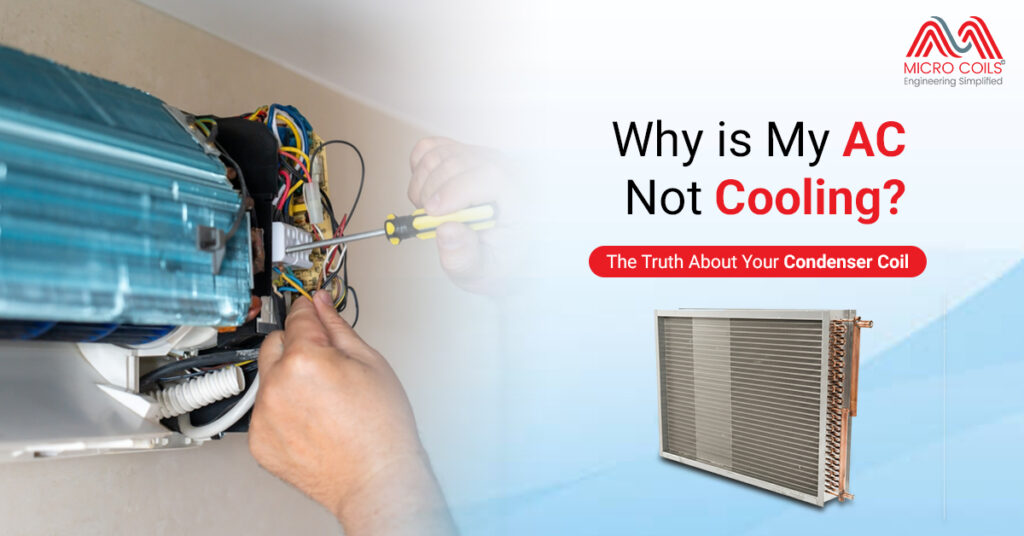
It’s the middle of summer. The sun is blazing outside, you’ve cranked your AC to the lowest setting, and yet — your home still feels like an oven. Sound familiar? You’re not alone. One of the most common complaints homeowners have during peak cooling season is that their air conditioner simply isn’t doing its job.
There are many reasons an AC unit can underperform. But one of the most overlooked culprits? The AC condenser coil. This small but mighty component plays a massive role in keeping your home cool. When it fails, everything falls apart.
In this blog, we’ll break down exactly why your AC might not be cooling, how the condenser coil fits into the picture, and what you can do about it — including what to expect when it comes to AC coil price and replacement costs.
First, Let’s Understand How Your AC Actually Works
Before we dive into problems, it helps to understand the basics. Your air conditioner doesn’t just “make cold air.” It actually removes heat from inside your home and releases it outside. This is done through a cycle of refrigerant — a special fluid that absorbs and releases heat as it moves through the system.
Here’s the simplified version of how it works:
The refrigerant absorbs heat from the warm air inside your home through the evaporator coil (located indoors). It then travels outside to the AC condenser coil, where it releases that heat into the outdoor air. A fan helps push that heat away. The cooled refrigerant then travels back inside, and the cycle repeats.
It’s an elegant system — when it works. But if any part of this process is disrupted, your home stops cooling efficiently. And the condenser coil is often right at the center of the problem.
What Exactly Is the AC Condenser Coil?
The AC condenser coil is located in the outdoor unit of your air conditioning system. It’s a series of thin metal tubes — usually made of copper or aluminum — surrounded by thin fins. Together, they create a large surface area that allows heat to escape into the outdoor air quickly.
Think of it like a radiator in your car. The condenser coil’s entire job is to dissipate heat. When it’s clean and functioning properly, it does this beautifully. When it’s dirty, damaged, or failing, your entire cooling system suffers.
The AC cooling coil (sometimes used interchangeably with the condenser coil) is essentially the heart of the outdoor unit. Without it working at full capacity, your AC has to work twice as hard to achieve half the results.
Why Your AC Isn’t Cooling: The Most Common Causes
1. A Dirty or Clogged Condenser Coil
This is by far the most common reason your AC isn’t cooling properly. The outdoor unit is exposed to the elements year-round. Dust, dirt, grass clippings, pollen, pet hair, and even leaves can build up on the condenser coil over time. This layer of grime acts as an insulating blanket, trapping heat inside instead of allowing it to escape, which makes condenser cleaning extremely important.
When heat can’t escape efficiently, the refrigerant stays warm. Warm refrigerant means the evaporator coil inside can’t absorb as much heat from your home’s air. The result? Warm, stuffy air blowing out of your vents even when the AC is running full blast.
The fix here is cleaning. A professional HVAC technician can thoroughly clean the coil using a specialized coil cleaner and low-pressure water. In some cases, homeowners can carefully clean the exterior fins with a garden hose — but deep cleaning is best left to a professional.
Regular maintenance goes a long way. Cleaning your condenser coil at least once a year — ideally before summer — can dramatically improve your AC’s performance and energy efficiency.
2. Bent or Damaged Fins
Look closely at your outdoor unit and you’ll notice thin metal fins surrounding the coil. These fins are designed to increase airflow and heat transfer. But they’re also incredibly delicate. Lawn equipment, hail, kids playing nearby, or even careless cleaning can bend these fins out of shape.
Bent fins restrict airflow. Less airflow means less heat escaping. Less heat escaping means your AC struggles to cool your home. This problem is more common than most people realize. Fortunately, HVAC technicians have a special tool called a “fin comb” that can straighten bent fins without replacing the entire coil.
3. Refrigerant Leak
If your condenser coil has a crack or pinhole, refrigerant can slowly leak out. Low refrigerant means the system can’t transfer heat effectively. Your AC runs constantly, your energy bill spikes, and your home never quite reaches the temperature you set.
A refrigerant leak is serious. It’s not something you can fix with a DIY approach. It requires a licensed HVAC technician to locate the leak, repair it, and recharge the system with the correct amount of refrigerant. Ignoring a refrigerant leak doesn’t just hurt your comfort — it can permanently damage the compressor, which is the most expensive component in your AC system.
Signs of a refrigerant leak include: ice forming on the coil, hissing or bubbling sounds near the outdoor unit, and a noticeable drop in cooling performance over time.
4. A Failing Condenser Fan
The condenser coil doesn’t release heat on its own. It needs a fan to push air across those coils and carry the heat away. If the fan motor is failing or the fan blades are damaged, airflow across the coil drops significantly.
Without adequate airflow, heat builds up in the outdoor unit. The coil can’t do its job. Eventually, the system may overheat and shut down completely as a safety measure. If you notice the fan spinning slowly, making unusual noises, or not spinning at all — that’s a red flag that needs immediate attention.
5. A Completely Failed or Damaged Condenser Coil
In some cases, the coil itself is simply beyond saving. Severe corrosion, formicary corrosion (caused by a reaction between copper and certain volatile organic compounds in the air), physical damage, or years of neglect can all render a condenser coil unusable.
When this happens, replacement is the only option. And that brings us to one of the most common questions homeowners ask: how much does an AC coil cost?
AC Coil Price: What to Expect?
Let’s be upfront — replacing an AC coil isn’t cheap. But understanding the cost breakdown helps you make an informed decision rather than being caught off guard by a repair bill.
AC condenser coil prices vary based on several factors, including the brand of your unit, the size (measured in tons of cooling capacity), and the type of coil material. Here’s a general breakdown:
Copper coils are generally considered more durable and easier to repair, but they cost more. Aluminum coils are less expensive but more prone to corrosion and harder to repair when damaged — meaning they’re more likely to require full replacement.
If your AC unit is relatively new (under 8-10 years old), replacing the coil makes sense. But if your system is older, it might be worth considering a full unit replacement instead. A new system comes with a warranty, better energy efficiency, and modern refrigerant compatibility.
Always get multiple quotes before committing to a coil replacement. Prices can vary widely between HVAC companies, and a second opinion is always worth it.
Signs Your AC Cooling Coil Needs Attention Right Now!
Not sure if your coil is the problem? Watch out for these warning signs:
- Your AC runs constantly but barely cools your home. This is a classic sign that heat isn’t being released efficiently outside — pointing directly to a condenser coil issue.
- Your energy bills have increased noticeably. When the coil is dirty or failing, the system works harder and longer, consuming more electricity in the process.
- Ice is forming on the outdoor unit or on the refrigerant lines. This can indicate either a refrigerant leak or severely restricted airflow — both related to coil problems.
- You notice unusual noises from the outdoor unit. Rattling, hissing, or grinding sounds can point to fan issues, refrigerant leaks, or physical damage to the coil.
- The outdoor unit feels extremely hot to the touch. Some heat is normal, but excessive heat suggests the coil isn’t dissipating it properly.
If you’re experiencing one or more of these symptoms, don’t wait. The longer you let coil problems go unaddressed, the more strain is placed on other components — especially the compressor. Compressor replacement is far more expensive than coil cleaning or even coil replacement.
How to Prevent Condenser Coil Problems?
Prevention is always better — and cheaper — than repair. Here are some simple steps to keep your AC cooling coil in great shape:
- Schedule annual maintenance. A professional tune-up every spring ensures the coil is cleaned, the refrigerant is at the right level, and everything is working as it should before the heat hits.
- Keep the area around the outdoor unit clear. Make sure there’s at least two feet of clearance on all sides of the unit. Trim back any plants, shrubs, or grass that might be crowding it.
- Rinse the coil occasionally. You can gently rinse the exterior fins of the outdoor unit with a garden hose from the inside out. Don’t use a pressure washer — the fins are delicate.
- Change your indoor air filter regularly. A clogged air filter restricts airflow throughout the entire system, which can contribute to coil problems both inside and outside.
- Don’t ignore warning signs. If something seems off with your AC, get it checked sooner rather than later. Small problems have a habit of becoming expensive ones.
Final Thoughts
A struggling air conditioner on a hot summer day isn’t just uncomfortable — it’s a sign that something needs attention. More often than not, the AC condenser coil is involved in the problem. Whether it’s simply dirty, damaged, or completely failed, the coil plays an irreplaceable role in your home’s cooling system.
Understanding how the AC cooling coil works, what can go wrong, and what the AC coil price looks like for repair or replacement puts you in a much stronger position as a homeowner. You won’t be caught off guard. You’ll know what questions to ask, what warning signs to watch for, and when it’s worth repairing versus replacing.
Don’t wait until your home becomes unbearable to address AC issues. A little attention now — and a good relationship with a trusted HVAC technician — can keep your system running smoothly for years to come.
Stay cool out there.
Technically, yes — but you shouldn’t. Running your AC with a dirty condenser coil forces the compressor to work under extreme stress. Over time, this shortens the compressor’s lifespan significantly. You’ll also notice higher electricity bills and poor cooling despite the system running constantly. Think of it like driving a car with a clogged radiator — it might move, but something will eventually break. A simple annual cleaning can prevent a much more expensive repair down the line.
Both problems share similar symptoms — weak cooling and the AC running nonstop. However, a refrigerant leak often comes with additional clues: a hissing or bubbling sound near the outdoor unit, ice forming on the copper lines, or your AC suddenly performing worse overnight without any visible dirt buildup. A dirty coil tends to degrade performance gradually over weeks or months. If performance dropped suddenly, suspect a leak and call a technician immediately.
In most cases, yes — and the improvement can be surprisingly noticeable. Homeowners often report their AC reaching the set temperature faster and running for shorter cycles after a professional coil cleaning. However, if cleaning doesn’t improve performance within a day or two, the problem likely goes deeper — such as low refrigerant, a failing fan motor, or internal coil damage. Cleaning is always the right first step before pursuing costlier diagnostics.
Gently rinsing the coil with a regular garden hose is actually fine and can temporarily improve efficiency on extremely hot days. However, never use a pressure washer — the high-pressure stream bends the delicate aluminum fins, restricting airflow and worsening performance. Also avoid spraying directly into electrical components. Some homeowners install misting systems around their outdoor unit for this exact purpose. It’s a helpful trick during heat waves, but it’s not a substitute for proper maintenance.
Very likely, yes. In the morning, outdoor temperatures are lower, making it easier for the condenser coil to release heat. As afternoon temperatures peak, a dirty or partially failing coil can no longer dissipate heat fast enough, causing the system to struggle. This time-of-day cooling pattern is a classic symptom of a condenser coil that needs cleaning or is operating with low refrigerant. If this sounds familiar, schedule a maintenance check before the problem worsens.

