

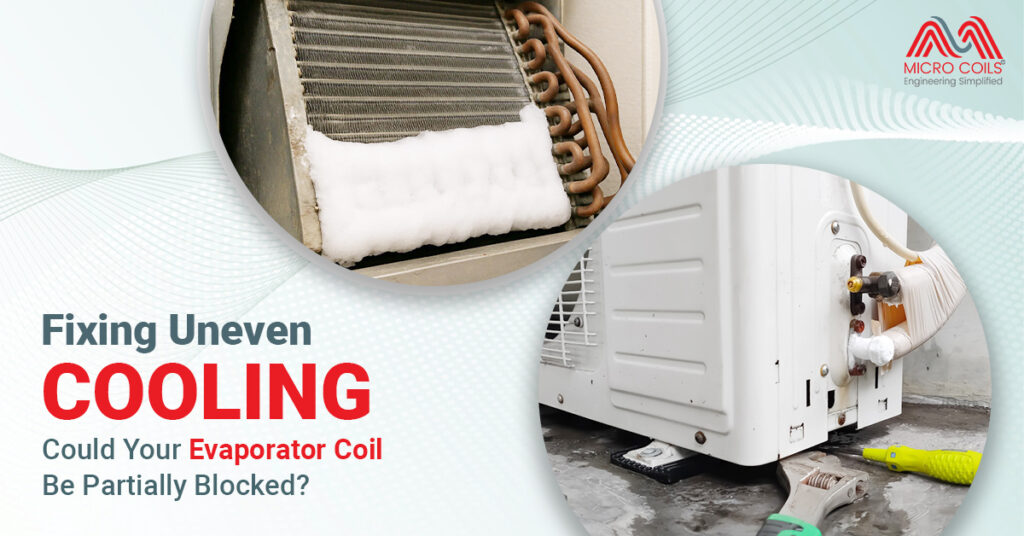
Temperature differences across your commercial facility create more than comfort complaints. When some zones stay cool while others overheat, you’re facing operational problems that cost money every day. The cause often sits inside your air handler a partially blocked evaporator coil that’s choking your cooling system.
For facility managers and building operators, understanding how blockages happen, spotting the warning signs, and knowing when to clean or replace saves thousands in energy costs and prevents expensive emergency repairs.
How Commercial Cooling Systems Work?
Your cooling system has two main parts that exchange heat. The AC condenser coil sits outside in the condensing unit on the roof or ground level. It releases heat from your building into the outdoor air. The AC evaporator coil unit sits inside your air handler and absorbs heat from the air circulating through your building.
Cold refrigerant flows through the evaporator coil. As warm return air from your building passes over this cold coil, heat transfers from the air to the refrigerant. The now-cooled air travels through your ductwork to different zones. The refrigerant, having absorbed heat, flows to the outdoor condenser where it releases that heat and cycles back.
When the entire coil surface works properly, all the air passing through gets cooled evenly. Blockages disrupt this process. Some sections of the coil can’t cool air effectively while other sections work overtime trying to compensate.
What Causes Blockages in Commercial Buildings?
Commercial evaporator coils face tougher conditions than residential units. They run longer hours, handle more air volume, and encounter contaminants that home systems never see.
- Dust and dirt accumulate despite your filters. No filter catches everything. Over months and years, fine particles build up on the coil’s thin metal fins. These fins sit close together—typically 12 to 16 per inch—so even thin layers of dirt restrict airflow significantly.
- Manufacturing facilities generate specific contaminants. Metal shops produce metal dust. Textile operations release fibers. Food processing creates flour or other organic particles. These materials get into your HVAC system and stick to coil surfaces.
- Biological growth thrives on cooling coils. The combination of moisture from condensation, nutrients from dust and organic matter, and relatively warm temperatures creates perfect conditions for mold, bacteria, and algae. These organisms don’t just sit on the surface—they form sticky biofilms that trap more debris and insulate the coil, reducing heat transfer.
- Outdoor air systems bring in unfiltered contaminants when economizers operate. Urban buildings pull in diesel exhaust, pollen, and atmospheric dust. Coastal facilities deal with salt-laden air that corrodes metal surfaces while catching additional particles.
- Grease from commercial kitchens creates particularly stubborn blockages. Kitchen makeup air systems pull grease-laden air across cooling coils. The grease forms sticky deposits that trap everything else passing through. A restaurant or institutional kitchen can block a coil in weeks if the system lacks proper grease filtration.
Why Partial Blockages Create Uneven Cooling?
A completely blocked coil stops cooling entirely—you notice immediately. Partial blockages are sneaky. The system keeps running, but performance degrades in ways that create zone-to-zone temperature differences.
Air takes the path of least resistance. When part of your coil blocks up, air rushes through the clear sections and barely trickles through blocked areas. The air moving too fast through clear sections doesn’t have enough contact time to cool properly. Air crawling through blocked sections either gets overcooled or doesn’t cool at all.
Your AC cooling coil typically has multiple refrigerant circuits, usually 3 to 6 separate paths through the coil. Each circuit should handle equal amounts of refrigerant and cool equal amounts of air. Blockages throw this balance off. Circuits serving blocked coil sections can’t absorb heat properly. The refrigerant in those circuits stays too cold, possibly causing ice formation. Meanwhile, circuits in unblocked sections work harder, possibly overheating.
Temperature differences develop in the air leaving your coil. Instead of uniform 55°F air across the entire airflow, you get patches—some areas blowing 55°F, others pushing 62°F or warmer. This temperature-stratified air flows into your duct system. Branches near the cold patches deliver good cooling. Branches near warm patches can’t cool their zones adequately.
Static pressure increases throughout your duct system as the blockage reduces total airflow. Your blower motor works harder, uses more electricity, and still moves less air than it should.
How to Diagnose Partial Blockages?
Start by mapping the problem. Measure temperature in each zone during peak cooling hours using a reliable thermometer. Take readings at the same height—about 5 feet off the floor. Temperature differences exceeding 5°F between zones indicate distribution problems, likely from uneven coil performance.
Check supply air temperature at each air register. Normal supply air measures 55-60°F. If some registers blow 56°F while others push 64°F, your coil isn’t cooling uniformly. This points directly to blockage rather than duct problems, which typically show consistent supply temperatures but different air volumes.
Measure the temperature difference between return air and supply air. This “split” should run 18-22°F in most commercial comfort cooling. Splits below 15°F suggest inadequate cooling capacity from restricted airflow. Splits above 25°F might indicate severely reduced airflow from heavy blockage.
Review your building management system data if you have one. Look for:
- Supply air temperatures gradually rising over weeks or months under similar conditions
- Static pressure increasing across the air handler
- Compressors running longer to achieve setpoints
- Growing temperature variance between zones served by the same unit
Check static pressure directly by measuring pressure before and after the coil. Clean commercial coils typically show 0.3 to 0.8 inches of water column pressure drop. Readings above 1.0 inch indicate restriction. Increases of 30-50% above your baseline measurements warrant investigation.
Inspect the coil physically. Turn off power completely at the breaker and service disconnect. Remove access panels to view the coil. You’re looking for:
- Light blockage: Visible dust or light debris on 0-25% of the coil surface. You can still see individual fins clearly. Performance impact is minor but trending toward problems.
- Moderate blockage: Dense debris covering 25-50% of the coil face. Fins get obscured in affected areas. You see fibrous materials, dust buildup, or biological growth. Airflow restriction creates measurable performance loss. Cleaning needed soon.
- Severe blockage: Thick accumulation on 50-75% of the coil. Most fins are completely hidden. Biological growth is evident. You might see corrosion or damage. This requires immediate attention to prevent compressor failure.
- Critical blockage: Over 75% of the coil face is obscured. Minimal airflow penetrates. The system operates in severely degraded mode. Shut down until cleaned. Replacement often makes more sense than cleaning at this point.
Also inspect for:
- Bent or crushed fins from physical damage
- Corrosion showing as white, green, or black deposits
- Mold, algae, or slimy biofilm on surfaces
- Ice formation during operation
- Standing water in the drain pan indicating drainage problems
Professional Cleaning Methods
Commercial coil cleaning requires professional service in most cases. The methods used depend on blockage severity and coil accessibility.
- Foam cleaners work for light to moderate contamination. These spray-on products expand into foam that penetrates between fins, breaks down dirt and biological material, then drains away with condensate. The limitation is they can’t handle heavy blockages and residue builds up from repeated applications.
- Pressure washing with detergent handles moderate to heavy contamination. Technicians apply alkaline cleaning chemicals, let them work for 10-20 minutes breaking down debris, then pressure rinse thoroughly. The challenge is managing water to avoid damage to other equipment or building finishes.
- Steam cleaning works well for biological contamination and grease, particularly in food service or healthcare applications. It sanitizes without chemicals and penetrates deep into the coil structure. The limitation is less effectiveness on heavy particulate blockages.
- Acid cleaning removes corrosion, mineral deposits, and stubborn biological contamination that alkaline cleaners can’t handle. It requires careful application to avoid metal damage and thorough neutralization after cleaning.
When hiring contractors, verify:
- Experience with commercial coils similar to yours
- Proper insurance coverage
- Safety certifications for working on roofs, in confined spaces, or with chemicals
- References from comparable facilities
- Clear service specifications detailing cleaning method, chemicals used, water protection measures, and performance verification after cleaning
Get written specifications covering:
- Who provides access equipment (lifts, scaffolding, roof protection)
- Work hours and advance notice requirements
- Pre-cleaning documentation (photos, measurements)
- Post-cleaning performance verification
- Warranty on cleaning effectiveness
When to Replace Instead of Clean?
Cleaning fixes surface blockages but can’t repair damage or restore lost capacity from deteriorated coils. Consider replacement when:
- The coil exceeds 15 years old. Even if cleanable now, replacement becomes necessary within 2-5 years regardless. Proactive replacement during scheduled maintenance beats emergency replacement during peak cooling season.
- Multiple leaks have occurred. A second or third refrigerant leak indicates widespread corrosion. Repair costs approach replacement cost and reliability remains questionable.
- Fins show heavy deterioration. Corrosion, mechanical damage, or missing fins affecting over 30% of the surface can’t be fixed. Cleaning won’t restore lost surface area.
- Your system uses R-22 refrigerant. Coil failure gives you an opportunity to upgrade to modern refrigerants, improving efficiency and reducing future service costs.
- Cleaning frequency becomes excessive. Coils requiring professional cleaning every 6-12 months despite good filtration indicate environmental conditions making replacement with coated, corrosion-resistant coils more economical long-term.
Taking Action
Partial blockages in your AC evaporator coil system cost money daily through wasted energy, accelerated equipment wear, and operational disruptions. Temperature differences between zones are your early warning signal.
Systematic diagnosis using temperature measurements and physical inspection identifies blockage severity. Professional cleaning restores performance in most cases, though severely deteriorated or repeatedly failing coils need replacement.
Preventive maintenance through upgraded filtration, scheduled inspections, proper drainage, and biological control keeps coils clean and systems running efficiently. The investment pays back through lower energy costs, extended equipment life, and reliable operation.
Address the problem now before a partially blocked coil becomes a completely failed system during your busiest season. Your cooling system is critical infrastructure—maintain it accordingly.
Professional cleaning duration varies by unit size and blockage severity. A standard 10-20 ton rooftop unit typically requires 2-4 hours including setup, cleaning, and rinsing. Larger air handlers serving 50+ tons may need 6-8 hours. Multiple-unit facilities should schedule cleaning across several days to maintain partial cooling capacity during service.
Yes, but monitor performance closely. Reduce cooling loads by adjusting setpoints upward 2-3 degrees and limiting occupancy in problem zones if possible. Check drain pans daily for overflow. If you notice ice formation on refrigerant lines, rapidly declining airflow, or unusual noises from the compressor, shut down immediately to prevent catastrophic failure requiring emergency replacement.
Stainless steel systems are more corrosion-resistant but can suffer from stress corrosion cracking in chloride environments – watch for hairline cracks near welds. Exotic materials like titanium or Hastelloy are highly resistant to chemical attack but may show different thermal expansion behaviors. Adjust your baseline parameters accordingly. The key is understanding your specific material’s vulnerabilities and focusing inspection efforts there. Document material specifications when purchasing from pillow plate manufacturers so your maintenance team knows exactly what they’re working with.
Most reputable contractors provide 30-90 day performance warranties guaranteeing cleaning effectiveness. Warranties typically cover re-cleaning if airflow or temperature performance doesn’t meet pre-specified targets, but exclude issues from ongoing contamination sources, filter neglect, or unrelated mechanical failures. Always request written warranty terms before authorizing service to understand coverage limitations and contractor obligations.
Track three metrics quarterly: supply air temperature trends, static pressure measurements, and filter replacement frequency. If supply temperatures rise 3+ degrees, static pressure increases 25%+ from baseline, or filters need changing twice as often as previously, increase cleaning frequency. High-humidity climates, heavy process loads, or poor outdoor air quality warrant more frequent service.
Check and replace air filters immediately dirty filters compound coil blockage effects. Reduce outdoor air intake if your economizer is bringing in contaminated air. Clean accessible surfaces of supply and return grilles to improve overall airflow. Lower thermostat fan setting from “auto” to “on” for continuous circulation, which sometimes improves air distribution despite reduced coil capacity.

