

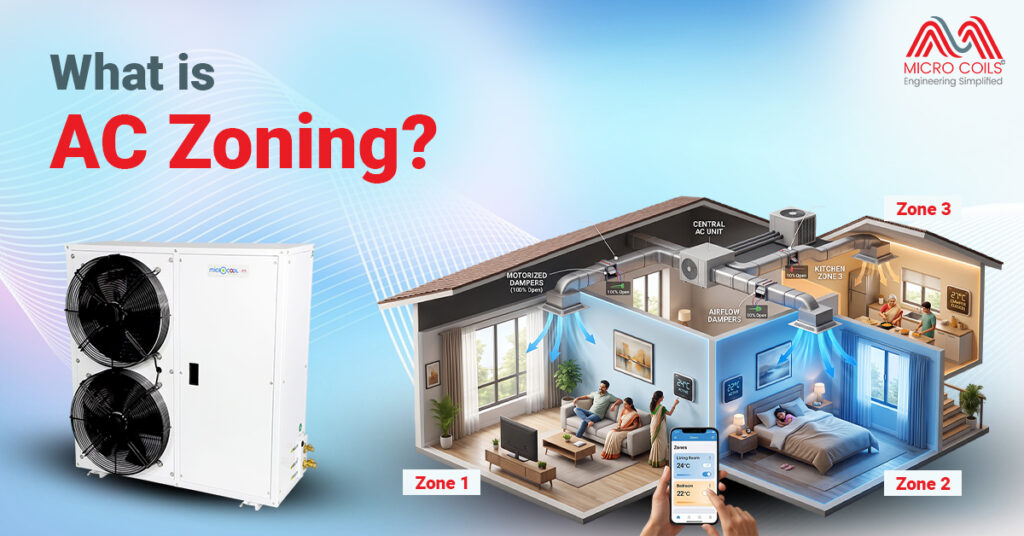
Every home has rooms that never seem to cool at the same rate. A bedroom upstairs might feel stuffy while the living room downstairs stays chilly all afternoon. This mismatch happens because most air conditioning systems treat a home as one giant space instead of several distinct areas. AC zoning offers a fix by dividing a home into separate sections that can be cooled independently.
At its core, AC zoning is a method of controlling temperature in different parts of a house using dampers, multiple thermostats, and a central control panel. Instead of pushing the same amount of cool air everywhere, the system directs airflow only where it is needed. This approach reduces energy waste and improves comfort in homes with uneven layouts. Many newer HVAC installations now include zoning as a standard option rather than an expensive add-on.
How AC Zoning Works?
A zoned system relies on motorized dampers installed inside the ductwork. These dampers open or close automatically based on signals from a central control panel, which reads temperature data from thermostats placed in each zone. When one zone reaches its target temperature, its damper closes while others remain open. This allows the system to send cool air precisely where it is still needed instead of cooling empty rooms.
The brain of the operation is the zone control panel, which constantly communicates with each thermostat to make real-time adjustments. If someone sets the upstairs zone to a cooler temperature than the downstairs zone, the panel manages both requests without conflict. Sensors track how quickly each area responds and adjust airflow accordingly. Over time, this coordination creates a smoother and more consistent indoor climate throughout the entire house.
Key Components of a Zoned AC System
Beyond dampers and thermostats, a zoned system depends on the same core cooling machinery found in any central air unit. The AC cooling coil absorbs heat from indoor air as it passes through the system, allowing cooler air to be distributed through the ducts.
Another essential part is the evaporator coil, which sits inside the air handler and plays a major role in removing humidity along with heat. When refrigerant flows through this coil, it changes from liquid to gas and pulls warmth out of the surrounding air. In a zoned setup, uneven use of different areas can cause the coil to work harder in some cycles than others. Regular maintenance of the AC evaporator coil helps keep the whole zoned system running at peak efficiency, since a struggling coil can undermine the benefits zoning is meant to provide.
Zone Control Panel
The central hub of the zoning system that communicates between the thermostat, dampers, and HVAC equipment. It receives temperature requests from each zone and directs conditioned air where it is needed.
Smart Thermostats
Each zone has its own thermostat, allowing occupants to set different temperatures for different rooms or areas. This ensures personalized comfort while reducing unnecessary energy use.
Motorized Zone Dampers
Installed within the ductwork, these dampers automatically open or close based on thermostat signals. They regulate airflow to specific zones, preventing overcooling or overheating.
HVAC Unit
The air conditioner or heat pump generates the cooled or heated air. In a zoned system, the HVAC unit works alongside the zone control panel to deliver air only to the areas that require conditioning.
Ductwork
A network of insulated air ducts distributes conditioned air throughout the building. Properly designed ductwork ensures balanced airflow and efficient operation across all zones.
Temperature Sensors
Some advanced systems include additional sensors that monitor room temperatures more accurately than thermostats alone. They help maintain consistent comfort and improve zoning precision.
Bypass Damper (When Required)
In certain systems, a bypass damper redirects excess air back to the return duct when multiple zone dampers are closed. This helps maintain proper air pressure and protects the HVAC equipment.
Return Air Vents
These vents pull indoor air back to the HVAC system for filtering and recooling. Adequate return airflow is essential for maintaining efficiency and balanced air circulation in each zone.
Air Filter
Positioned within the HVAC system, the air filter removes dust, allergens, and airborne contaminants before air is recirculated. A clean filter improves indoor air quality and system performance.
Communication Wiring or Wireless Controls
These connect the thermostats, dampers, and control panel, ensuring seamless communication between all components. Modern systems may use wireless technology for easier installation and greater flexibility.
Types of AC Zoning Systems
Homeowners can choose from a few different approaches when setting up zoning.
1. Single-Zone AC System
A single-zone system uses one thermostat to control the temperature throughout the entire property. While it is simple and cost-effective, it does not allow different areas to have independent temperature settings, making it best suited for smaller homes or open-plan spaces.
2. Multi-Zone AC System
A multi-zone AC system divides a building into multiple climate-controlled areas, each with its own thermostat. Motorized dampers regulate airflow to each zone, allowing occupants to customize temperatures for different rooms while improving comfort and energy efficiency.
3. Manual Damper Zoning
This system uses manually adjustable dampers installed in the ductwork to control airflow to different areas. Homeowners or technicians must physically adjust the dampers whenever temperature requirements change. Although affordable, it lacks the convenience and precision of automated zoning systems.
4. Automatic Damper Zoning
Automatic damper zoning uses motorized dampers connected to a central control panel and individual thermostats. The dampers open and close automatically based on temperature settings, delivering conditioned air only where it is needed. This is one of the most efficient and commonly used zoning methods.
5. Ducted Zoning System
Designed for central air conditioning systems, ducted zoning uses existing ductwork with electronically controlled dampers to manage airflow between different zones. It is ideal for larger homes, offices, and commercial buildings that require customized temperature control.
Benefits of AC Zoning
- Improves Energy Efficiency
AC zoning delivers conditioned air only to occupied areas instead of cooling the entire building. This reduces energy consumption and helps lower monthly utility bills. - Provides Personalized Comfort
Each zone has its own thermostat, allowing different rooms or floors to maintain individual temperature settings based on occupant preferences. - Eliminates Hot and Cold Spots
Zoning helps maintain consistent temperatures throughout the property by directing airflow where it is needed most, reducing uneven cooling. - Reduces HVAC Wear and Tear
Since the system operates more efficiently and avoids unnecessary cooling, HVAC components experience less strain, which can extend the system’s lifespan. - Lowers Utility Costs
By preventing energy waste in unused rooms, AC zoning can significantly reduce electricity expenses, especially in larger homes and commercial spaces. - Enhances Indoor Air Quality
Controlled airflow reduces the circulation of dust, allergens, and pollutants between zones, contributing to a cleaner and healthier indoor environment. - Offers Greater Flexibility
Different zones can be adjusted independently to accommodate changing occupancy, room usage, or seasonal temperature needs without affecting the rest of the building. - Supports Smart Home Integration
Many modern zoning systems work with smart thermostats and mobile apps, allowing users to monitor and control temperatures remotely for added convenience. - Reduces Noise Levels
Because conditioned air is directed only to active zones, the HVAC system often runs at lower speeds, resulting in quieter operation. - Ideal for Multi-Story Buildings
Zoning addresses temperature differences between upper and lower floors, ensuring balanced comfort throughout the property. - Increases Overall System Efficiency
By optimizing airflow and preventing unnecessary operation, zoning improves the overall performance of the HVAC system and helps maintain consistent indoor comfort. - Adds Long-Term Property Value
A professionally installed zoned AC system is considered a premium home feature that enhances comfort, energy efficiency, and overall property appeal.
Cost Considerations for Zoning Installation
The price of installing a zoning system depends on several factors, including home size, the number of zones desired, and whether existing ductwork can be reused. Retrofitting dampers into an established duct system is usually more affordable than installing an entirely new ductless setup. Homeowners should also budget for the zone control panel and additional thermostats, which add to the overall project cost. Getting quotes from multiple licensed contractors helps ensure a fair price for the scope of work involved.
While the upfront investment can feel significant, most homeowners recover part of the cost through lower monthly energy bills over time. Financing options through HVAC companies can also spread the cost across manageable monthly payments. When comfort improvements and long term savings are factored in together, zoning often proves to be a worthwhile investment for the right home.
Signs You Might Need AC Zoning
- Uneven Temperatures Throughout Your Home
If some rooms always feel too hot while others remain too cold, your HVAC system may not be distributing air evenly. AC zoning helps maintain consistent comfort by controlling airflow to individual areas. - Constant Thermostat Adjustments
Frequently changing the thermostat to satisfy different family members or adapt to varying room temperatures is a strong indication that a zoned system could improve comfort and efficiency. - High Energy Bills
Cooling your entire home when only a few rooms are occupied wastes energy. AC zoning directs conditioned air only where it is needed, helping reduce electricity costs. - Multi-Story Home
Upper floors often become warmer than lower levels because heat rises. A zoned AC system allows each floor to have its own temperature settings for balanced cooling. - Rooms with Large Windows or Sun Exposure
South- or west-facing rooms that receive direct sunlight tend to heat up faster. Zoning provides additional cooling to these spaces without affecting the rest of the home. - Recently Added Living Spaces
Home extensions, converted garages, basements, or attic rooms often have different cooling needs than the original structure. AC zoning ensures these spaces remain comfortable without overworking the HVAC system. - Different Comfort Preferences
If family members prefer different temperatures in bedrooms, living areas, or home offices, zoning allows each space to be customized independently, improving comfort for everyone. - Inconsistent Room Usage
Guest rooms, home theaters, or conference rooms that are used occasionally do not need constant cooling. AC zoning prevents energy waste by conditioning these areas only when occupied.
Common Mistakes to Avoid With Zoning
Not every zoning project goes smoothly, and certain mistakes can undermine the system’s benefits. Choosing too many zones for a small home can overcomplicate the setup without adding meaningful comfort. Skipping a proper load calculation before installation often leads to imbalanced airflow, where some rooms cool quickly while others lag behind. Ignoring the condition of existing ductwork before adding dampers can also cause leaks or restricted airflow that limits performance.
Another frequent issue is neglecting ongoing maintenance once the system is installed. Homeowners sometimes assume zoning equipment runs itself indefinitely without needing inspections or filter changes. Failing to service dampers and sensors regularly can cause them to stick or malfunction over time. Working with an experienced installer from the start and scheduling routine checkups helps avoid these pitfalls and keeps the system performing as intended.
Tips Before Installing an AC Zoning System
Homeowners considering zoning should keep a few practical points in mind before committing to installation.
- Get a professional load calculation to determine how many zones the home actually needs.
- Check that existing ductwork can support additional dampers without major modifications.
- Ask about smart thermostat compatibility for remote control and scheduling features.
- Budget for periodic maintenance, since more components mean more parts to inspect over time.
Following these steps helps avoid costly mistakes during installation. A poorly planned zoning system can lead to airflow imbalances or added strain on the equipment. Working with an experienced technician ensures dampers, thermostats, and the control panel are configured correctly from the start. This upfront planning pays off through better performance and fewer repairs down the road.
Maintaining a Zoned AC System
Routine maintenance keeps a zoned system running smoothly for years to come. Filters should be checked and replaced on a regular schedule, since clogged filters restrict airflow across every zone rather than just one area. Dampers benefit from periodic inspection to confirm they open and close fully without sticking. Homeowners should also watch for unusual noises or uneven cooling, which can signal a damper or sensor issue that needs attention.
Annual professional tune ups are especially valuable for zoned systems given their added complexity compared to standard setups. A technician can test the control panel’s communication with each thermostat and recalibrate settings as needed. Coil cleaning should also be part of this routine, since buildup on cooling components reduces efficiency across the entire system. Staying consistent with maintenance protects the investment and helps the system deliver reliable comfort throughout every season.
Zoning in Commercial Buildings
Zoning is not limited to residential homes, since many offices and retail spaces face similar temperature challenges. Conference rooms filled with equipment and people often run warmer than quiet hallways or storage areas nearby. Open floor plans with large glass windows can create hot spots that a single thermostat struggles to manage fairly. Commercial zoning addresses these differences by directing cooling to high traffic or high heat areas without overcooling less active spaces.
Businesses also benefit from the scheduling flexibility that zoning provides. Areas used only during business hours can be set to reduce cooling overnight or on weekends, cutting unnecessary energy costs. Server rooms and areas with sensitive equipment can be kept at consistently lower temperatures regardless of settings elsewhere in the building. As commercial energy costs continue to rise, more property managers are turning to zoning as a practical way to control spending while keeping occupants comfortable.
Conclusion
AC zoning transforms how a home experiences comfort by treating each area according to its actual needs rather than forcing one setting for everyone. It relies on a coordinated system of dampers, thermostats, and control panels working alongside the same core cooling components found in standard units. Homes with multiple floors, inconsistent sunlight exposure, or frequent family disagreements over temperature tend to benefit the most from this upgrade. For anyone tired of uneven cooling, zoning offers a practical and energy efficient solution worth exploring.
Yes. Many existing ducted HVAC systems can be upgraded with zoning by installing dampers, thermostats, and a compatible control panel.
Most residential systems support two to eight zones, depending on the home’s size, duct layout, and HVAC system capacity.
No. A zoned system typically uses a single HVAC unit with motorized dampers to independently control airflow to different areas.
Is AC zoning suitable for small homes?
Schedule professional maintenance at least once a year to inspect dampers, thermostats, ductwork, and HVAC components for optimal performance.

