

Maintaining the right temperature is essential for businesses that store perishable goods. Food processing facilities, restaurants, supermarkets, pharmaceutical warehouses, and cold storage operators rely on refrigeration systems to preserve product quality and prevent spoilage. However, installing a refrigeration system that offers reliable cooling without requiring extensive on-site assembly can be challenging.
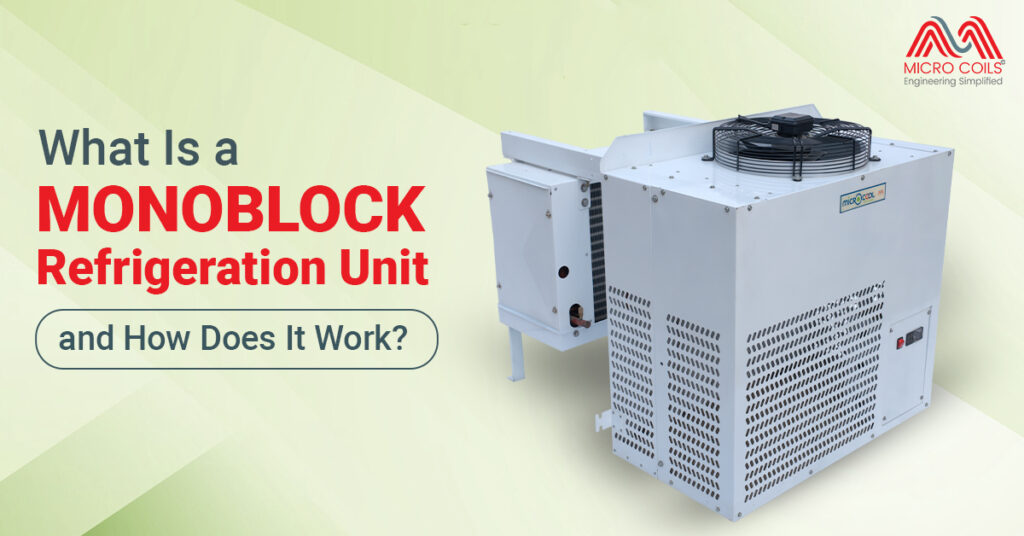
A monoblock refrigeration unit provides a practical solution. It combines the main refrigeration components into a single, compact assembly, making installation easier and reducing the need for complex refrigeration piping between separate units.
These systems are commonly used in walk-in cold rooms, commercial refrigeration facilities, and temperature-controlled storage spaces. Their compact design makes them suitable for applications where space, installation time, and ease of maintenance are important considerations.
But what exactly is a monoblock refrigeration unit? How does it work, and what makes it different from a conventional split refrigeration system?
This guide explains the working principle, key components, applications, benefits, and selection factors associated with monoblock refrigeration systems.
What Is a Monoblock Refrigeration Unit?
A monoblock refrigeration unit is a self-contained cooling system that houses the major refrigeration components within a single assembly. These typically include a compressor, a condenser, an expansion device, an evaporator, and the necessary controls. Its design also incorporates essential heat transfer components, similar to those used in specialised equipment manufactured by pillow plate manufacturers in India.
Unlike a conventional split refrigeration system, which places the condensing unit and evaporator in separate locations connected by refrigerant piping, a monoblock system integrates these components into one packaged unit.
In many cold room applications, the unit is installed through a wall or ceiling panel. One part faces the external environment, where heat is released, while the other extends into the refrigerated space, where cooling takes place.
This arrangement simplifies installation because the refrigeration circuit is assembled and sealed by the manufacturer. Depending on the design, the installer may only need to prepare the mounting opening, secure the unit, provide the electrical connection, and complete the required drainage and commissioning work.
Monoblock refrigeration systems are available in different capacities and configurations. The appropriate model depends on the room dimensions, insulation quality, required temperature, product load, ambient conditions, and frequency of door openings.
What Is the Difference Between a Monoblock and a Split Refrigeration System?
Both systems use the refrigeration cycle to remove heat from an enclosed space. Their main difference lies in how their components are arranged.
Feature | Monoblock refrigeration unit | Split refrigeration system |
Component arrangement | Major components integrated into one assembly | Components installed in separate units |
Installation | Generally simpler and faster | Requires refrigerant piping between units |
Refrigerant circuit | Usually factory-assembled and sealed | Requires field connections between sections |
Space requirements | Requires a suitable mounting location | Offers greater flexibility in component placement |
Maintenance | Major components are accessed through the packaged unit | Components can be accessed at separate locations |
Typical applications | Small and medium-sized cold rooms, depending on capacity | Cold rooms and installations requiring flexible layouts or larger capacities |
Neither design is automatically better for every application. A monoblock is often attractive when simplicity and compact installation are priorities, while a split system may be more suitable when the layout, cooling load, or equipment placement requires greater flexibility.
How Does a Monoblock Refrigeration Unit Work?
A monoblock refrigeration unit works by transferring heat from inside a cold room to the surrounding environment. It uses a closed refrigeration circuit in which refrigerant repeatedly changes pressure and state to absorb and release heat.
The process involves four main stages: compression, condensation, expansion, and evaporation.
1. The Compressor Raises Refrigerant Pressure
The compressor is the component that drives the refrigeration cycle. It receives low-pressure refrigerant vapour from the evaporator and compresses it into a high-pressure, high-temperature vapour.
This increases the refrigerant’s pressure and temperature, allowing it to release heat to the surrounding air during the next stage.
Compressor performance affects the unit’s cooling capacity, energy consumption, and operating reliability. The compressor must be suitable for the refrigerant, required temperature range, and expected operating conditions.
2. The Condenser Releases Heat
The hot, high-pressure refrigerant vapour flows into the condenser. Here, heat transfers from the refrigerant to the surrounding air, causing the refrigerant to condense into a high-pressure liquid.
A fan usually moves air across the condenser surface to improve heat transfer.
The condenser coil, also known as an AC condenser coil in air conditioning applications, plays a key role in this stage by providing the surface through which the refrigerant releases heat. Dust accumulation, restricted airflow, or an excessively high ambient temperature can reduce heat rejection and affect system performance.
For this reason, the condenser must have adequate ventilation and should be cleaned and inspected regularly.
3. The Expansion Device Reduces Refrigerant Pressure
After leaving the condenser, the liquid refrigerant passes through an expansion device, such as a thermostatic expansion valve or capillary arrangement, depending on the system design.
The expansion device reduces the refrigerant pressure and controls the flow entering the evaporator.
As the pressure drops, the refrigerant temperature also decreases. This prepares it to absorb heat from the cold room during the evaporation stage.
Correct refrigerant flow is essential. Too much or too little flow can affect cooling performance and compressor operation.
4. The Evaporator Absorbs Heat from the Cold Room
The low-pressure refrigerant enters the evaporator, where it absorbs heat from the air inside the refrigerated space. As the refrigerant absorbs this heat, it evaporates and changes from a liquid-vapour mixture into vapour.
A fan circulates room air across the evaporator surface, helping distribute the cooled air throughout the cold room.
The evaporator coil is central to this process because it provides the surface for heat absorption. If frost or ice builds up excessively on the coil, airflow and heat transfer can decrease. Monoblock units therefore use suitable defrost arrangements based on their operating temperature and application.
Once the refrigerant leaves the evaporator, it returns to the compressor, and the cycle begins again.
5. The Temperature Controller Regulates Cooling
A thermostat or electronic controller monitors the temperature inside the refrigerated space. When the temperature rises above the set point, the controller signals the refrigeration system to provide cooling.
Once the required temperature is reached, the system cycles or modulates according to its design.
More advanced units may include digital displays, high- and low-pressure protection, temperature alarms, defrost scheduling, and fault indicators.
These controls help maintain stable storage conditions and alert operators to potential problems.
What Are the Main Components of a Monoblock Refrigeration Unit?
Although individual designs vary, most monoblock systems contain several essential components that work together to deliver cooling.
Compressor
The compressor circulates refrigerant through the system and raises its pressure. Its capacity must match the cooling requirements of the refrigerated room.
Condenser
The condenser removes heat from the refrigerant and transfers it to the surrounding environment. Its performance depends on adequate airflow, clean surfaces, and suitable operating conditions. Similar considerations apply to an AC cooling coil, where efficient heat transfer is essential for cooling performance.
Evaporator
The evaporator absorbs heat from the refrigerated space. Its size, fin spacing, airflow, and defrost arrangement affect cooling performance.
Expansion Device
The expansion device controls refrigerant flow and reduces its pressure before it enters the evaporator.
Fans
Condenser and evaporator fans move air across the heat exchange surfaces. Proper airflow supports heat transfer and helps maintain the required room temperature.
Temperature Controller
The controller regulates the cooling cycle and may manage defrost operations, alarms, and other system functions.
Defrost System
Moisture from the room air can freeze on the evaporator surface when it operates below the freezing point of water. Depending on the application, the unit may use electric, hot-gas, or off-cycle defrost.
The correct defrost method depends on the room temperature, humidity, door-opening frequency, and equipment design.
Drainage System
During defrost, accumulated ice melts and produces water. A suitable drainage arrangement removes this water and helps prevent leakage or unwanted ice formation around the unit.
Where Are Monoblock Refrigeration Units Used?
Monoblock refrigeration systems are used in a range of commercial and industrial applications where a self-contained cooling solution is appropriate.
Walk-In Cold Rooms
Restaurants, hotels, supermarkets, and food distributors use walk-in cold rooms to store chilled ingredients, dairy products, meat, vegetables, and other perishable goods.
A monoblock unit can provide a convenient cooling solution for a suitably sized room with appropriate insulation and ventilation.
Commercial Kitchens
Commercial kitchens need reliable refrigeration to preserve ingredients and support food safety. Compact monoblock systems can be used in suitable cold rooms and storage areas.
The cooling capacity must account for the quantity and temperature of products entering the room, kitchen ambient conditions, and the frequency of door openings.
Supermarkets and Retail Stores
Retail businesses use refrigerated storage spaces to manage stock before products move to display cabinets or sales areas.
Monoblock units may suit back-of-house cold rooms where straightforward installation and routine maintenance are priorities.
Food Processing Facilities
Food processing businesses often require controlled-temperature storage for ingredients, intermediate products, and finished goods.
The refrigeration system must be selected according to the product’s storage requirements, hygiene practices, heat load, and applicable food safety standards.
Pharmaceutical and Laboratory Storage
Certain pharmaceutical products and laboratory materials require controlled-temperature environments.
A monoblock unit may be suitable for some storage applications, provided it can meet the required temperature range, stability, monitoring, and alarm requirements. Critical applications may need redundant refrigeration, independent temperature monitoring, and documented validation.
Agricultural Storage
Farmers, produce distributors, and agricultural businesses may use cold rooms to store harvested produce before transportation or processing.
The refrigeration system must match the produce type because different fruits and vegetables have different temperature and humidity requirements.
What Are the Benefits of a Monoblock Refrigeration Unit?
Monoblock refrigeration units offer several advantages for businesses that need reliable cooling without a complex installation.
1. Easier Installation
Because the major refrigeration components are integrated into a factory-assembled unit, installation is generally simpler than installing a system with separate components and extensive field refrigerant piping.
This can reduce installation time and the amount of on-site refrigeration work required.
However, correct electrical connections, mounting, drainage, ventilation, and commissioning remain essential.
2. Compact Design
The integrated configuration reduces the need to install separate refrigeration assemblies at different locations.
This makes monoblock systems useful in facilities where space is limited or where a simple equipment arrangement is preferred.
The installation must still allow sufficient clearance for airflow, servicing, and heat rejection.
3. Reduced Field Refrigerant Piping
Many monoblock units arrive with a factory-assembled refrigerant circuit. This reduces the number of refrigerant connections that must be made during installation.
Fewer field connections can simplify commissioning and reduce installation-related leak risks, although the sealed circuit still requires appropriate inspection and servicing when necessary.
4. Predictable Performance
Factory-assembled equipment is designed around a specified operating range and rated capacity. When the unit is selected and installed correctly, it can deliver predictable cooling performance under suitable conditions.
Actual performance still depends on room insulation, ambient temperature, product loading, maintenance, and operating practices.
5. Simplified Maintenance Access
Many monoblock systems provide access to the main refrigeration components through a single equipment assembly.
This can make routine inspections and servicing more convenient. The ease of maintenance depends on the unit’s mounting position, access clearances, and design.
6. Suitable for Smaller Cold Rooms
Monoblock units are often well suited to small and medium-sized cold rooms, although the actual capacity range varies by manufacturer.
For larger rooms or demanding applications, businesses should compare monoblock options with split systems and other commercial refrigeration configurations.
7. Integrated Controls
Many models include built-in temperature controls and protective functions. These features help operators regulate cooling, manage defrost, and identify certain faults.
The available features vary, so businesses should check the controller specifications before purchasing.
What Factors Should You Consider When Choosing a Monoblock Refrigeration Unit?
Selecting the right unit involves more than matching the equipment to the dimensions of a cold room. The system must be capable of handling the total heat load under actual operating conditions.
1. Cold Room Size and Insulation
Calculate the room’s dimensions and consider the quality and thickness of its insulated panels, floor, ceiling, and doors.
Poor insulation increases heat gain and may require a larger refrigeration capacity.
2. Required Storage Temperature
Determine the target room temperature based on the products being stored.
Chilled storage and frozen storage have different refrigeration requirements. A unit designed for one temperature range may not be suitable for another.
3. Product Load
Consider how much product enters the room, its temperature at entry, and how quickly it needs to reach the storage temperature.
Loading warm products introduces additional heat that the refrigeration system must remove.
4. Ambient Temperature
The temperature surrounding the unit affects condenser performance. A unit installed in a hot kitchen or poorly ventilated area may have less available cooling capacity than it would under standard rating conditions.
Check the manufacturer’s rated ambient range and installation requirements.
5. Door Openings and Air Infiltration
Every time a cold room door opens, warmer air and moisture can enter. Frequent door openings increase the refrigeration load and can contribute to evaporator frosting.
Consider the traffic level, door dimensions, door seals, and whether strip curtains or other suitable measures are needed.
6. Cooling Capacity and Energy Consumption
Compare the unit’s rated cooling capacity at the intended operating conditions, rather than relying only on a general horsepower or kilowatt label.
Also review power consumption, starting current, defrost energy, and expected operating hours to estimate ongoing costs. For air conditioning equipment, factors such as coil specifications, material, dimensions, and cooling capacity can also influence the AC coil price.
7. Installation and Service Requirements
Confirm the required wall or ceiling opening, mounting method, electrical supply, condensate drainage, ventilation clearance, and access for maintenance.
Reliable after-sales support and spare parts availability are also important considerations.
Monoblock Refrigeration Unit vs. Conventional Refrigeration Systems
A monoblock unit is not always the most suitable choice. Understanding the differences between available refrigeration configurations helps businesses select equipment that meets their needs.
Factor | Monoblock system | Conventional split system |
Design | Integrated assembly | Separate indoor and outdoor sections |
Installation | Generally straightforward | Requires interconnecting refrigerant piping |
Equipment placement | Limited by the mounting arrangement | Greater flexibility |
Refrigerant connections | Typically factory-assembled circuit | Field connections are generally required |
Maintenance | Access depends on unit location | Components can be accessed separately |
Application | Suitable for compatible cold room sizes and loads | Suitable for a wide range of layouts and capacities |
When selecting between the two, consider the cooling load, room layout, ambient conditions, installation cost, maintenance access, and future expansion plans.
Common Problems with Monoblock Refrigeration Units
Like any refrigeration system, a monoblock unit requires proper installation and maintenance. Several issues can affect its performance.
Insufficient Cooling
Insufficient cooling may result from a dirty condenser, blocked airflow, incorrect temperature settings, refrigerant problems, excessive product loading, or inadequate refrigeration capacity.
The cause should be identified before replacing components or changing operating settings.
Excessive Frost on the Evaporator
Frost can accumulate because of frequent door openings, humid air entering the room, blocked airflow, or a malfunctioning defrost system.
Regular inspection and correct defrost settings help prevent excessive ice buildup.
High Energy Consumption
A dirty condenser, damaged door seals, poor insulation, incorrect controller settings, or unsuitable equipment sizing can increase energy consumption.
Cleaning heat exchange surfaces and correcting room-related heat gains can improve performance.
Unusual Noise or Vibration
Noise may be caused by loose mounting hardware, fan problems, vibration, or compressor-related issues.
Persistent or unusual noise should be inspected by a qualified refrigeration technician.
Water Leakage
Drainage blockages, incorrect pipe slopes, or problems with the defrost drainage arrangement can cause water to accumulate around the unit.
Inspecting and cleaning the drainage system helps reduce this risk.
How to Maintain a Monoblock Refrigeration Unit?
Routine maintenance helps preserve cooling performance, reduce avoidable energy use, and identify problems early.
- Clean the condenser surface and check that airflow is unobstructed.
- Inspect evaporator fans and check for excessive frost or ice.
- Verify that the temperature controller and sensors operate correctly.
- Check door seals and insulation for damage.
- Clean the condensate drainage system and confirm that water flows away properly.
- Inspect electrical connections and protective devices through a qualified technician.
- Monitor temperature trends, unusual noise, and changes in operating behaviour.
- Schedule professional servicing according to the manufacturer’s recommendations.
Refrigerant circuit repairs, electrical work, and component replacement should be performed by qualified personnel. Refrigerant handling must comply with applicable safety and environmental regulations.
Conclusion
A monoblock refrigeration unit offers a compact and practical way to cool suitable cold rooms and temperature-controlled storage spaces. By integrating the main refrigeration components into a single assembly, it can simplify installation, reduce field piping requirements, and provide convenient access to essential equipment.
Its performance depends on several factors, including cooling capacity, room insulation, product load, ambient temperature, airflow, and maintenance. Choosing a unit that matches the actual application is essential for maintaining the required temperature and controlling operating costs.
For restaurants, supermarkets, food processing facilities, agricultural businesses, and other commercial operators, a well-selected monoblock refrigeration system can support reliable cold storage without unnecessary installation complexity.
A monoblock integrates the major refrigeration components into a single assembly. A split system places the evaporator and condensing equipment in separate locations and connects them through refrigerant piping.
They can operate efficiently when correctly sized, installed, and maintained. Energy consumption depends on the cooling load, ambient temperature, insulation, control settings, compressor efficiency, and heat exchanger condition.
Consider the cold room’s dimensions, insulation, target temperature, product load, ambient conditions, door-opening frequency, cooling capacity, electrical supply, and maintenance requirements. A refrigeration specialist can calculate the required capacity and recommend a suitable model.
Inspection frequency depends on the operating environment, usage, and manufacturer’s recommendations. Condenser cleaning, airflow checks, drainage inspection, and temperature monitoring should form part of routine maintenance, with professional servicing scheduled as required.
Yes, certain models are designed for low-temperature and frozen storage applications. The selected unit must be rated for the required room temperature, load, defrost conditions, and ambient operating range.
A monoblock integrates the major refrigeration components into a single assembly. A split system places the evaporator and condensing equipment in separate locations and connects them through refrigerant piping.

