

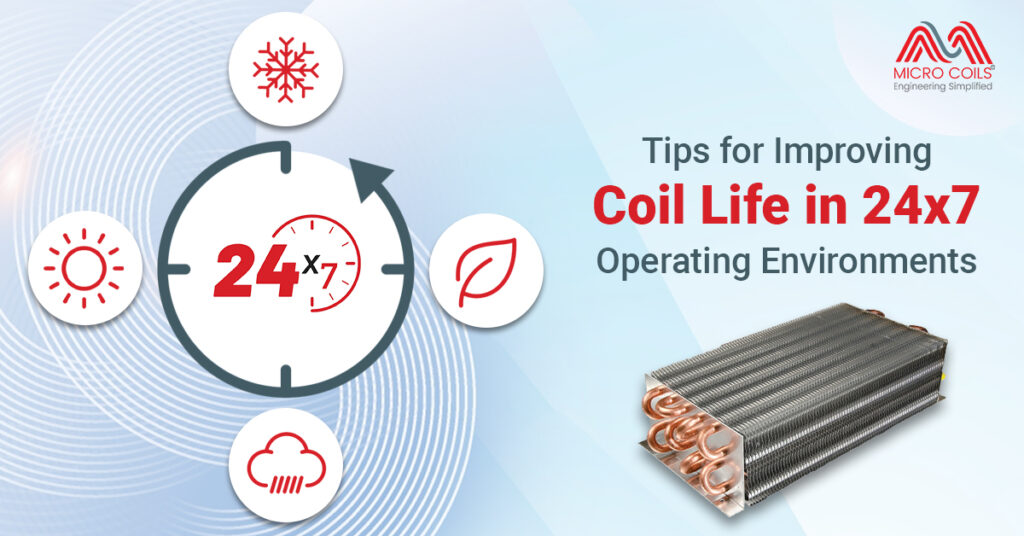
Running cooling systems around the clock presents unique challenges that demand careful attention and strategic planning from facility managers everywhere. Your equipment never rests, never gets a break, and faces relentless operational demands every single day without any reprieve from stress.
Continuous operation puts enormous stress on every component, especially coils that serve as the workhorses of industrial cooling systems worldwide. These critical components face relentless demands that can shorten their lifespan dramatically if you’re not implementing proper care and maintenance protocols.
But here’s the good news: with the right strategies, you can extend coil life significantly even under the most punishing conditions. Even in demanding 24/7 environments, proper care keeps systems running efficiently for years without unexpected failures or costly unplanned breakdowns.
Let’s explore practical tips that make a real difference in protecting your investment and maximizing equipment longevity throughout its service life.
What is the 24/7 Challenge?
Most residential cooling systems enjoy natural breaks that allow components to rest and recover from operational stress throughout the normal day. They cycle on and off throughout the day, giving motors, compressors, and coils time to cool down completely between operation cycles. Nighttime brings cooler temperatures and reduced demand, which means less strain on all system components throughout the evening and overnight hours. Seasonal changes provide months of rest when heating takes over or mild weather eliminates the need for any mechanical conditioning at all.
Industrial and commercial environments tell a dramatically different story that poses unique challenges for equipment designers, operators, and maintenance teams alike. Data centers run constantly to keep servers operating at optimal temperatures, never allowing cooling systems any downtime whatsoever throughout the year. Manufacturing facilities operate multiple shifts, sometimes running production lines continuously for weeks or months without any scheduled breaks for equipment rest. Hospitals never close their doors to patients, requiring uninterrupted climate control to protect vulnerable populations and temperature-sensitive medical equipment and pharmaceuticals. Telecommunications equipment generates heat continuously, demanding reliable cooling every hour of every day regardless of external weather conditions or seasonal variations.
These applications demand non-stop cooling, creating conditions where coils face accelerated wear that shortens their expected service life dramatically compared to residential. Continuous operation means constant thermal stress as metal expands and contracts repeatedly under rapidly fluctuating temperature conditions throughout daily and seasonal operations. Contaminants accumulate without pause, building layer upon layer of debris that restricts airflow and reduces heat transfer efficiency over extended periods. Corrosion progresses steadily, eating away at metal surfaces and weakening structural integrity with each passing day of exposure to moisture and chemicals. Mechanical vibrations never cease, causing fatigue in joints and connections that eventually leads to cracks and complete failures requiring expensive emergency repairs.
Start With the Right Equipment
Coil longevity begins at the specification stage, long before equipment arrives at your facility for installation and commissioning by trained technicians. Choosing appropriate equipment for your application matters enormously and affects performance for years after the initial purchase decision is finalized. Making informed decisions now prevents expensive problems that would otherwise plague you throughout the equipment’s entire operational lifespan in active service.
Material selection deserves careful consideration based on your specific environmental conditions, operating parameters, and budget constraints for capital equipment purchases and installations. Copper coils offer excellent heat transfer characteristics but corrode rapidly in certain environments containing sulfur compounds or aggressive chemical vapors from processes. Aluminum costs significantly less than copper but lacks the durability required in harsh conditions where abrasive particles circulate continuously through air handlers. Stainless steel provides superior corrosion resistance for challenging applications but carries a premium price that requires careful justification to management and stakeholders. Some facilities benefit tremendously from specialty coatings that protect base metals from environmental damage while maintaining excellent heat transfer properties for efficiency.
Working with reputable suppliers ensures quality construction that meets or exceeds industry standards for continuous duty applications in demanding industrial environments. An experienced heat exchanger manufacturer in India can provide coils engineered specifically for continuous duty applications requiring maximum reliability under stress. They understand the unique demands of 24/7 operation and design their products accordingly to withstand punishing conditions that would destroy inferior equipment. Fin spacing affects both performance and maintenance requirements in ways that become apparent only after months of continuous operation under real conditions. Tighter fin spacing maximizes heat transfer per unit volume but traps debris more easily, requiring more frequent and aggressive cleaning procedures. Oversizing coils reduces operational stress dramatically by allowing equipment to operate at partial capacity under most normal operating conditions encountered in practice.
Water Quality Management: The Foundation of Coil Health
Poor water quality destroys coils faster than anything else, causing corrosion, scaling, and biological growth that severely degrades performance over time. Minerals, contaminants, and biological growth attack metal surfaces relentlessly, eating away material and creating rough surfaces that trap even more debris. In 24/7 operations, these problems intensify dramatically because contaminants never stop accumulating and damaging effects compound over time without any interruption.
Critical Water Treatment Strategies
- Test water regularly to identify problems early before they cause extensive damage throughout your system: Monthly analysis identifies problems before they cause significant damage requiring expensive repairs or complete replacement of failed components throughout your cooling system
- Control pH levels carefully within recommended ranges for your specific metals and system design: Maintain proper pH ranges to minimize corrosion—typically between 6.5 and 8.5 depending on specific metal alloys present in your particular system
- Manage mineral content through appropriate treatment methods like softening or chemical inhibitors for scale prevention: Use softeners or scale inhibitors to prevent calcium and magnesium deposits from forming hard layers that insulate surfaces and block passages
- Prevent biological growth that accelerates corrosion and blocks water passages throughout the entire cooling system infrastructure: Implement biocide programs to eliminate algae, bacteria, and fungi that form slimy biofilms protecting colonies from disinfectants and facilitating localized corrosion
- Monitor conductivity as an indicator of dissolved solids that accelerate electrochemical corrosion processes in metallic system components: High conductivity accelerates corrosion in metallic components by facilitating electrochemical reactions that dissolve metal into solution as dissolved ionic compounds
Don’t treat water management as optional maintenance that you can postpone when budgets get tight or schedules become demanding with competing priorities. Facilities that neglect water treatment replace coils three to five times more frequently than those with proper programs, making treatment incredibly cost-effective.
Establish Rigorous Cleaning Protocols
Continuous operation means continuous contamination as airborne particles deposit on coil surfaces every single moment the system operates under any load. Dust, pollen, industrial emissions, and biological matter accumulate on coil surfaces constantly, building insulating layers that severely impair heat transfer effectiveness. This buildup insulates coils from the air they’re supposed to cool, reducing heat transfer efficiency and forcing systems to work harder. The AC cooling coil surfaces must remain clean to transfer heat efficiently and prevent localized hot spots that accelerate component failures.
Many 24/7 facilities inspect coils monthly and perform thorough cleaning quarterly to maintain optimal performance throughout the year without any degradation. High-contamination environments near highways, industrial zones, or agricultural areas require even more frequent attention to prevent buildup from overwhelming surfaces completely. Use appropriate cleaning methods for your specific coil type, considering fin material, spacing, and coating to avoid causing more damage than benefit. High-pressure washing can damage delicate fins by bending them flat against each other, effectively blocking airflow through entire sections permanently. Chemical cleaners might corrode certain metals or attack protective coatings, actually accelerating deterioration rather than preventing it as intended by operators. Consider professional cleaning services for critical applications where downtime costs exceed service fees and proper technique demands specialized knowledge and appropriate equipment.
Proper and regular maintenance directly improves ac cooling coil life by preserving heat transfer efficiency and preventing premature system stress.
Airflow Optimization: Keep It Moving
Adequate airflow is absolutely critical for coil health because stagnant air creates temperature gradients that stress materials and reduce efficiency dramatically. Restricted airflow creates localized cold spots where moisture freezes, building ice layers that block passages and prevent proper heat transfer throughout coils. It increases pressure drop across coils significantly, stressing fans and motors that must work harder to move required volumes against resistance.
Essential Airflow Maintenance Practices
- Maintain proper clearances around coils according to manufacturer specifications for optimal air circulation and heat transfer performance: Equipment placement affects performance significantly by influencing air distribution patterns, creating dead zones, and generating turbulence that wastes fan energy unnecessarily
- Inspect and replace air filters consistently according to predetermined schedules rather than waiting for obvious performance failures: Clogged filters choke your system by dramatically restricting airflow, sometimes reducing volumes by fifty percent or more compared to clean conditions
- Balance your air distribution system properly through careful adjustment of dampers and diffusers across all operational zones: Uneven airflow creates hot spots where some coils work overtime while others barely function, leading to premature failure of overloaded sections
- Monitor fan performance continuously using current sensors, vibration monitors, or listening for unusual operational sounds indicating problems: Belt-driven fans need regular tension adjustment because belts stretch over time, slipping and losing efficiency while generating heat that deteriorates materials
Corrosion Prevention: Fight the Invisible Enemy
Corrosion silently destroys coils from within, weakening metal structures, creating leaks, and reducing heat transfer efficiency long before visible damage appears. It weakens metal by removing material atom by atom through electrochemical reactions that transform solid metal into dissolved ions or powdery oxides. In 24/7 operations, corrosion never sleeps, progressing continuously whenever moisture contacts metal surfaces in the presence of oxygen or other oxidizers. Working with quality suppliers like pillow plate manufacturers who understand corrosion mechanisms helps you select materials and designs that resist deterioration effectively.
Control humidity around coils whenever possible through dehumidification or ventilation to keep moisture levels below the threshold for accelerated corrosion reactions. High humidity accelerates corrosion dramatically by maintaining continuous moisture films on surfaces that facilitate electrochemical reactions dissolving protective oxide layers on metals. Apply protective coatings to vulnerable coils operating in harsh environments containing chemical vapors, salt spray, or other aggressive contaminants that attack bare metals. Epoxy, polyurethane, and specialized metal coatings create barriers against corrosive elements by sealing surfaces from direct contact with aggressive environments around equipment. Address galvanic corrosion in mixed-metal systems where different materials contact each other, creating electrochemical cells that accelerate material loss from less noble metals.
Monitor Performance Continuously
What you measure, you can manage effectively by detecting trends and responding before minor problems escalate into expensive failures requiring emergency repairs. Continuous monitoring detects problems early when they’re cheapest to fix, often requiring only minor adjustments rather than major component replacement or overhauls. Track inlet and outlet temperatures across coils to establish baseline performance and identify degradation from fouling, scaling, refrigerant loss, or airflow problems. Monitor pressure drop across coils continuously or at regular intervals, comparing readings to design values and historical trends to identify developing problems. Use thermal imaging regularly to visualize temperature distribution across coil faces, identifying problems invisible to visual inspection but critically important for reliability.
Preventive Maintenance: Your Best Investment
Reactive maintenance—fixing things only after they break catastrophically—costs far more than preventive approaches that address problems before failures occur during operations. In 24/7 operations, unexpected failures cause expensive downtime and emergency service calls with premium pricing that dwarfs the cost of routine maintenance. Develop comprehensive maintenance schedules that address every aspect of coil health systematically, ensuring no critical tasks get overlooked or postponed indefinitely. Train staff thoroughly on proper maintenance procedures so technicians understand why tasks matter and how to perform them correctly without causing damage.
Final Thoughts
Improving coil life in demanding 24/7 environments isn’t mysterious science requiring advanced degrees or specialized expertise unavailable to typical maintenance departments today. Success comes from consistent application of proven practices implemented systematically rather than sporadically when problems become impossible to ignore any longer. Remember that coil longevity directly impacts your bottom line through multiple mechanisms including capital costs, maintenance expenses, energy consumption, and operational reliability. Your cooling system works around the clock serving critical needs, and it deserves attention proportional to its importance for your facility operations.
Intentional shutdowns in 24/7 facilities often cause more harm than benefit through thermal shock and condensation during restart cycles. Instead, focus on proper maintenance during operation including real-time monitoring and online cleaning methods. If shutdowns are unavoidable, implement gradual temperature ramping protocols and thorough drying procedures before restarting to minimize stress on components.
Oversized coils operating at low loads may cause inadequate dehumidification, leading to humidity problems and potential microbial growth in conditioned spaces. However, proper system design with variable speed controls and staged capacity can optimize both efficiency and longevity. The key is balancing coil size with appropriate control strategies that maintain adequate surface temperatures for moisture removal.
Evaluate coating integrity through visual inspection for chalking, flaking, or extensive bare metal exposure exceeding twenty percent of total surface area. Consider recoating if the base metal remains structurally sound without significant pitting or thinning. However, if corrosion has penetrated deeply or caused leaks, complete replacement becomes more economical than attempting repairs.
Spring and fall transitions create challenging conditions with fluctuating outdoor temperatures and humidity levels that stress coils through frequent load changes. Pollen counts peak in spring, accelerating surface contamination rates. Schedule intensive maintenance before summer’s peak demand and winter’s potential freezing conditions to ensure systems handle extreme weather without failures.
Implement temporary measures including increased cleaning frequency, enhanced water treatment dosing, reduced operating loads through supplemental portable units, and closer monitoring intervals. Apply emergency coating patches to localized corrosion spots and install temporary filtration upgrades to reduce contamination rates. These stopgap solutions buy time but require careful documentation and eventual proper repairs.

