

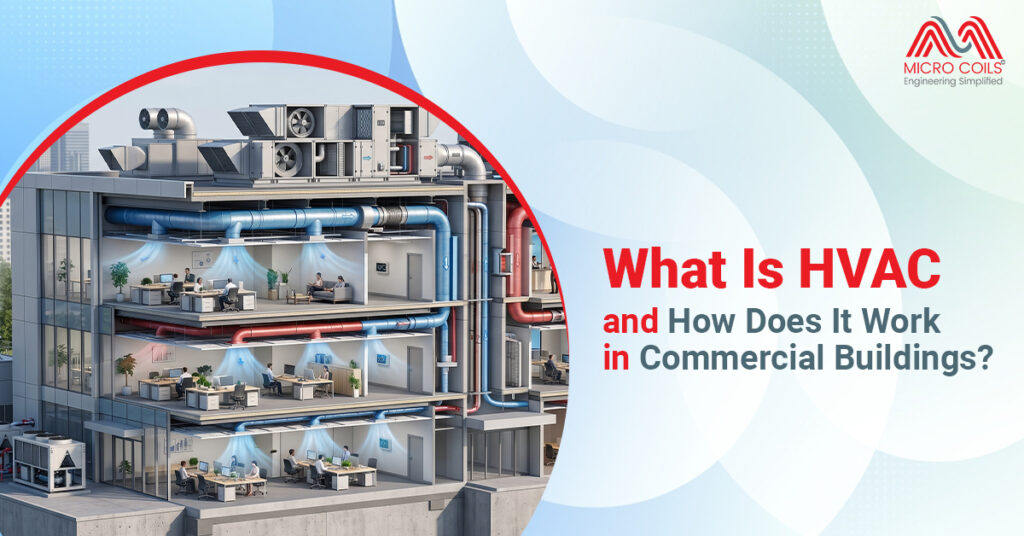
HVAC stands for Heating, Ventilation, and Air Conditioning, but in commercial buildings, it represents far more than temperature control. It supports occupant comfort, regulates indoor air quality, and ensures that large, complex spaces function efficiently across seasons. Offices, hospitals, malls, and manufacturing units all rely on HVAC systems tailored to their operational demands. The scale, integration, and precision required in these environments make HVAC a core infrastructure rather than a background utility.
Commercial HVAC systems differ significantly from residential setups in both design and intent. They must handle larger spaces, fluctuating occupancy levels, and varying thermal loads throughout the day. A system that works for a small home would fail under the dynamic requirements of a commercial facility. Engineers, therefore, design these systems with modularity, redundancy, and zoning capabilities. This ensures consistent performance even under peak demand or partial system failures.
The importance of HVAC extends beyond comfort into productivity and compliance. Employees perform better in controlled environments, while certain industries must meet strict air quality and temperature standards. Poor ventilation or inconsistent cooling can affect equipment, inventory, and even regulatory approvals. Businesses, therefore, treat HVAC as a strategic investment rather than a cost center. The right system can directly influence operational efficiency and long-term savings.
Core Components of a Commercial HVAC System
A commercial HVAC system consists of several interconnected components working in coordination. Each element plays a specific role in maintaining temperature, airflow, and air quality across the building. These include compressors, condensers, air handlers, ducts, and control systems. The complexity increases as systems scale to serve multiple zones and floors.
At the important junction of the cooling process lies the evaporator coil, where heat exchange takes place. This component absorbs heat from indoor air, allowing cooler air to circulate back into the space. It works in tandem with refrigerant cycles to maintain consistent indoor temperatures. Without this critical element, effective cooling would not be possible. The efficiency of this coil directly impacts energy consumption and performance.
Air handling units distribute conditioned air throughout the building using ductwork and vents. These units regulate airflow, filter contaminants, and maintain pressure balance within different zones. In large buildings, multiple air handling units operate simultaneously to serve distinct areas. This zoning capability allows businesses to optimize energy use based on occupancy and need. It also enhances comfort by preventing uneven temperature distribution.
Control systems tie all components together, enabling centralized monitoring and automation. Modern HVAC systems often integrate with building management systems for real-time adjustments. Sensors track temperature, humidity, and air quality, allowing the system to respond dynamically. This level of control reduces manual intervention while improving efficiency. Over time, it also helps identify maintenance needs before they escalate into costly issues.
How HVAC Systems Work in Commercial Buildings?
The operation of a commercial HVAC system begins with air intake and filtration. Fresh air is drawn into the system, where filters remove dust, allergens, and pollutants. This ensures that indoor environments remain healthy and compliant with air quality standards. Clean air is then conditioned based on the desired temperature and humidity levels. The process must remain continuous to maintain consistency across large spaces.
Cooling involves a refrigerant cycle that transfers heat from inside the building to the outside. The refrigerant absorbs heat as it passes through the AC cooling coil, transforming from liquid to gas. This heat is then expelled through the condenser unit located outside the building. As the refrigerant cools and returns to liquid form, the cycle repeats. The system operates continuously to maintain the set temperature.
Heating, on the other hand, may use boilers, heat pumps, or electric heaters depending on the building design. Warm air is generated and distributed through the same duct network used for cooling. In colder climates or specific industrial setups, heating becomes equally critical. The system must switch seamlessly between heating and cooling modes as conditions change. This adaptability ensures year-round comfort and functionality.
Ventilation plays a crucial role in maintaining indoor air quality. It involves the exchange of indoor air with fresh outdoor air to prevent stagnation and contamination. Proper ventilation reduces carbon dioxide levels and removes odors, smoke, and airborne particles. In commercial spaces with high occupancy, this becomes especially important. It also supports compliance with health and safety regulations.
Types of Commercial HVAC Systems
Commercial buildings use different types of HVAC systems depending on their size, purpose, and design.
- Packaged systems are common in smaller commercial spaces, where all components are housed in a single unit. These systems are relatively easy to install and maintain. They are often placed on rooftops to save indoor space. Despite their simplicity, they can handle moderate cooling and heating demands effectively.
- Variable Refrigerant Flow systems offer greater flexibility and efficiency for larger buildings. They allow precise control of temperature in different zones by adjusting refrigerant flow. This makes them ideal for offices, hotels, and mixed-use developments. Energy consumption is optimized because only occupied areas receive conditioning. The system adapts quickly to changing load requirements.
- Chilled water systems are widely used in large commercial complexes and industrial facilities. They use water as a cooling medium, which is circulated through pipes and heat exchangers. These systems are highly efficient for large-scale operations. They also allow centralized control and easier maintenance. However, they require significant upfront investment and space.
- Hybrid systems combine elements of different HVAC technologies to achieve optimal performance. They may integrate renewable energy sources, advanced controls, or energy recovery systems. This approach allows businesses to balance cost, efficiency, and sustainability. As environmental concerns grow, hybrid systems are gaining popularity. They represent a forward-looking approach to building management.
Detailed Breakdown of HVAC Workflow
- Air is drawn into the system through intake vents, where filters remove dust and contaminants before conditioning begins.
- The refrigerant cycle starts as heat from indoor air is absorbed through specialized coils, initiating the cooling process.
- Conditioned air is pushed through ductwork and distributed evenly across different zones within the building.
- Sensors continuously monitor environmental conditions, feeding data back to the control system for real-time adjustments.
- Excess heat is expelled through condenser units, ensuring the cycle remains efficient and uninterrupted.
- Ventilation systems introduce fresh air while removing stale air, maintaining a balanced indoor environment.
- Heating components activate when temperatures drop, using the same distribution network for efficiency.
- The system operates in cycles, adjusting output based on demand, occupancy, and external weather conditions.
Role of Key Cooling Components
The AC evaporator coil plays a critical role in absorbing heat from indoor air. It works closely with refrigerants to enable the phase change necessary for cooling. This process forms the foundation of modern air conditioning systems. Its performance directly affects cooling speed and efficiency. Regular maintenance ensures it remains free of dust and corrosion.
Condensers complement the role of evaporator coils by releasing absorbed heat خارج the building. Together, these components form a closed-loop system that continuously transfers heat. Compressors drive the refrigerant through this loop, maintaining pressure and flow. Each component must function optimally for the system to perform efficiently. Even minor inefficiencies can lead to increased energy consumption.
Ductwork ensures that conditioned air reaches every part of the building. Poorly designed ducts can lead to energy loss and uneven cooling. Insulation and proper sealing are essential for maintaining efficiency. In large buildings, duct design becomes a complex engineering task. It must account for airflow dynamics, pressure, and space constraints.
Benefits of HVAC in Commercial Buildings
A well-designed HVAC system enhances comfort, which directly impacts employee productivity and customer satisfaction. Consistent temperatures create a stable working environment. This is especially important in sectors like healthcare, hospitality, and retail. Comfort influences how people interact with a space. It also affects how long they choose to stay.
Energy efficiency is another major advantage of modern HVAC systems. Advanced controls and smart technologies reduce unnecessary energy consumption. This leads to lower operational costs over time. Businesses can also meet sustainability goals more effectively. Reduced energy use contributes to a smaller carbon footprint.
Improved air quality supports health and well-being within commercial spaces. Proper filtration and ventilation remove pollutants and allergens. This reduces the risk of respiratory issues and improves overall comfort. In workplaces, better air quality can reduce absenteeism. It also creates a more pleasant environment for employees and visitors.
Maintenance and Operational Considerations
Regular maintenance is essential to keep HVAC systems running efficiently. Filters, coils, and ducts must be cleaned and inspected periodically. Neglecting maintenance can lead to reduced performance and higher energy costs. It can also shorten the lifespan of the system. Preventive maintenance is always more cost-effective than reactive repairs.
System upgrades and retrofits help businesses stay aligned with evolving technologies. Older systems may lack the efficiency and control of modern solutions. Upgrading components can significantly improve performance. It also allows integration with smart building systems. This enhances monitoring and decision-making capabilities.
Operational strategies such as load management and zoning can further optimize performance. By conditioning only occupied areas, businesses can reduce energy waste. Scheduling systems to align with working hours also improve efficiency. These strategies require careful planning and monitoring. When implemented correctly, they deliver measurable savings.
Conclusion
HVAC systems are integral to the functioning of commercial buildings, supporting comfort, efficiency, and compliance. They involve complex interactions between multiple components, each playing a vital role in maintaining indoor environments. Understanding how these systems work helps businesses make informed decisions about design, maintenance, and upgrades. It also highlights the importance of investing in reliable and efficient solutions.
As commercial spaces continue to evolve, HVAC systems will play an even greater role in shaping sustainable and productive environments. Advances in technology will drive smarter, more adaptive systems. Businesses that prioritize HVAC optimization will gain a competitive edge. The right system not only enhances comfort but also supports long-term operational success.
Commercial HVAC systems play a central role in meeting energy codes and green building standards. Advanced monitoring tools track consumption patterns, enabling audits and reporting. This ensures organizations remain compliant while also reducing environmental impact and long-term operational risks.
System selection depends on building size, occupancy patterns, climate conditions, and industry-specific requirements. Architects and engineers also consider installation space, budget constraints, and future scalability. A detailed load calculation is essential before finalizing any system. Choosing the right configuration ensures optimal performance without overspending or underestimating demand.
Modern HVAC systems integrate with building automation platforms to enable centralized control. This allows facility managers to adjust settings remotely and respond to real-time data. Integration improves decision-making by providing insights into usage trends. It also enhances occupant experience through automated adjustments tailored to changing environmental conditions.
Oversized systems cycle on and off frequently, leading to energy waste and uneven temperature control. Undersized systems struggle to meet demand, causing discomfort and strain on components. Both scenarios reduce efficiency and increase maintenance costs. Accurate system sizing is critical to ensure reliability, performance consistency, and long-term cost control.
HVAC systems support critical operations by maintaining stable conditions for equipment and personnel. In industries like data centers or healthcare, even minor fluctuations can disrupt processes. Backup systems and redundancy planning reduce downtime risks. Reliable HVAC infrastructure ensures that essential operations continue smoothly during unexpected disruptions or peak demand periods.

