
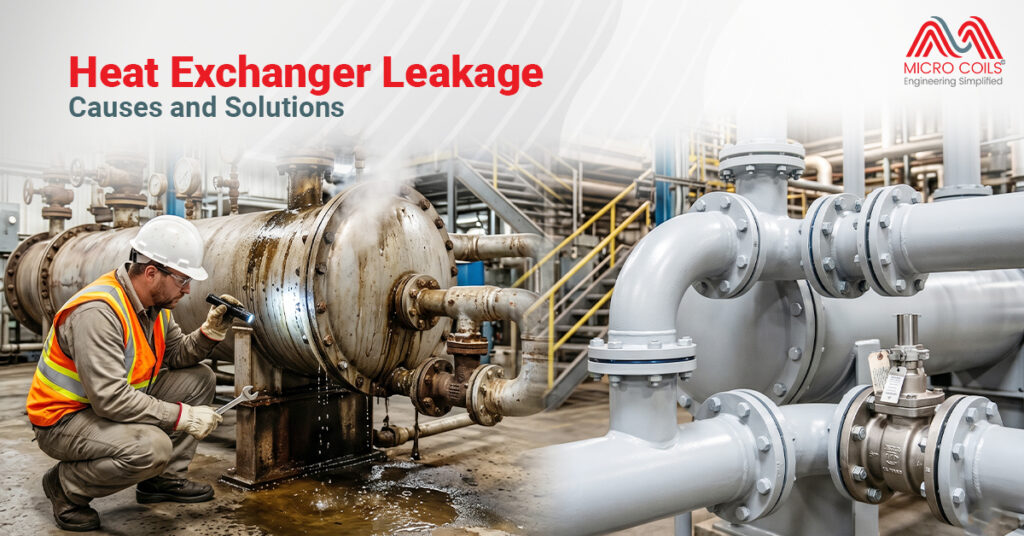
Heat exchanger leakage rarely begins as a visible failure that demands immediate attention, because in most industrial environments, it develops gradually within tubes, gaskets, or welded joints while systems continue to operate under seemingly stable conditions. Over time, this hidden deterioration starts to influence thermal performance, often appearing first as subtle inefficiencies that are easy to overlook but costly to ignore. As energy consumption rises and output consistency declines, the issue quietly moves from a technical concern to a business challenge that directly impacts productivity, compliance, and margins. What appears to be a minor deviation in performance is often an early signal of a deeper structural issue that requires strategic intervention.
The challenge becomes more complex when leakage begins to affect not just efficiency but also process integrity, especially in industries where fluid separation is critical to quality, safety, and regulatory compliance. Even a small breach can introduce contamination, disrupt pressure balance, and create uncertainty in system behavior, making it difficult for operations teams to maintain predictable output. This uncertainty often leads to reactive maintenance cycles, unplanned downtime, and increased operational costs that strain both resources and timelines. For B2B organizations operating at scale, these disruptions are not isolated events but recurring risks that can impact long-term performance.
However, leakage does not have to escalate into a costly disruption when approached with clarity and intent, because understanding the underlying causes and recognizing early warning signs allows organizations to act before damage becomes extensive. With a structured strategy that combines timely inspection, informed decision-making, and targeted solutions, businesses can move from reactive fixes to proactive control. This shift is not just operational but strategic, as it enables better asset utilization, improved efficiency, and reduced lifecycle costs. In competitive industrial environments, this level of control becomes a measurable advantage.
Understanding Heat Exchanger Leakage in Industrial Contexts
Heat exchanger leakage refers to the unintended escape or mixing of fluids between channels that are designed to remain completely separate, and this distinction is critical in industries where even minimal contamination can compromise product quality or process outcomes. Leakage can occur internally, where fluids cross barriers within the exchanger, or externally, where fluid escapes into the surrounding environment, and each scenario introduces different operational and compliance risks. Internal leakage often remains undetected for longer durations because it does not produce visible signs, yet it directly impacts process efficiency and output consistency. External leakage, while easier to identify, can still escalate rapidly if not addressed with urgency and precision.
In industrial systems, leakage rarely stems from a single failure point, because it typically evolves through a combination of material degradation, operational stress, and maintenance gaps that accumulate over time. These factors interact in complex ways, gradually weakening system components and increasing the likelihood of failure under normal operating conditions. As systems continue to operate under these stresses, the probability of leakage rises, often without triggering immediate alarms. This makes it essential for businesses to adopt a broader perspective rather than focusing only on visible faults.
The operational impact of leakage extends beyond equipment performance, influencing production timelines, energy consumption, and overall system reliability in ways that are not always immediately measurable. Many organizations experience delayed consequences, where the financial and operational impact becomes evident only after efficiency has significantly declined. This delay complicates decision-making, particularly in high-throughput environments where even small inefficiencies scale quickly. A deeper understanding of leakage dynamics enables more accurate forecasting and risk management.
Ultimately, leakage should be viewed as a system-level issue that requires coordination across engineering, operations, and maintenance teams, rather than being treated as an isolated mechanical fault. When addressed holistically, it becomes easier to identify root causes, implement effective solutions, and prevent recurrence. This approach not only improves system reliability but also supports broader business objectives such as cost optimization and operational continuity. Consistency in strategy leads to consistency in performance.
Common Causes of Heat Exchanger Leakage
Heat exchanger leakage is often the result of multiple contributing factors that develop over time rather than a single identifiable issue, which is why root cause analysis becomes critical before implementing any corrective action. Corrosion remains one of the most common causes, particularly in environments where fluids contain aggressive chemicals that gradually weaken metal surfaces and create pathways for leakage. Thermal stress also plays a significant role, as repeated cycles of heating and cooling cause expansion and contraction that eventually lead to material fatigue and structural cracks. In addition to these, fouling and scaling introduce internal pressure variations that accelerate wear and increase the likelihood of failure.
Installation-related issues can also contribute to leakage, especially when alignment, sealing, or assembly processes are not executed with precision during initial setup. Even minor deviations during installation can create weak points that worsen under operational stress, eventually leading to leakage. Material selection is another critical factor, as using components that are not suited to the operating environment can significantly reduce the lifespan of the heat exchanger. Over time, these combined factors create conditions where leakage becomes unavoidable without intervention.
Key Causes Explained:
- Corrosion: Chemical reactions degrade internal surfaces, particularly in high-moisture or chemically active environments, leading to gradual material loss. In copper-based heat exchangers, formicary corrosion can also occur when organic acids attack copper surfaces, creating tiny tunnel-like corrosion paths that may eventually lead to pinhole leaks and reduced equipment life.
- Thermal Stress: Continuous expansion and contraction weaken joints and tubes, increasing the risk of cracks over extended use.
- Fouling and Scaling: Deposits restrict flow and increase internal pressure, which accelerates wear and damages structural integrity.
- Improper Installation: Misalignment and poor sealing create initial vulnerabilities that worsen under operating conditions.
- Material Fatigue: Prolonged exposure to stress reduces strength, eventually leading to failure points within the system.
Each of these causes develops at a different rate depending on operating conditions, which makes regular monitoring essential for early identification. Businesses that invest in understanding these factors are better positioned to prevent leakage before it disrupts operations. A proactive approach significantly reduces long-term risks. Prevention always proves more cost-effective than correction.
Impact of Heat Exchanger Leakage on Business Performance
Heat exchanger leakage directly affects thermal efficiency, but its broader impact extends into operational and financial performance, making it a critical concern for B2B organizations that depend on consistent output. When leakage occurs, heat transfer becomes inefficient, leading to higher energy consumption and increased operational costs that affect overall profitability. This inefficiency often compounds over time, especially in large-scale operations where even minor losses are amplified across systems. As a result, businesses may experience reduced output without immediately identifying the root cause.
Operational stability is also compromised, as leakage introduces fluctuations in temperature, pressure, and flow that make it difficult to maintain consistent process conditions. These fluctuations can affect downstream processes, leading to variations in product quality and increased rejection rates. In industries with strict quality standards, this can have serious implications for compliance and customer satisfaction. Maintaining stability becomes increasingly challenging as leakage progresses.
From a safety perspective, leakage can pose significant risks, particularly when hazardous or high-temperature fluids are involved, as even minor breaches can lead to dangerous exposure or equipment damage. Contamination between fluids can also create regulatory challenges, especially in sectors such as food processing and pharmaceuticals where purity is essential. These risks extend beyond equipment performance and into workplace safety and compliance. Addressing leakage early helps mitigate these concerns.
Financially, the cost of leakage extends beyond repair expenses, as it includes energy losses, downtime, reduced productivity, and potential compliance penalties that can significantly impact business outcomes. Organizations that delay addressing leakage often face higher cumulative costs over time. Early detection and resolution provide a clear financial advantage. Strategic maintenance becomes a cost-saving measure rather than an expense.
Detecting Heat Exchager Leakage Before It Escalates
Early detection of heat exchanger leakage is essential for minimizing impact, and it relies on a combination of performance monitoring, inspection techniques, and data analysis to identify deviations from normal operation. Subtle changes in temperature gradients, pressure levels, or fluid composition often serve as early indicators that something is not functioning as expected. These changes may seem minor initially, but they provide valuable insights into underlying issues. Consistent monitoring helps capture these signals before they escalate.
Visual inspection remains a practical starting point, particularly for identifying external leakage through signs such as moisture accumulation, corrosion marks, or residue around joints and connections. While basic, this method can quickly highlight visible issues that require further investigation. However, relying solely on visual checks may not be sufficient for complex systems. More advanced techniques are often necessary.
Technologies such as ultrasonic testing, pressure testing, and dye penetration analysis enable more precise identification of internal leaks, allowing maintenance teams to pinpoint problem areas with accuracy. These methods reduce guesswork and improve the efficiency of repair processes. They are particularly valuable in large-scale industrial setups where downtime must be minimized. Precision in detection leads to faster resolution.
Data-driven monitoring adds another layer of reliability, as tracking performance metrics over time helps identify patterns and anomalies that may indicate early-stage leakage. This approach supports predictive maintenance strategies, allowing businesses to act before failures occur. Over time, it improves decision-making and resource allocation. Consistency in data analysis enhances system reliability.
Solutions to Prevent and Address Heat Exchanger Leakage
Effective leakage management requires a combination of immediate corrective actions and long-term preventive strategies that address both symptoms and root causes. Short-term solutions may include sealing leaks, replacing damaged components, or tightening connections to restore system functionality. While these actions provide quick relief, they must be followed by deeper analysis to prevent recurrence. A temporary fix should never replace a permanent solution.
Material selection plays a critical role in long-term prevention, as choosing corrosion-resistant alloys and durable components significantly reduces the likelihood of leakage in demanding environments. This is particularly important in industries where exposure to chemicals or extreme temperatures is common. Investing in better materials upfront often results in lower maintenance costs over time.
Design optimization also contributes to leakage prevention, as improved flow distribution, enhanced sealing mechanisms, and stress-resistant structures reduce the likelihood of failure under operational conditions. Modern heat exchanger designs focus on minimizing weak points and improving structural integrity. These improvements extend equipment lifespan and enhance performance.
Regular maintenance remains one of the most effective strategies, as scheduled inspections, cleaning, and component replacement help address issues before they develop into major problems. Preventive maintenance ensures that systems remain stable and efficient over time. It also reduces the risk of unexpected downtime.
Choosing the Right Partner for Long-Term Reliability
Selecting the right partner is as important as selecting the right equipment, because expertise in design, material selection, and application-specific customization directly influences the performance and durability of heat exchangers. Working with an experienced heat exchanger manufacturer ensures that systems are designed with both operational efficiency and long-term reliability in mind. This expertise helps reduce the likelihood of leakage and improves overall system performance. Strong partnerships lead to better outcomes.
For businesses operating in diverse and demanding environments, collaborating with a trusted heat exchanger manufacturer in India provides access to localized expertise, cost-effective solutions, and designs tailored to regional conditions. This becomes particularly valuable when dealing with industry-specific requirements and environmental challenges. Local understanding enhances customization and support. It also improves responsiveness.
Customization plays a key role in reducing leakage risks, as tailored designs ensure compatibility with specific operating conditions rather than relying on generic solutions that may not perform optimally. This approach improves efficiency and reduces stress on system components. It also extends equipment lifespan. Precision in design leads to consistency in performance.
Ongoing support from the manufacturer further strengthens system reliability, as access to maintenance guidance, technical expertise, and performance optimization services ensures that issues are addressed proactively. This continuous engagement helps businesses maintain efficiency over time. It also builds confidence in system performance. Reliable support adds long-term value.
The Future of Leak-Resistant Systems
The evolution of industrial cooling solutions is increasingly focused on durability, efficiency, and intelligent monitoring, as businesses seek to minimize downtime and maximize performance in competitive environments. Modern heat exchangers are being designed with advanced materials and integrated sensors that enable real-time performance tracking. These innovations allow faster identification of potential issues before they become critical. Technology is reshaping maintenance strategies.
Material advancements are playing a significant role, as new alloys and coatings offer improved resistance to corrosion, thermal stress, and wear, which directly reduces the likelihood of leakage. These materials extend equipment lifespan while reducing maintenance requirements.
Predictive maintenance is becoming more accessible through data analytics and automation, enabling businesses to identify patterns and trends that indicate early-stage issues. This approach shifts maintenance from reactive to proactive, reducing downtime and improving efficiency.
Sustainability is also influencing design priorities, as energy-efficient systems reduce waste and align with environmental goals while maintaining high performance standards. This balance between efficiency and responsibility is becoming essential for modern industries. Future-ready systems focus on both performance and sustainability.
Conclusion
Heat exchanger leakage is not just a technical issue but a business challenge that affects efficiency, reliability, and operational costs in ways that can significantly impact overall performance. Addressing it requires a clear understanding of causes, early detection strategies, and a commitment to proactive maintenance. When managed effectively, leakage becomes a controllable factor rather than an unpredictable risk. This shift improves both operational stability and financial outcomes.
Businesses that invest in better design, high-quality materials, and expert partnerships are better equipped to prevent leakage and maintain consistent performance over time. These investments reduce long-term costs and improve system reliability. They also support scalability and growth. Strong foundations lead to sustained success.
A proactive approach transforms leakage management from a reactive burden into a strategic advantage that supports efficiency, safety, and long-term performance. Organizations that adopt this mindset gain greater control over their operations. They also improve resilience. Preparedness drives confidence.
Ultimately, consistent monitoring, informed decision-making, and reliable partnerships form the foundation of effective leakage management in modern industrial systems. When these elements work together, businesses can achieve both operational excellence and cost efficiency. This balance defines long-term success. Stability becomes a competitive edge.
Early signs include unusual temperature variations, pressure drops, fluid contamination, and increased energy consumption, all of which indicate potential internal or external leakage that requires immediate inspection.
Yes, leakage can cause cross-contamination between fluids, which directly affects product purity and quality, especially in industries like food processing, pharmaceuticals, and chemicals where strict standards must be maintained.
Not always, as minor leaks can be repaired through sealing or part replacement, but severe structural damage or repeated failures may require complete replacement to ensure reliability.
Regular maintenance helps identify wear, corrosion, and fouling early, allowing timely corrective actions that prevent small issues from developing into major leaks or system failures.
Modern heat exchangers use advanced materials, improved designs, and monitoring technologies, which significantly reduce leakage risks while enhancing efficiency and durability in demanding industrial applications.

