

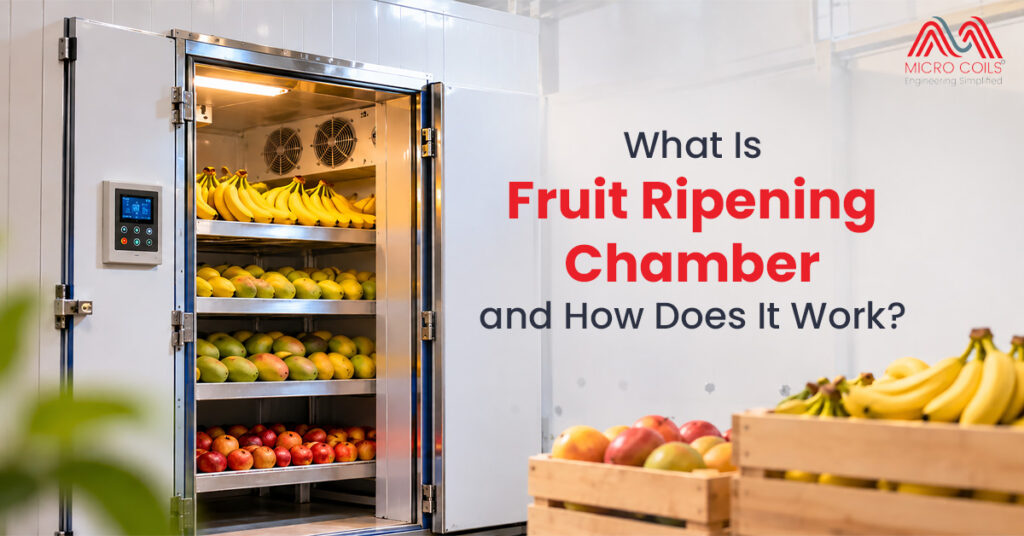
Fruits need the right conditions to ripen, develop their natural colour, and achieve the taste and texture consumers expect. However, natural ripening can be unpredictable. Temperature changes, uneven exposure to ethylene, and poor storage conditions can cause fruits to ripen at different rates. This creates challenges for farmers, wholesalers, distributors, retailers, and food processing businesses that handle large volumes of fresh produce.
A fruit ripening chamber offers a controlled solution to this problem. It creates the ideal environment for fruits to ripen uniformly within a planned period. By regulating temperature, humidity, ventilation, and ethylene concentration, the chamber helps businesses improve fruit quality, reduce post-harvest losses, and manage inventory more efficiently.
From bananas and mangoes to papayas and avocados, controlled ripening plays an important role in modern fruit supply chains. But what exactly is a fruit ripening chamber, and how does it work?
This guide explains the technology behind fruit ripening chambers, their key components, the ripening process, their benefits, and the factors businesses should consider when choosing a suitable system.
What Is a Fruit Ripening Chamber?
A fruit ripening chamber is a specially designed, insulated room or enclosure that provides controlled environmental conditions to accelerate and regulate the ripening of climacteric fruits. These fruits continue to ripen after harvest and respond to ethylene, a naturally occurring plant hormone that regulates ripening.
The chamber maintains suitable temperature, relative humidity, airflow, and, where required, ethylene concentration. These conditions help fruits ripen more evenly than they typically would under uncontrolled ambient conditions.
Commercial fruit ripening chambers are commonly used in agricultural markets, fruit distribution centres, cold storage facilities, supermarkets, food processing units, and export businesses.
For example, bananas harvested while still green can be transported and stored before being placed inside a ripening chamber. The chamber then creates conditions that encourage the fruit to develop its characteristic yellow colour, sweetness, aroma, and texture.
Similarly, mangoes can be ripened under controlled conditions to support consistent quality and improve the timing of market deliveries.
How Is a Fruit Ripening Chamber Different from a Cold Storage Room?
Although both systems use refrigeration technology, they serve different purposes.
- Cold storage: Slows down fruit respiration and delays deterioration to extend shelf life.
- Fruit ripening chamber: Creates controlled conditions that encourage the ripening process to proceed at a desired rate.
- Pre-cooling system: Removes field heat from freshly harvested produce before storage or transportation.
Businesses may use these systems together. For example, green bananas can be transported under suitable temperature conditions, held in storage if required, and then transferred to a ripening chamber shortly before distribution.
How Does a Fruit Ripening Chamber Work?
A fruit ripening chamber works by controlling the environmental factors that influence the natural ripening process. Its refrigeration system, humidification equipment, airflow arrangement, sensors, and control panel work together to maintain the required conditions.
The exact settings depend on the fruit variety, maturity at harvest, intended ripening duration, and market requirements.
Here is how the process generally works.
1. Fruits Are Loaded into the Chamber
Harvested fruits are sorted, inspected, and packed into suitable crates or cartons. The produce is then arranged inside the chamber to allow air to circulate around the packages.
Proper loading is important because tightly packed cartons or blocked air passages can create temperature differences within the room. These differences may lead to uneven ripening.
The chamber should not be overloaded beyond its designed capacity. Adequate space between stacks and unobstructed airflow paths help the system maintain consistent conditions.
2. The Temperature Is Regulated
Temperature is one of the most important factors affecting fruit ripening. It influences respiration, enzyme activity, ethylene response, and the speed at which fruits develop their colour, flavour, and texture.
The chamber’s refrigeration and heating controls maintain a temperature suitable for the specific fruit being ripened.
For example, bananas and mangoes require different temperature management strategies. Temperatures that are too low can cause chilling injury in sensitive tropical fruits, while excessive heat can accelerate deterioration and reduce quality.
Temperature sensors continuously monitor conditions inside the chamber. The controller adjusts the refrigeration or heating system when the temperature moves away from the target range.
3. Ethylene Is Introduced When Required
Ethylene is a natural plant hormone that triggers and coordinates several ripening changes in climacteric fruits. Commercial ripening chambers may use a controlled ethylene supply to initiate more predictable ripening.
Once introduced at the appropriate stage and concentration, ethylene stimulates physiological changes in responsive fruits. These include chlorophyll breakdown, colour development, changes in fruit firmness, and the conversion of stored carbohydrates into sugars in certain fruits.
Ethylene concentration, exposure duration, and timing must be managed according to the crop and its maturity. More ethylene does not automatically produce better fruit.
Some fruits also produce ethylene naturally and may require different ripening protocols. The chamber operator must follow crop-specific recommendations rather than applying the same settings to every fruit.
4. Humidity Is Maintained
Relative humidity affects moisture loss, fruit weight, skin appearance, and overall quality during ripening.
If humidity is too low, fruits can lose moisture, become shrivelled, and suffer unnecessary weight loss. Excessive moisture or condensation, on the other hand, may encourage mould growth and other quality problems.
A fruit ripening chamber uses humidity monitoring and, where necessary, humidification equipment to maintain appropriate conditions.
The objective is to reduce moisture loss without creating conditions that encourage condensation or microbial growth.
5. Air Circulation Distributes Heat and Ethylene
Uniform airflow is essential for consistent ripening. Fans circulate air through the chamber and around the fruit packages, helping distribute temperature, humidity, and ethylene more evenly.
Poor airflow can create pockets where fruits receive different levels of heat or ethylene exposure. As a result, some cartons may ripen faster than others.
A well-designed chamber accounts for carton ventilation, stacking patterns, fan capacity, and air distribution. Operators must also avoid blocking air inlets and outlets during loading.
6. Sensors and Controls Monitor the Process
Modern fruit ripening chambers use digital controllers and sensors to monitor temperature and, depending on the system, humidity and ethylene concentration.
Operators can use these controls to set the required conditions, monitor the ripening cycle, and identify deviations before they affect the entire batch.
Some advanced systems also support automated programmes, alarms, remote monitoring, and data logging. These features help businesses standardise operating procedures and maintain records for quality control.
7. Fruits Are Checked and Unloaded
The ripening cycle continues until the fruit reaches the required stage for distribution or sale. The duration varies according to the fruit type, maturity, temperature, ethylene exposure, and desired market condition.
Operators assess fruit colour, firmness, aroma, and other relevant quality indicators to determine readiness. Once the batch reaches the target stage, the fruit is removed and moved to suitable holding, packing, or distribution facilities.
The goal is not simply to ripen fruits quickly. It is to achieve the required quality at the right time while preserving shelf life.
What Are the Main Components of a Fruit Ripening Chamber?
A commercial fruit ripening chamber consists of several components that work together to maintain a controlled environment.
Insulated Panels
Insulated walls, floors, and ceilings help minimise heat exchange between the chamber and its surroundings. Effective insulation reduces temperature fluctuations and supports energy efficiency.
Refrigeration System
The refrigeration system removes excess heat and maintains the required temperature. Its capacity depends on chamber size, fruit load, ambient conditions, and the heat generated during respiration.
Heating System
Some systems include heating elements or other heating arrangements to maintain the required temperature, particularly when ambient conditions are cooler than the target setting.
Ethylene Dosing System
The ethylene dosing system introduces a controlled amount of ethylene when the ripening protocol requires it. Commercial systems should use suitable gas-handling equipment, monitoring, and safety procedures.
Humidification System
Humidifiers help maintain the relative humidity required to limit excessive moisture loss. Their operation must be coordinated with temperature and ventilation controls.
Air Circulation Fans
Fans distribute conditioned air throughout the chamber. Their placement and capacity influence temperature uniformity and the effectiveness of ethylene distribution.
Sensors and Control Panel
Temperature sensors, humidity sensors, optional ethylene sensors, and programmable controllers help operators monitor and adjust chamber conditions.
Ventilation and Gas Management
Ventilation systems help manage gas levels and remove excess heat or accumulated gases when required by the operating protocol. Proper ventilation is especially important when using ethylene and managing carbon dioxide produced by fruit respiration.
Which Fruits Can Be Ripened in a Fruit Ripening Chamber?
Fruit ripening chambers are primarily used for climacteric fruits, which can continue ripening after harvest.
Common examples include:
- Bananas: Controlled ripening helps develop the expected yellow colour, sweetness, and texture.
- Mangoes: Suitable conditions support more uniform colour and softening, depending on the variety and maturity.
- Papayas: Controlled temperature and ethylene exposure can support predictable ripening.
- Avocados: Ripening management helps businesses supply fruit at the desired stage of firmness.
- Pears: Certain varieties respond to ethylene and may require controlled ripening protocols.
- Kiwifruit: Ethylene can be used in specific commercial ripening and conditioning programmes.
Not all fruits respond to ethylene in the same way. Apples, for instance, are climacteric fruits, but commercial handling requirements differ by variety and intended use. Citrus fruits, grapes, and strawberries generally do not undergo the same post-harvest ripening process as bananas or mangoes.
A ripening chamber should therefore be configured for the intended crop rather than treated as a universal solution for every type of fruit.
What Are the Ideal Conditions Inside a Fruit Ripening Chamber?
There is no single temperature, humidity level, or ethylene concentration that suits every fruit. The correct operating conditions depend on the species, variety, maturity, quality requirements, and local operating standards.
The following table provides a general overview.
Fruit | Key ripening considerations |
Bananas | Carefully controlled temperature, humidity, ethylene exposure, and airflow |
Mangoes | Variety-specific temperature management, maturity assessment, and uniform airflow |
Papayas | Suitable temperature and humidity with controlled ethylene exposure where required |
Avocados | Crop-specific temperature management and careful monitoring of firmness |
Pears | Variety-dependent conditioning, temperature, and ethylene requirements |
Kiwifruit | Controlled ethylene exposure where specified by the commercial protocol |
These are general guidelines, not operating specifications. Businesses should obtain precise settings from an experienced ripening chamber supplier, agricultural specialist, or recognised post-harvest handling protocol.
Using unsuitable temperatures can cause chilling injury, uneven ripening, poor flavour development, or accelerated deterioration. Similarly, incorrect ethylene exposure may result in inconsistent outcomes.
Benefits of Using a Fruit Ripening Chamber
A fruit ripening chamber offers several operational and commercial advantages for businesses that handle fresh produce.
1. Uniform Fruit Ripening
Controlled temperature, humidity, ethylene exposure, and airflow help reduce differences in ripening across a batch. This supports more consistent colour, texture, and eating quality.
2. Better Inventory Planning
Businesses can schedule ripening according to expected orders and market demand. This makes it easier to prepare the required quantity of ripe fruit for retailers, distributors, and food service operators.
3. Reduced Post-Harvest Losses
Uncontrolled ripening can result in fruits becoming overripe before reaching the market. A chamber helps operators manage ripening more predictably, potentially reducing losses caused by inconsistent maturity and poor handling.
Actual loss reduction depends on fruit quality, storage practices, chamber design, and operator skill.
4. Improved Fruit Appearance and Marketability
Consistent ripening can help fruits develop the colour and texture expected by consumers. This is especially valuable for supermarkets and organised retail chains that need uniform produce across multiple outlets.
5. Better Supply Chain Management
A controlled ripening process allows businesses to separate harvesting, transportation, storage, and final ripening. This supports more flexible distribution planning and can help match product readiness with delivery schedules.
6. Greater Operational Control
Automated controls and monitoring systems reduce reliance on informal methods of ripening. Operators can follow repeatable procedures, maintain batch records, and investigate variations in fruit quality.
7. Support for Commercial Scale
From wholesale fruit markets to large distribution centres, commercial ripening chambers can process substantial volumes of produce in organised batches. Chamber capacity and cycle planning can be matched to business requirements.
Natural Ripening vs. Controlled Ripening
Natural ripening and controlled ripening both rely on the fruit’s biological processes. The difference lies mainly in how the surrounding conditions are managed.
Factor | Natural or ambient ripening | Controlled chamber ripening |
Temperature | Depends on surrounding conditions | Managed within a selected range |
Ethylene exposure | May vary naturally | Can be controlled where required |
Ripening consistency | May vary across the batch | More predictable with proper operation |
Scheduling | Less precise | Easier to plan |
Monitoring | Often limited | Can include continuous sensor monitoring |
Scale | Suitable for smaller or informal operations | Well suited to organised commercial batches |
Controlled ripening does not guarantee perfect fruit quality. The maturity and condition of the fruit at harvest remain important. Poor-quality, immature, damaged, or diseased fruit cannot be made high-quality simply by placing it inside a chamber.
How to Choose the Right Fruit Ripening Chamber?
Selecting a suitable system requires more than comparing the chamber’s physical dimensions or purchase price.
Assess Your Daily and Seasonal Capacity
Estimate the quantity of fruit you need to ripen per batch and per day. Consider peak-season demand as well as average volumes.
A chamber that is too small may create processing bottlenecks, while an oversized system may increase unnecessary capital and operating costs.
Identify the Fruits You Handle
Determine whether the chamber will be used for bananas, mangoes, papayas, avocados, or multiple fruit varieties. Different crops may need different temperature settings, ripening programmes, and operating procedures.
If several fruits will be processed, confirm whether the supplier can accommodate their individual requirements safely and effectively.
Check Temperature and Humidity Control
Ask about temperature uniformity, humidity management, sensor accuracy, and the controller’s ability to maintain the required conditions under full load.
These factors can directly affect ripening consistency and fruit quality.
Evaluate Airflow Design
The chamber should distribute air evenly through the loaded cartons. Ask the supplier how the system handles different carton designs, stacking arrangements, and full-capacity loads.
Review Automation and Monitoring Features
Digital controls, alarms, batch records, and remote monitoring can improve operational oversight. Select features that match your staff’s technical capabilities and the complexity of your operation.
Consider Energy Efficiency
Review insulation quality, refrigeration efficiency, fan power, maintenance requirements, and the energy consumption expected under normal operating conditions.
The lowest initial purchase price does not always translate into the lowest long-term cost.
Check Safety and After-Sales Support
Ask about gas-handling safeguards, ventilation, emergency procedures, operator training, maintenance support, and spare parts availability.
A reliable supplier should explain the operating process clearly and help your team establish crop-specific ripening protocols.
Common Mistakes to Avoid When Using a Fruit Ripening Chamber
Even a well-designed chamber can produce inconsistent results if it is operated incorrectly.
- Overloading the chamber: Excessive loading can obstruct airflow and create uneven conditions across the batch.
- Using the same settings for every fruit: Different varieties have different temperature tolerances and ripening requirements.
- Ignoring fruit maturity: Fruits harvested at unsuitable maturity may fail to develop the expected quality, even under controlled conditions.
- Applying excessive ethylene: Ethylene concentration and exposure time should follow the relevant crop-specific protocol.
- Allowing temperature fluctuations: Poor door management, equipment faults, or inadequate insulation can disrupt the ripening cycle.
- Neglecting sanitation: Dirty floors, crates, fans, and surfaces can contribute to contamination and spoilage.
- Skipping routine maintenance: Faulty sensors, blocked airflow paths, and poorly maintained refrigeration systems can affect chamber performance.
Regular cleaning, calibration, inspection, and staff training help prevent these problems.
Conclusion
A fruit ripening chamber is an important tool for managing the quality, timing, and consistency of fresh produce. By controlling temperature, humidity, ethylene exposure, and airflow, it helps businesses create suitable conditions for fruits to ripen in a more predictable manner.
The technology supports commercial operations by improving inventory planning, reducing avoidable post-harvest losses, and helping deliver fruits at the right stage of maturity. However, results depend on the quality of the harvested fruit, the chamber’s design, the selected ripening protocol, and the skill of the operator.
For fruit distributors, wholesalers, retailers, and processing businesses, investing in the right fruit ripening chamber can improve operational control and support a more reliable supply chain. Choosing a system that matches the fruit varieties, batch capacity, energy requirements, and quality standards of the business is essential for long-term performance.
The main purpose is to provide controlled conditions that help climacteric fruits ripen more uniformly and predictably. It allows businesses to manage fruit readiness according to market demand and distribution schedules.
The duration depends on the fruit variety, maturity at harvest, temperature, ethylene exposure, and desired ripeness. Bananas may require several days under commercial ripening programmes, while other fruits follow different schedules. Operators should follow crop-specific protocols rather than rely on a fixed duration.
No. Ethylene is commonly used for fruits such as bananas and may be used for mangoes and other responsive crops. However, the need for external ethylene depends on the fruit, its maturity, and the intended ripening process.
A chamber generally offers better control over temperature, humidity, airflow, and ethylene exposure. This can improve consistency and scheduling for commercial operations. Natural ripening may still be suitable for smaller quantities or situations where precise timing is not essential.

