

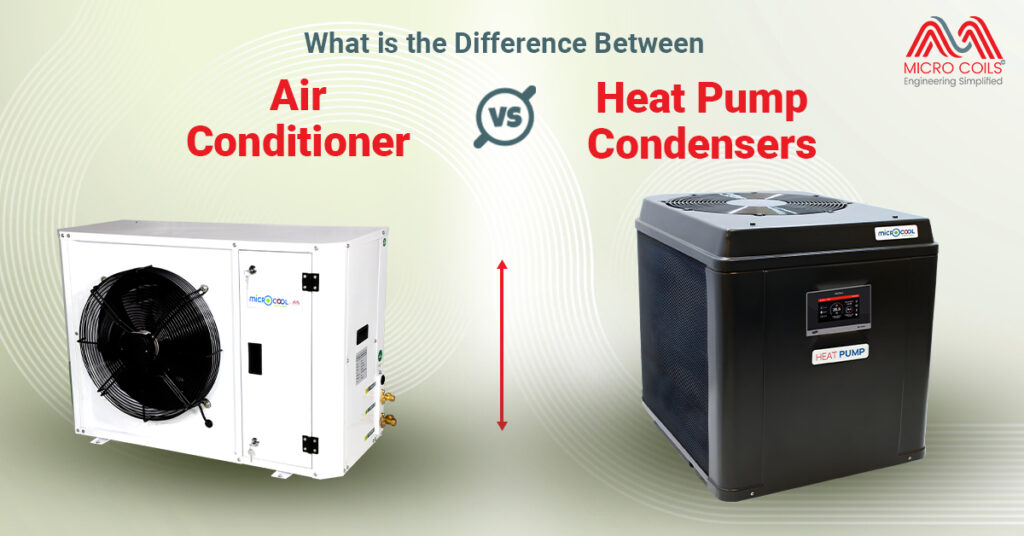
When your commercial clients ask about the difference between air conditioners and heat pump condensers, they’re asking a question that directly impacts their bottom line. These two systems might look almost identical sitting on a rooftop or beside a building, but they operate in fundamentally different ways that affect installation costs, energy bills, and maintenance schedules. Understanding these differences helps you recommend the right solution for each client’s specific needs and climate conditions. Let’s break down everything you need to know about air conditioner versus heat pump condensers so you can confidently guide your clients toward smart HVAC investments.
What Is a Condenser and Why Does It Matter?
The condenser is the outdoor unit that sits outside the building—that large metal box your clients see on rooftops, parking lots, or alongside their facilities. Inside this cabinet, refrigerant changes from gas to liquid while releasing heat into the outdoor air. The AC condenser coil inside this unit consists of copper or aluminum tubing arranged to maximize heat transfer efficiency. A fan pulls air across these coils while the compressor circulates refrigerant through the system, creating the pressure changes needed for heat exchange.
For your clients, the condenser represents a significant capital investment that affects their energy costs for the next 10 to 20 years. Better condensers use less electricity to achieve the same cooling or heating results, which translates directly to lower operating expenses month after month. Modern units include features like variable-speed fans and enhanced coil designs that improve performance while reducing energy consumption. Your clients need to understand that choosing the right condenser isn’t just about upfront costs—it’s about the total cost of ownership over the equipment’s entire lifespan.
How Air Conditioner Condensers Work?
Air conditioner condensers have one job: remove heat from indoor spaces and dump it outside during warm weather. The refrigerant arrives at the condenser as hot, high-pressure gas after picking up heat from inside the building. In the condenser, this hot gas flows through the AC cooling coil, where outdoor air cools it down below its condensation point. As the refrigerant condenses from gas to liquid, it releases heat into the outdoor environment—that’s why the area around a running condenser feels noticeably warmer.
This one-directional heat transfer defines air conditioning systems completely. They move heat from inside to outside, period—they cannot reverse this process regardless of settings or controls. This simplicity makes air conditioner condensers less complex than heat pumps, with fewer components that can fail. However, your clients need to understand the limitation: air conditioner condensers sit completely unused during winter months, providing no heating benefit whatsoever.
The seasonal operation pattern means air conditioner condensers typically last longer than heat pump condensers. Running only during the cooling season—roughly four to seven months depending on location—gives these units extended downtime that reduces wear and extends component life. Quality air conditioner condensers often deliver 15 to 20 years of service with proper maintenance, making them excellent long-term investments for facilities in cooling-dominated climates.
Heat Pump Condensers: The Year-Round Workhorse
Heat pump condensers work double duty throughout the entire year, functioning as condensers during summer and evaporators during winter. A reversing valve—the key component that separates heat pumps from regular air conditioners—changes refrigerant flow direction based on heating or cooling needs. During summer, heat pump condensers work exactly like air conditioner condensers, removing heat from buildings and releasing it outside. Switch to heating mode, and that outdoor unit reverses roles, extracting heat from outdoor air even when temperatures drop below freezing.
This year-round operation subjects heat pump condensers to considerably more wear compared to air-conditioning-only units. While air conditioner condensers rest during winter, heat pump condensers run constantly during the coldest months when heating demands peak. The continuous cycling between heating and cooling modes, plus exposure to harsh winter conditions including ice and snow, accelerates component wear significantly. Your clients need realistic maintenance budgets that account for this additional stress and the higher service requirements heat pump systems demand.
The reversing valve represents the most important difference between heat pump and air conditioner condensers. This component acts like a four-way switch for refrigerant flow throughout the system. When the valve shifts position, it redirects refrigerant to flow backward, effectively swapping the functions of indoor and outdoor coils instantly. This mechanical complexity introduces a failure point that air conditioner condensers don’t have—reversing valves can stick, leak, or fail electrically, requiring repairs that standard AC systems never need. Your clients should know that heat pumps offer versatility but come with additional maintenance considerations.
Spotting the Physical Differences
Looking at an air conditioner condenser next to a heat pump condenser, most people can’t tell them apart without opening the panels. Both use similar cabinet designs, fan assemblies, and external coil configurations that make them look nearly identical. Heat pump condensers include extra components like reversing valves, defrost controls, and sometimes backup heating elements that air conditioner condensers skip entirely. These additional parts add weight, complexity, and potential maintenance needs that distinguish heat pumps despite their similar appearance.
The AC coil price differs significantly between air conditioner and heat pump systems because of these design differences. Heat pump condensers need coils built to handle both condensation and evaporation, exposure to freezing temperatures, ice buildup during defrost cycles, and continuous year-round operation. Manufacturers use thicker materials, stronger fin designs, and better corrosion protection in heat pump coils to survive these tough conditions.
Compressor specifications also differ between the two systems in ways that affect pricing and longevity. Heat pump compressors handle bidirectional operation and must work efficiently across much wider temperature ranges than air conditioner compressors. Air conditioner compressors optimize for hot weather, knowing they’ll never run during cold months. Heat pump compressors must perform well from scorching 100°F summer days down to freezing winter nights, sometimes operating at temperatures well below zero. This versatility requires different engineering, better lubrication systems, and upgraded internal components that increase costs compared to cooling-only applications.
Installation Considerations and Costs
Installing air conditioner condensers typically costs less than heat pump installations because of simpler wiring, fewer controls, and standard refrigerant line configurations. Your installation crews can complete air conditioner condenser installations faster since there’s no reversing valve to wire, no defrost controls to configure, and no backup heat to integrate with the system. This simplicity reduces labor hours and minimizes potential wiring errors during installation. For large commercial projects with multiple units, these labor savings add up quickly and can significantly impact total project costs.
Heat pump condenser installations require additional electrical connections for reversing valves, defrost circuits, and often backup heating elements. Technicians must properly configure defrost controls to prevent ice buildup that could damage the outdoor coil during winter operation. The reversing valve needs correct wiring to switch reliably between heating and cooling modes without failures. These extra steps increase installation time by 20-40% compared to equivalent air conditioner installations, driving up labor costs for your clients.
Refrigerant line sizing considerations differ between the two systems as well. Heat pumps moving refrigerant in both directions need carefully sized lines that work efficiently for both heating and cooling modes. Air conditioner systems optimize refrigerant lines for one-way flow, simplifying design calculations and reducing installation complexity. Mistakes in refrigerant line sizing affect heat pump performance more severely than air conditioner performance, making proper installation even more critical for heat pump projects.
Electrical service requirements can differ substantially between systems, particularly for heat pump condensers with backup electric heat. While the condenser itself might draw similar power whether it’s an air conditioner or heat pump, backup heating elements can add 10-15 kilowatts of electrical demand. Your clients need adequate electrical service to handle these peak loads, which might require panel upgrades or dedicated circuits that air conditioner installations don’t need. Factoring these electrical costs into project budgets prevents unpleasant surprises during installation.
Maintenance Requirements and Costs
Air conditioner condensers generally require less maintenance than heat pump condensers because they operate fewer months per year and handle only one job. Standard maintenance includes coil cleaning, refrigerant level checks, electrical connection inspection, and fan motor lubrication typically performed once annually before cooling season begins. Since these units sit idle during winter, there’s no winter maintenance needed, and components experience less wear overall. Annual maintenance contracts for air conditioner condensers typically run 15-25% less than comparable heat pump maintenance agreements.
Heat pump condensers need maintenance twice yearly—before cooling season and again before heating season—to ensure reliable operation year-round. Spring maintenance prepares the system for summer cooling demands while fall service readies the equipment for winter heating loads. Defrost controls need testing, reversing valves require inspection, and coils need cleaning before each season to maintain efficiency. This doubled maintenance frequency increases annual service costs but prevents failures during peak demand periods when your clients need reliable climate control most desperately.
Climate Considerations for Your Clients
Client location dramatically affects whether air conditioner or heat pump condensers make better financial sense for their facilities. In warm climates where heating needs remain minimal, air conditioner condensers paired with minimal backup heat often provide the most cost-effective solution. These regions experience long cooling seasons and brief, mild winters where simple electric heat or small gas furnaces handle occasional heating needs inexpensively.
Moderate climates represent ideal heat pump territory where these systems deliver maximum value. These areas need both heating and cooling throughout the year but rarely experience extreme temperatures in either direction. Heat pumps maintain excellent efficiency in these conditions, providing year-round comfort at lower operating costs than separate heating and cooling systems. Your clients in these regions should seriously consider heat pump condensers for new installations and system replacements.
Building usage patterns also influence equipment selection beyond pure climate considerations. Facilities with high internal heat gains from equipment, lighting, or occupants might need year-round cooling even in cold climates, making heat pumps attractive for their cooling capability during unexpected warm spells. Warehouses, data centers, or manufacturing facilities with significant heat generation benefit from heat pump flexibility that air conditioner condensers can’t match during shoulder seasons.
Making the Right Recommendation
Your role involves guiding clients toward equipment that balances upfront costs, operating expenses, maintenance requirements, and expected lifespan based on their specific situation. Air conditioner condensers make sense when clients have access to affordable heating fuel, experience long cooling seasons with minimal heating needs, or operate in climates where heat pumps struggle with extreme cold. The simpler design, lower maintenance costs, and longer equipment life often justify air conditioner condensers even when heat pumps offer theoretical efficiency advantages.
Heat pump condensers deserve serious consideration for clients in moderate climates, facilities without access to natural gas, or buildings where single-system simplicity outweighs the disadvantages of year-round operation. The combined heating and cooling capability eliminates separate heating equipment, reduces maintenance complexity despite higher service frequency, and often delivers lower total operating costs when climate conditions favor heat pump operation. Forward-thinking clients concerned about reducing fossil fuel use increasingly prefer heat pump technology despite potentially higher costs.
Budget considerations matter tremendously for cost-conscious clients comparing options. Heat pump condensers typically cost 20-40% more upfront than equivalent air conditioner condensers because of their additional components and complexity. This price premium must be recovered through operating cost savings over the equipment’s lifetime to justify the investment financially. Running detailed cost comparisons using actual local energy rates, climate data, and realistic usage patterns helps clients make informed decisions based on facts rather than sales pitches.
Long-term facility plans also influence equipment selection in ways that immediate needs don’t reveal. Clients planning building expansions, system upgrades, or eventual full HVAC replacements within 5-7 years might choose simpler, less expensive air conditioner condensers as interim solutions. Conversely, clients making 15-20 year equipment investments should carefully evaluate heat pump technology’s total lifecycle costs including energy savings, maintenance expenses, and environmental benefits that matter increasingly to corporate sustainability goals.
Conclusion: Different Tools for Different Jobs
Air conditioner and heat pump condensers serve different purposes despite their similar appearance and shared cooling functionality. Air conditioner condensers excel at cooling with simplicity, reliability, and longevity that suits many commercial applications perfectly. Heat pump condensers offer year-round versatility, potential operating cost savings, and fossil-fuel-free operation that appeals to environmentally conscious clients and facilities in appropriate climates. Neither system represents the universally “best” choice—the right answer depends entirely on your client’s specific needs, location, budget, and long-term facility plans. Understanding these key differences allows you to confidently recommend equipment that delivers optimal performance and value for each unique situation you encounter.
Converting an air conditioner condenser into a heat pump isn’t technically feasible or economically practical for commercial installations. The two systems require fundamentally different internal components that can’t simply be added after manufacture. Your existing air conditioner lacks the reversing valve hardware, specialized control boards, and bidirectional compressor design that heat pumps need for heating operation.
Heat pump condensers often generate slightly different sound profiles than air conditioner condensers, though overall decibel levels remain comparable in quality equipment. The reversing valve produces a distinctive clicking or whooshing sound when switching between heating and cooling modes that air conditioners never make. During defrost cycles in winter, heat pump condensers can create unusual sounds including hissing, popping, or rushing noises as the system temporarily reverses to melt ice buildup on outdoor coils. Some clients find these unfamiliar sounds concerning until you explain they’re normal operational characteristics.
Stainless steel systems are more corrosion-resistant but can suffer from stress corrosion cracking in chloride environments – watch for hairline cracks near welds. Exotic materials like titanium or Hastelloy are highly resistant to chemical attack but may show different thermal expansion behaviors. Adjust your baseline parameters accordingly. The key is understanding your specific material’s vulnerabilities and focusing inspection efforts there. Document material specifications when purchasing from pillow plate manufacturers so your maintenance team knows exactly what they’re working with.
Manufacturers generally offer similar base warranty coverage for both air conditioner and heat pump condensers, but the extended warranty options and exclusions often differ significantly. Standard warranties typically cover compressors for 5-10 years and other components for 1-5 years regardless of system type. However, heat pump warranties frequently include specific exclusions for reversing valve failures after the initial warranty period, defrost control issues, or damage related to improper winter operation. Some manufacturers offer enhanced warranty packages specifically for heat pumps in cold climates that extend coverage for cold-weather components like defrost boards and outdoor coil freeze protection.
Both air conditioner and heat pump condensers shut down immediately during power failures, but they restart differently when power returns, creating distinct concerns for facility managers. Air conditioner condensers typically restart automatically once power restores if the thermostat still calls for cooling, though many commercial systems include delay timers preventing immediate restart that could damage compressors. Heat pump condensers face additional complications during winter power outages because extended shutdowns in freezing weather can cause outdoor coils to ice over completely, requiring manual defrost cycles before normal operation resumes.
Refrigerant leaks affect both system types similarly in terms of performance degradation, but diagnosing and repairing leaks in heat pump condensers typically costs more than equivalent air conditioner repairs. Heat pump condensers contain additional potential leak points including the reversing valve connections, extra refrigerant fittings for bidirectional flow, and service ports that air conditioner condensers don’t require. Leak detection becomes more complex in heat pumps because technicians must check the system in both heating and cooling modes to identify leaks that only appear under specific operating pressures.

