

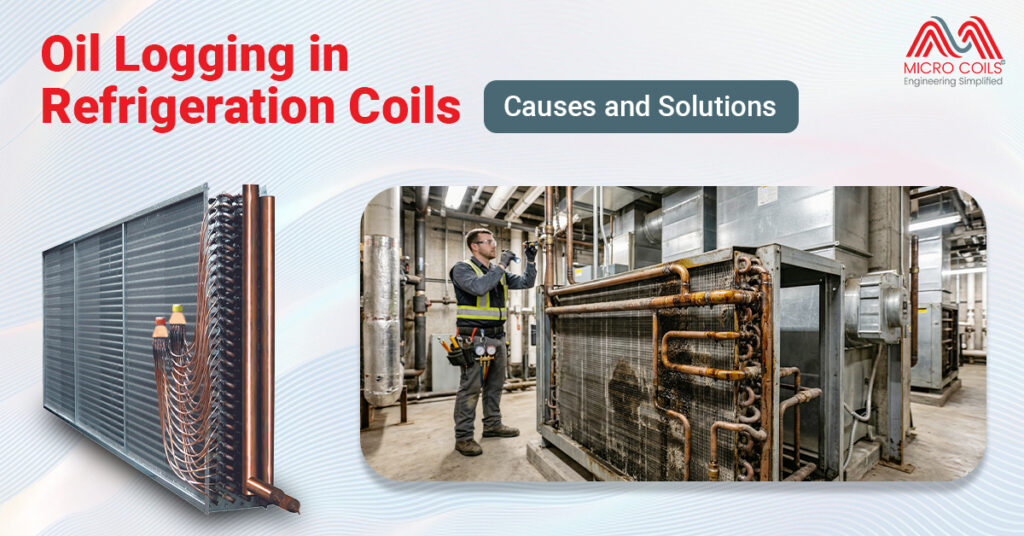
Oil logging represents one of the most insidious performance degradation issues facing commercial and industrial refrigeration systems today. Unlike catastrophic failures that announce themselves with alarms and shutdowns, oil logging creeps in gradually, quietly eroding system efficiency while driving up operational costs. Facility managers and refrigeration technicians often misdiagnose the symptoms, attributing reduced cooling capacity to refrigerant charge issues or compressor problems when the real culprit sits trapped within the refrigeration coil itself. Understanding oil logging—its causes, consequences, and solutions—separates reactive maintenance programs from proactive asset management strategies that protect both equipment investments and bottom-line performance.
What Is Oil Logging and Why Should You Care?
Oil logging occurs when lubricating oil from the compressor accumulates in the evaporator coil rather than returning to the compressor crankcase where it belongs. In a properly functioning refrigeration system, a small amount of oil circulates with the refrigerant throughout the entire circuit, lubricating moving parts and providing critical protection to the compressor. This oil should continuously return to the compressor, maintaining proper lubrication levels and preventing oil starvation. When oil becomes trapped in the coil instead, it creates a cascading series of problems that compromise system performance and accelerate equipment wear.
The impact of oil logging extends far beyond simple efficiency loss. A coil filled with excessive oil reduces the effective heat transfer surface area, forcing the compressor to work harder and longer to achieve the same cooling effect. Energy consumption increases by 15-30% in moderately oil-logged systems, with severe cases showing even higher penalties. Perhaps most critically, the compressor itself faces lubrication starvation as its oil supply diminishes, creating conditions for premature bearing failure and catastrophic compressor damage that can cost tens of thousands of dollars to repair or replace.
How Oil Moves Through Refrigeration Systems?
Refrigeration oil doesn’t pump itself through the system—it rides along with refrigerant vapor as an entrained mist. The velocity of refrigerant vapor moving through piping and coils determines whether oil successfully travels through the circuit or settles in low points and horizontal runs. In vertical risers, refrigerant velocity must exceed minimum thresholds (typically 700-1000 feet per minute depending on pipe diameter) to carry oil upward against gravity. When velocity drops below these critical levels, oil falls back down and accumulates in the lowest points of the system, which often means the evaporator coil.
The relationship between system load, refrigerant velocity, and oil return creates a delicate balance that designers must carefully consider. At full load conditions, refrigerant mass flow rates are high, velocities are adequate, and oil circulates properly throughout the system. During partial load operation—which represents the majority of operating hours for most systems—refrigerant flow decreases, velocities drop, and oil migration slows or reverses. This is why properly designed systems incorporate oil return strategies that function across the full range of operating conditions, not just at peak capacity.
Primary Causes: Design Factors That Promote Oil Logging
Inadequate refrigerant velocity in the evaporator coil stands as the single most common design-related cause of oil logging in commercial refrigeration systems. Engineers who undersize liquid lines or design coil circuits without considering minimum velocity requirements create systems predisposed to oil accumulation from day one. Horizontal runs of refrigeration piping without proper pitch (minimum 0.5 inches per 10 feet of run) allow oil to pool in low spots rather than draining back toward the compressor. Oversized evaporator coils, while seemingly beneficial for heat transfer, can actually work against oil return by reducing refrigerant velocity below critical thresholds during normal operation.
Circuit design within the coil itself plays an equally crucial role in determining oil return characteristics. Multi-circuit coils with unequal refrigerant distribution create conditions where some circuits experience adequate velocity while others become oil traps. Long horizontal headers that feed multiple coil circuits often accumulate oil because refrigerant velocity in headers is inherently lower than in individual circuits. Coils designed without consideration for oil return—prioritizing only heat transfer performance—inevitably experience oil logging issues in real-world applications. The most problematic designs combine long horizontal circuits, multiple elevation changes, and inadequate refrigerant velocities into a perfect storm of oil retention.
Operational Factors: How System Conditions Accelerate Oil Logging?
Low load operation transforms even well-designed systems into potential oil logging scenarios over extended periods. When ambient temperatures drop, cooling loads decrease, and compressors cycle or run at reduced capacity through variable-speed control, refrigerant mass flow rates plummet. The AC cooling coil that performed flawlessly during peak summer conditions may become an oil trap during mild spring weather when the system operates at 30-40% of design capacity. Prolonged low-load operation allows oil to gradually accumulate in coils, creating problems that won’t manifest until the system is called upon to deliver full capacity again.
Refrigerant charge issues—both undercharge and overcharge conditions—significantly impact oil logging tendencies in refrigeration systems. Undercharged systems run higher superheat, reducing refrigerant density and velocity in the suction line and evaporator, which impairs oil entrainment and return. Overcharged systems flood back liquid refrigerant to the compressor, washing oil out of the crankcase and sending excessive amounts into the refrigeration circuit. Improper oil charge in the compressor crankcase itself creates similar issues: too little oil and the compressor starves; too much oil and the excess circulates through the system, overwhelming the coil’s ability to return it. Each of these charge-related issues compounds oil logging risk while simultaneously making diagnosis more difficult.
Recognizing Oil Logging Before Catastrophic Failure
Declining system capacity represents the earliest and most common symptom of oil logging, though it’s often attributed to other causes initially. A refrigeration coil with significant oil accumulation simply cannot transfer heat as effectively as a clean coil, forcing longer run times to achieve setpoint temperatures. Facility managers notice food cases taking longer to pull down after restocking, walk-in coolers that struggle to recover after door openings, or process cooling applications that can’t maintain temperature tolerances. These capacity losses typically develop gradually over weeks or months, making them easy to overlook or rationalize until the degradation becomes severe enough to impact operations.
Abnormal temperature and pressure readings provide concrete diagnostic evidence when compared against baseline system performance data. Suction pressure drops lower than normal for the given load conditions because the oil-logged evaporator cannot evaporate refrigerant efficiently. Superheat readings climb higher than design specifications as the effective evaporator surface area shrinks due to oil coating internal surfaces. Compressor discharge temperatures increase as the machine works harder and longer to overcome the reduced system capacity. The compressor crankcase oil level visibly drops below the sight glass minimum as oil migrates out of the compressor and into the refrigeration circuit, providing the most definitive visual confirmation of oil logging.
Immediate Solutions: Addressing Active Oil Logging Situations
Oil return procedures provide the fastest route to restoring system performance when oil logging is identified and confirmed. The most straightforward approach involves temporarily raising the evaporator temperature and increasing refrigerant velocity to mobilize trapped oil and push it back toward the compressor. This can be accomplished by reducing cooling load, adjusting expansion valve settings to run lower superheat, or in extreme cases, briefly shutting down the system and allowing the evaporator coil to warm above refrigerant saturation temperature. Once oil begins moving, the system should be run at higher loads to maintain velocity until the compressor crankcase refills to proper levels.
Hot gas defrost cycles, where applicable, offer an effective oil clearing mechanism for systems already equipped with this functionality. Introducing hot discharge gas directly into the evaporator rapidly raises coil temperature and refrigerant velocity, creating ideal conditions for flushing trapped oil back through the suction line. This approach works particularly well in low-temperature applications where oil logging is most problematic due to higher oil viscosity at cold temperatures. However, hot gas defrost must be carefully controlled to avoid liquid slugging the compressor or creating pressure spikes that damage system components. Multiple short defrost cycles often prove more effective than single extended cycles for oil return purposes.
Maintenance Protocols: Routine Practices That Prevent Oil Accumulation
Establishing baseline performance data for each refrigeration system creates the foundation for early oil logging detection through trend analysis. Monthly recording of key parameters—suction and discharge pressures, superheat and subcooling values, compressor runtime hours, and crankcase oil level—provides the comparative data necessary to identify gradual performance degradation. When plotted over time, these metrics reveal patterns that distinguish oil logging from refrigerant charge issues, fouled coils, or failing compressors. This data-driven approach replaces reactive troubleshooting with predictive maintenance that addresses oil logging before it impacts operations or damages equipment.
Regular oil level monitoring and oil quality testing deserve priority status in comprehensive refrigeration maintenance programs. Visual inspection of compressor crankcase oil levels through sight glasses should occur during every routine service visit, with any deviations from normal levels triggering investigation. Annual oil sampling and laboratory analysis reveals contamination, acid formation, and viscosity breakdown that indicates system problems requiring attention. When oil levels consistently run low despite no external leaks, oil logging becomes the prime suspect requiring systematic evaluation of system design and operating conditions. The relatively minor cost of routine oil testing pales compared to compressor replacement expenses or lost product due to refrigeration system failures.
Conclusion: The Path Forward for Oil Logging Prevention
Oil logging in refrigeration coils represents a preventable performance degradation that costs the industry hundreds of millions of dollars annually in wasted energy and premature equipment failure. The technical causes are well understood, diagnostic methods are readily available, and effective solutions exist for both new construction and existing system remediation. Yet oil logging persists because many organizations treat refrigeration as a commodity infrastructure rather than a sophisticated system requiring expert design, proper commissioning, and proactive maintenance. The gap between best practices and common practice creates ongoing operational penalties and unnecessary capital expenditure replacing equipment that should have delivered decades of reliable service.
Frequently Asked Question
Absolutely. New systems can experience oil logging within days if improperly commissioned. Common installation errors include incorrect refrigerant charge, failure to achieve proper evacuation leaving moisture in the system, wrong oil type for the specified refrigerant, or contractor shortcuts during pressure testing that introduce contaminants. Always verify proper startup procedures were followed and document baseline performance metrics immediately after commissioning to establish reference points for future comparisons.
No, synthetic oils don’t eliminate oil logging—they simply change its characteristics. POE (polyolester) and PVE (polyvinylether) synthetic oils offer better miscibility with HFC refrigerants at low temperatures compared to mineral oils, potentially reducing accumulation severity. However, synthetics are hygroscopic, absorbing moisture more readily, which creates acid formation risks. They also cost significantly more than mineral oils. Oil type selection must match refrigerant choice and application requirements, but proper system design remains essential regardless of oil chemistry.
Stainless steel systems are more corrosion-resistant but can suffer from stress corrosion cracking in chloride environments – watch for hairline cracks near welds. Exotic materials like titanium or Hastelloy are highly resistant to chemical attack but may show different thermal expansion behaviors. Adjust your baseline parameters accordingly. The key is understanding your specific material’s vulnerabilities and focusing inspection efforts there. Document material specifications when purchasing from pillow plate manufacturers so your maintenance team knows exactly what they’re working with.
Monthly visual inspections of compressor oil levels provide minimum monitoring frequency, with quarterly detailed performance assessments recommended for critical systems. High-risk applications—low-temperature freezers, systems with long refrigerant line runs, or those operating under highly variable loads—warrant monthly performance testing including pressure-temperature analysis and superheat verification. Seasonal checks before peak cooling season ensure systems perform when needed most. Document all readings to establish trends rather than relying on single-point measurements that miss gradual degradation patterns.
This approach addresses symptoms temporarily while worsening the underlying problem. Adding oil without removing trapped oil from coils increases total system oil charge, meaning even more oil circulates through refrigerant circuits and accumulates in evaporators. The compressor may show proper oil levels briefly, but logging accelerates as excess oil overwhelms the system’s oil return capability. Correct solution requires identifying why oil isn’t returning, implementing proper oil recovery procedures, then charging only the manufacturer-specified oil quantity after trapped oil returns.
Refrigeration industry consensus strongly discourages aftermarket oil additives in commercial systems. These products may temporarily improve oil flow characteristics but often void equipment warranties and create unforeseen chemical reactions with refrigerants, metals, or elastomers in the system. Some additives break down under refrigeration operating conditions, producing contaminants that damage compressors or clog expansion devices. Instead, address root causes through proper system design, correct oil selection for your specific refrigerant, and maintenance practices proven effective across millions of operating hours.

