

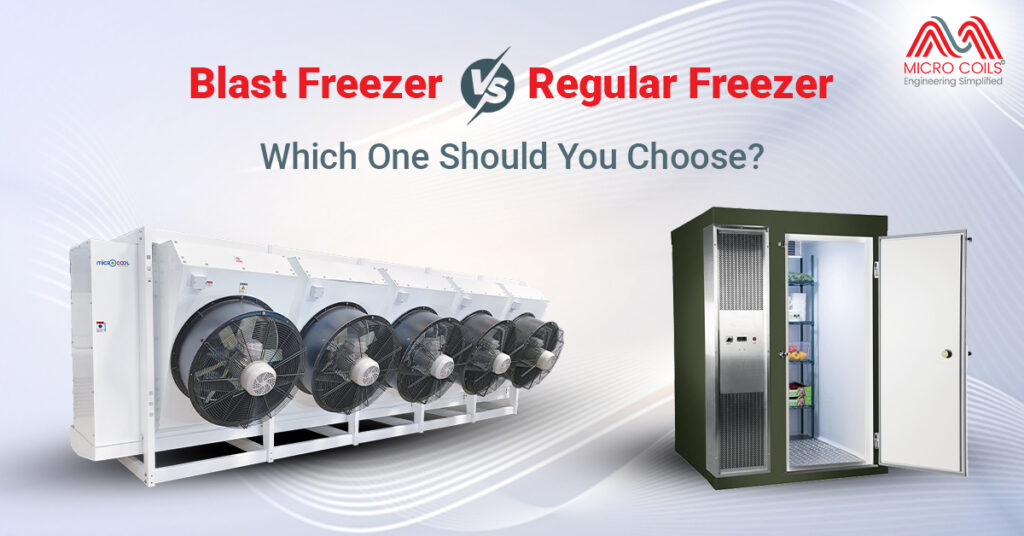
Freezing is one of the most effective ways to preserve food, but not all freezers work in the same way. When it comes to maintaining food quality, texture, freshness, and shelf life, the choice between a blast freezer and a regular freezer can make a significant difference. While a regular freezer is designed primarily for long-term frozen storage, a blast freezer rapidly removes heat from food, helping preserve its original characteristics more effectively.
So, which one is the right choice for your needs? The answer depends on factors such as the type of food you handle, production volume, storage requirements, and budget. In this article, we compare blast freezers and regular freezers to help you understand their key differences and choose the most suitable solution for your application.
What Is a Blast Freezer?
A blast freezer is a high-performance freezing system designed to reduce the temperature of food products extremely quickly. It circulates very cold air at high speed around the product, allowing the food to pass through the critical temperature zone much faster than it would in a conventional freezer. This rapid process helps preserve texture, moisture, flavor, and nutritional quality.
Blast freezing is particularly useful for cooked meals, seafood, meat, bakery products, desserts, and other perishable items. By freezing products rapidly, smaller ice crystals are formed inside the food. Smaller crystals cause less damage to the cellular structure, which means the product can retain a better appearance and texture after thawing.
What Is a Regular Freezer?
A regular freezer is designed mainly to maintain products at frozen storage temperatures for extended periods. It may be used in homes, restaurants, grocery stores, warehouses, and commercial kitchens. Although it can freeze fresh products, the freezing process is generally much slower compared with a blast freezer.
Conventional freezers are ideal for storing already frozen goods and maintaining a stable low temperature. They are typically more affordable and easier to operate, making them suitable for businesses that do not require rapid freezing. However, when fresh food is placed directly into a regular freezer, the slower freezing process may lead to larger ice crystal formation and a greater impact on product texture.
Blast Freezer vs Regular Freezer: The Main Difference
Feature | Blast Freezer | Regular Freezer |
|---|---|---|
Primary Purpose | Rapidly freezes fresh or cooked food | Stores and maintains already frozen food |
Freezing Speed | Extremely fast | Relatively slow |
Operating Method | Uses powerful cold airflow to remove heat quickly | Uses conventional cooling to gradually freeze products |
Food Quality | Better preserves texture, moisture, flavor, and appearance | May cause more texture changes during slow freezing |
Ice Crystal Formation | Produces smaller ice crystals | Produces larger ice crystals |
Best For | Restaurants, bakeries, catering, food processing, and high-volume kitchens | Homes, small businesses, shops, and long-term storage |
Temperature Reduction | Quickly lowers the core temperature of food | Gradually lowers the temperature over time |
Storage Function | Mainly designed for rapid freezing before storage | Primarily designed for long-term frozen storage |
Energy Demand | Higher during rapid freezing cycles | Generally lower and more consistent |
Initial Cost | Higher due to advanced refrigeration and airflow systems | Usually lower and more affordable |
Production Efficiency | Ideal for batch processing and high-volume operations | Better suited for lower-volume freezing and storage |
Food Safety Control | Supports rapid cooling and freezing processes | Less suitable for quickly freezing large quantities of warm food |
Maintenance Needs | Requires regular maintenance of high-performance components | Generally simpler maintenance requirements |
Ideal Investment | Businesses focused on food quality, speed, and production efficiency | Users primarily focused on affordable frozen storage |
The biggest difference between a blast freezer and a regular freezer is the speed at which they remove heat from food. A blast freezer is engineered to bring food down to freezing temperatures quickly, whereas a regular freezer gradually freezes products over a longer period.
This difference can have a major impact on food quality and production efficiency. Businesses that prepare large quantities of food and need to preserve freshness often benefit from rapid freezing technology. On the other hand, operations that mainly need dependable frozen storage may find that a standard commercial freezer is sufficient.
One Detailed Comparison: Key Factors to Consider
When comparing a blast freezer and a regular freezer, it is important to look beyond the temperature displayed on the control panel. The following factors can influence performance, operating costs, food quality, and long-term value.
- Freezing speed: Blast freezers freeze food rapidly by using powerful airflow and lower operating temperatures. Regular freezers work more slowly and are primarily intended to keep products frozen after they have already reached the desired temperature.
- Food texture and quality: Rapid freezing produces smaller ice crystals, helping maintain the original structure of food. Slow freezing can create larger crystals that may damage cells and lead to moisture loss after thawing.
- Food safety: Quickly reducing the temperature of freshly prepared food can help businesses manage cooling and freezing processes more effectively. This is especially important for commercial kitchens and food production environments that handle large batches.
- Storage capacity: Regular freezers are often designed with storage as their primary purpose. Blast freezers may have lower storage capacity relative to their performance because they need adequate airflow around products during the freezing cycle.
- Energy consumption: A blast freezer may require substantial power during rapid freezing because of its high-performance refrigeration system. However, efficient operation and proper batch planning can improve overall energy management.
- Initial investment: Regular freezers generally have a lower purchase cost. Blast freezers usually require a larger initial investment because they use more powerful components and advanced temperature-control systems.
- Production efficiency: For businesses with high food volumes, a blast freezer can significantly improve workflow. Food can be prepared, rapidly frozen, and moved into long-term storage, allowing the next batch to be processed efficiently.
- Maintenance requirements: Both systems require regular cleaning, inspection, and servicing. Components such as fans, compressors, insulation, and evaporator coil assemblies must operate efficiently to maintain reliable cooling performance.
How Does a Blast Freezer Work?
A blast freezer works by circulating extremely cold air at high velocity around the food. This continuous airflow removes heat from the product much faster than the still or slower-moving air found in many conventional freezing systems. The goal is not simply to reach a low cabinet temperature but to reduce the internal temperature of the food quickly and evenly.
The refrigeration system plays a critical role in this process. The compressor, condenser, expansion device, fans, and refrigeration coils work together to absorb and transfer heat. Proper airflow and heat exchange are essential because even a powerful refrigeration system can lose efficiency if air movement is restricted or key components are poorly maintained.
How Does a Regular Freezer Work?
A regular freezer uses a refrigeration cycle to remove heat from the storage compartment and maintain a low temperature. Depending on the model, it may use natural air circulation or mechanical fans to distribute cold air. Once products are frozen, the freezer works to maintain the required storage conditions.
This makes regular freezers an excellent choice for keeping frozen food stable over time. However, when large quantities of warm or freshly cooked food are loaded into the unit, the temperature inside the cabinet can rise. The freezer may then need a considerable amount of time to remove the additional heat, potentially affecting both the newly added products and the items already in storage.
Which Freezer Preserves Food Quality Better?
For rapid preservation, a blast freezer generally provides better results. The faster freezing process helps reduce the size of ice crystals formed within the food. This can minimize structural damage and help products retain their original texture when they are thawed and prepared later.
A regular freezer can still preserve food effectively, especially when products are properly packaged and stored. However, slower freezing may not provide the same quality retention for delicate products. Seafood, meat, pastries, cream-based desserts, and prepared meals may benefit more from rapid freezing when appearance and texture are important.
Temperature Control and Food Safety
Temperature control is one of the most important considerations in any refrigeration system. A blast freezer is designed to move food through temperature reduction stages quickly, making it useful for commercial food handling operations that require controlled cooling and freezing procedures.
A regular freezer is more suitable for maintaining already frozen products at a stable storage temperature. Using it as a rapid cooling solution may place additional strain on the system, particularly when large quantities of warm products are loaded at once. Choosing the correct equipment for each stage of food handling can improve both operational efficiency and product consistency.
Energy Efficiency: Which Option Uses More Power?
A blast freezer usually has a higher instantaneous energy demand because it uses powerful refrigeration equipment and fans to achieve rapid temperature reduction. The system must remove heat from products within a relatively short time, which requires significant cooling capacity.
However, higher power demand does not automatically mean that a blast freezer is the less efficient choice. For businesses with frequent high-volume freezing requirements, completing the freezing process quickly may improve workflow and reduce unnecessary operating time. A properly sized unit, good insulation, regular maintenance, and efficient loading practices are all important for controlling energy consumption.
Cost Comparison: Blast Freezer vs Regular Freezer
The initial purchase price of a regular freezer is typically lower, making it an attractive option for small businesses and households. Installation is often simpler, and replacement parts and servicing may also be more straightforward depending on the model and system design.
Blast freezers generally cost more because they are designed for faster heat removal and more demanding commercial applications. Nevertheless, the higher upfront investment can be justified when product quality, production speed, reduced food waste, and batch processing are critical to the operation.
When Should You Choose a Blast Freezer?
A blast freezer is often the better choice when food quality must be maintained during long-term storage. Restaurants that prepare meals in advance, bakeries producing frozen products, catering companies, seafood processors, and food manufacturers can all benefit from rapid freezing technology.
It is also a strong option for businesses with high production volumes. Instead of waiting for products to freeze slowly, operators can process batches quickly and transfer them to a separate storage freezer. This creates a more organized workflow and allows the equipment to be used for its intended purpose.
When Is a Regular Freezer the Better Choice?
A regular freezer is the right option when the primary requirement is dependable long-term frozen storage. It is practical for households, small restaurants, convenience stores, and businesses that purchase products already frozen and simply need to maintain them at the correct temperature.
It can also be a more cost-effective solution for operations with limited freezing requirements. If fresh products only need to be frozen occasionally and rapid freezing is not essential, investing in a blast freezer may not provide enough additional value to justify the higher initial cost.
Can You Use Both Together?
Many commercial food businesses benefit from using both types of equipment. A blast freezer can handle the rapid freezing stage, while a regular freezer can provide long-term storage. This separation allows each unit to perform the task for which it was designed.
For example, a commercial kitchen may prepare a large batch of meals, rapidly freeze them in a blast freezer, and then transfer the frozen products into a storage freezer. This approach can improve workflow, protect product quality, and prevent frequent temperature fluctuations in the main storage area.
The Importance of Refrigeration System Maintenance
Whether you use a blast freezer or a regular freezer, maintenance is essential for reliable performance. Dirty condenser surfaces, damaged door seals, poor airflow, refrigerant issues, and malfunctioning fans can all reduce cooling efficiency. Regular inspections can help identify small problems before they become costly equipment failures.
The condition of the AC evaporator coil is also important in systems where efficient heat absorption and airflow are necessary. Frost buildup, dirt, or restricted airflow can reduce performance and increase energy consumption. Scheduled cleaning and professional servicing help ensure that the refrigeration system continues to operate efficiently.
Factors to Consider Before Buying
Before choosing between a blast freezer and a regular freezer, start by evaluating your actual usage requirements. Consider how much food you process each day, whether you freeze freshly prepared products, how long products need to be stored, and how important texture and appearance are after thawing.
You should also consider available space, electrical capacity, ventilation requirements, maintenance costs, and future business growth. Buying equipment that is too small can create operational bottlenecks, while purchasing a system with unnecessary capacity may increase costs without delivering meaningful benefits.
Blast Freezer vs Regular Freezer: A Quick Decision Guide
If your business frequently freezes fresh food and product quality is a top priority, a blast freezer is likely the better investment. Its rapid freezing capability can help maintain texture, reduce moisture loss, and support faster production cycles.
If your main requirement is storing frozen food for extended periods, a regular freezer may be the more practical and economical choice. It provides dependable temperature maintenance without the higher investment associated with rapid freezing equipment.
Final Thoughts
The choice between a blast freezer and a regular freezer ultimately depends on how you handle food, the volume of your operations, and the level of quality you need to maintain. Blast freezers are designed for speed and rapid temperature reduction, making them valuable for commercial kitchens, food processors, bakeries, and businesses that freeze fresh products regularly.
Regular freezers, meanwhile, remain an essential solution for reliable long-term storage. They are generally more affordable, easier to integrate into smaller operations, and well suited for maintaining already frozen products. In many commercial environments, the most effective solution is not choosing one over the other but using both systems together.
By understanding the differences in freezing speed, food quality, energy use, cost, storage capacity, and maintenance requirements, you can make a more informed decision. Selecting the right freezer can improve operational efficiency, reduce food waste, protect product quality, and support the long-term success of your business.
The freezing time depends on the food’s size, thickness, starting temperature, packaging, and the capacity of the freezer. Smaller or thinner products may freeze within a few hours, while larger and denser items can take considerably longer.
Yes, but it is generally more practical to use a blast freezer for rapid freezing and then transfer the products to a dedicated storage freezer. This approach allows the blast freezer to remain available for the next freezing cycle while the storage freezer maintains the products at the required temperature.
Many commercial blast freezers are designed to handle freshly prepared or warm food, provided the unit is loaded according to its specified capacity and operating guidelines. Overloading the freezer can reduce airflow and affect freezing performance.
Blast freezing is particularly useful for products where maintaining texture and appearance is important. Common examples include meat, seafood, bakery items, prepared meals, desserts, and other perishable foods that need to be frozen efficiently.
Focus on your daily production volume, batch size, product thickness, incoming temperature, required final core temperature, available space, and electricity capacity. Choosing a freezer based only on cabinet size can lead to insufficient freezing performance for your actual workload.

