

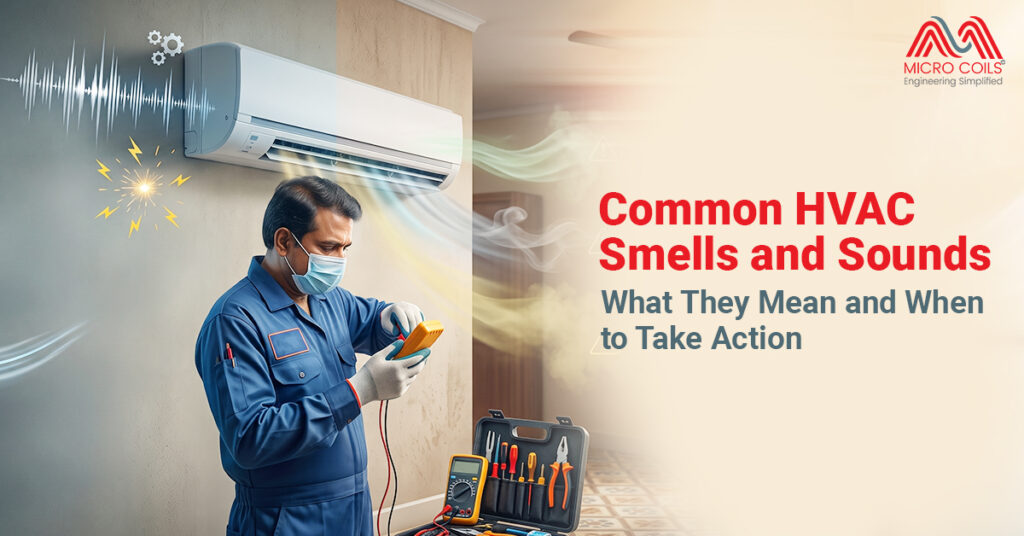
An HVAC system rarely fails without warning. In most homes, the first signs of trouble show up as an unusual smell drifting through the vents or a strange noise coming from the indoor or outdoor unit. These signals are the system’s way of communicating that something inside is worn, blocked, or damaged. Learning to recognize them early can save homeowners from expensive breakdowns and uncomfortable indoor temperatures.
This blog walks through the most common smells and sounds associated with heating and cooling systems. It explains what typically causes each one and how urgently a homeowner should respond. Some issues are minor and can wait for a scheduled service visit, while others demand immediate attention. Understanding the difference helps protect both the equipment and the people living in the home.
Musty or Moldy Smells from the Vents
A musty odor is one of the most frequent complaints homeowners raise about their cooling systems. It usually points to trapped moisture inside the ductwork, drip pan, or evaporator coil, which creates the perfect environment for mold and mildew to grow. This smell tends to appear after long periods of humid weather or when a system has been running with a clogged drain line. Left unaddressed, it can affect indoor air quality and trigger allergy symptoms in sensitive household members.
Fixing a musty smell often starts with a thorough inspection of the drain pan and condensate line for blockages. A technician may also recommend cleaning the ductwork if mold growth has spread beyond the coil area. Regular filter changes go a long way toward preventing this issue from returning. Homeowners who notice this smell every cooling season should consider a dehumidifier as a long-term solution.
Burning or Smoky Smells
A burning smell is one of the more alarming odors an HVAC system can produce, and it should never be ignored. It often signals an electrical issue, such as a failing motor, a worn belt, or overheating wiring inside the unit. Sometimes the smell is faint and only noticeable when the system first starts up. Other times it is strong enough to fill an entire room within minutes.
If a burning odor is detected, the safest first step is to turn off the system at the thermostat or breaker. Continuing to run a unit with an electrical fault increases the risk of component damage or fire. A licensed technician should inspect the wiring, motor, and capacitor before the system is used again. This is not a smell to wait out, even if it seems to disappear on its own.
Rotten Egg or Sulfur Odor
A rotten egg smell near a furnace or HVAC unit is a serious warning sign that often points to a natural gas leak. Utility companies add a sulfur-like scent to naturally odorless gas specifically so leaks can be detected quickly. This smell may be constant or may come and go depending on airflow and ventilation in the home. It is far more common near gas furnaces than purely electric cooling systems.
Anyone who notices this odor should leave the house immediately and avoid using light switches, phones, or anything that could create a spark. The gas company or emergency services should be contacted from a safe distance away from the property. Only after the area is declared safe should a technician be called to inspect the furnace or gas lines. This is the one smell on this list that always requires an emergency response rather than a scheduled appointment.
Chemical or Exhaust-Like Smell
A sharp, chemical odor coming from the vents often points to a refrigerant leak somewhere in the system. Refrigerant itself has a faint, sweet smell, but it can mix with other odors as it escapes through cracks or corroded lines. This issue frequently develops around the AC condenser coil, where refrigerant lines connect to the outdoor unit. A drop in cooling performance often accompanies this smell, since the system has less refrigerant available to absorb heat. In HVAC systems, formicary corrosion can also cause tiny leaks in copper tubing, which may gradually lead to refrigerant loss and reduced cooling performance.
Refrigerant leaks are not something homeowners should attempt to fix themselves, since the chemicals involved require special handling. A certified technician can locate the leak, repair or replace the damaged section, and recharge the system to the correct level. Ignoring this smell typically leads to reduced efficiency and higher energy bills over time. Prompt repair also prevents further strain on the compressor, which is one of the most expensive parts to replace.
Grinding or Metal Scraping Noises
A grinding noise from an HVAC unit almost always points to a mechanical problem inside the blower motor or compressor. This sound occurs when metal parts have worn down and are now rubbing against each other without proper lubrication. It is usually loud, harsh, and impossible to ignore once it starts. Homeowners often describe it as similar to metal-on-metal contact, which is an accurate description of what is actually happening inside the unit.
Continuing to run a system that is grinding can cause the damage to spread to nearby components very quickly. What starts as a minor motor bearing issue can turn into a full motor replacement within days. Turning off the unit and scheduling a repair as soon as the noise is noticed is the best way to limit the damage. In many cases, catching this sound early saves homeowners from a much larger repair bill later.
Squealing or Screeching Sounds
A squealing or screeching noise is typically linked to belts or motor bearings that have become worn, loose, or in need of lubrication. Older systems that use a belt-driven blower motor are especially prone to this sound as the rubber ages and stretches over time. The noise is often most noticeable when the system first turns on and may fade slightly as the unit continues running. It can also signal that a fan motor is beginning to fail.
This type of sound rarely indicates an emergency, but it does suggest that a maintenance visit is due. A technician can tighten or replace a worn belt and lubricate any moving parts that have dried out. Addressing the noise early prevents it from turning into a complete motor failure, which is far more costly to fix. Routine seasonal maintenance is usually enough to catch this type of wear before it becomes serious.
Clicking Sounds During Startup or Shutdown
A single clicking sound when the system turns on or off is completely normal and simply indicates the thermostat or relay engaging. However, repeated or continuous clicking is a different story and often points to an electrical control issue. This could involve a faulty relay, a failing capacitor, or a thermostat that is not communicating properly with the unit. The sound is usually rhythmic and easy to distinguish from other mechanical noises.
If clicking continues well beyond the normal startup period, it is worth having the electrical components checked. A technician can test the capacitor and relay to confirm whether they need replacement. Left unresolved, this issue can prevent the system from starting altogether, leaving the home without heating or cooling. Since the fix is usually straightforward, this is one of the more affordable repairs on this list.
Hissing or Whistling Noises
A hissing sound often points to air escaping through a leak in the ductwork or, in some cases, a refrigerant leak near the AC cooling coil. Whistling, by contrast, is more commonly associated with restricted airflow caused by a dirty filter or blocked vent. Both sounds tend to be quiet at first and grow louder as the underlying problem worsens. Homeowners sometimes mistake this noise for background sound from the outdoor unit, especially if it is faint.
Checking and replacing the air filter is the simplest first step, since a clogged filter is one of the most common causes of whistling. If the sound continues after a filter change, a technician should inspect the ductwork for leaks or gaps. A hissing sound paired with reduced cooling performance may indicate refrigerant loss, which requires professional repair. Addressing airflow issues quickly helps the system run more efficiently and reduces strain on the compressor.
Rattling or Buzzing Sounds
Rattling noises are frequently caused by loose panels, screws, or debris that has found its way into the outdoor unit. Leaves, twigs, and small branches can settle around the fan blades and create noise every time the unit runs. Buzzing, on the other hand, is more often linked to electrical issues such as a failing contactor or loose wiring connection. Both sounds tend to be intermittent rather than constant, which can make them easy to dismiss at first.
A quick visual inspection of the outdoor unit can often reveal loose debris that is safe to remove without professional help. Tightening visible panel screws is another simple fix homeowners can try on their own. If buzzing continues after these checks, an electrical inspection is the safer next step, since loose wiring poses a fire risk. Addressing rattling and buzzing early prevents small annoyances from turning into larger mechanical failures.
Quick Checklist Before Calling a Technician
Before scheduling a repair visit, a few simple checks can help homeowners narrow down the cause of a smell or sound.
- Replace or inspect the air filter for dirt and blockage
- Check the outdoor unit for leaves, debris, or loose panels
- Confirm the thermostat settings and battery are working correctly
- Note when the smell or sound occurs, such as at startup or during continuous operation
- Turn off the system if a burning smell or gas odor is present
Going through this list takes only a few minutes and often provides useful information for the technician. It can also help homeowners decide whether a problem is minor enough to wait for a scheduled appointment. In cases involving gas odors or burning smells, safety should always come before troubleshooting. A little preparation before the service call can also help reduce diagnostic time and overall repair costs.
Understanding AC Coil Price and Repair Costs
Many of the smells and sounds discussed above eventually trace back to the coils inside the system, whether it is the indoor evaporator coil or the outdoor condenser coil. When a coil is damaged beyond repair, replacement becomes necessary, and AC coil price is often one of the first questions homeowners ask. Costs vary widely depending on the size of the unit, the type of refrigerant used, and whether the coil is standard or a specialized replacement part. Labor charges also play a role, since coil replacement is a more involved repair than routine maintenance tasks.
Getting an accurate price usually requires a technician to inspect the system in person, since online estimates rarely account for the specific model or installation conditions. Homeowners can request a written quote before any work begins to avoid unexpected charges. Comparing quotes from more than one licensed contractor is a reasonable way to confirm a fair price. Regular maintenance, including coil cleaning and filter changes, remains the most effective way to delay the need for a costly replacement.
When to Call a Professional?
Some HVAC issues are safe to observe for a day or two, while others require an immediate call to a technician. Gas odors and burning smells fall firmly into the emergency category and should never be delayed. Grinding noises, refrigerant leaks, and persistent electrical clicking also warrant a prompt service call, since continued operation can worsen the damage. Milder issues, such as light dust smells on startup or a single click during shutdown, are usually not cause for concern.
Homeowners who are unsure about the severity of a smell or sound should still lean toward caution and reach out to a professional. A short diagnostic visit is far less expensive than a major repair caused by delayed action. Keeping a record of recurring issues also helps technicians identify patterns during routine maintenance visits. Over time, this kind of attentiveness leads to a more reliable and longer lasting HVAC system.
Conclusion
Unusual smells and sounds are an HVAC system’s way of asking for attention before a small issue becomes a major repair. Recognizing the difference between a harmless startup click and a dangerous gas odor can protect both the home and the people living in it. Regular maintenance, prompt filter changes, and periodic professional inspections go a long way toward preventing most of these problems altogether. When in doubt, reaching out to a qualified technician remains the safest and most reliable course of action.
A burning smell often appears when dust burns off heating components after a long period of inactivity. However, if the odor is strong, persistent, or resembles burning plastic or rubber, it may indicate an electrical fault, overheating motor, or damaged wiring. Turn off the system immediately and schedule professional HVAC service to prevent equipment damage or fire hazards.
A musty smell usually points to mold or mildew growing inside the air ducts, evaporator coil, or drain pan due to excess moisture. Besides creating unpleasant odors, mold spores can affect indoor air quality and trigger allergies. Replacing filters, cleaning the system, and addressing moisture issues can eliminate the problem and prevent recurrence.
Banging, rattling, or clanking noises often indicate loose components, damaged fan blades, worn bearings, or debris trapped inside the unit. Ignoring these sounds can lead to more extensive mechanical damage and costly repairs. Turn off the system if the noise is severe and have a qualified HVAC technician inspect and repair the affected parts.
No. A continuous hissing sound may indicate a refrigerant leak, escaping air from damaged ductwork, or a faulty expansion valve. Refrigerant leaks reduce cooling efficiency and can damage the compressor if left unresolved. Prompt professional diagnosis and repair help restore performance while preventing expensive system failures.
Contact an HVAC professional if unusual odors or noises continue after changing the air filter or restarting the system. Burning smells, gas-like odors, loud grinding, screeching, or persistent banging require immediate attention. Early inspection helps identify minor issues before they become major repairs, ensuring safe, efficient, and reliable HVAC operation.

