Micro Coils

Blogs

Why Is My AC Not Cooling? The Truth About Your Condenser Coil

Why Is My AC Not Cooling? The Truth About Your Condenser Coil

Why Is My AC Not Cooling? The Truth About Your Condenser Coil

It’s the middle of summer. The sun is blazing outside, you’ve cranked your AC to the lowest setting, and yet — your home still feels like an oven. Sound familiar? You’re not alone. One of the most common complaints homeowners have during peak cooling season is that their air conditioner simply isn’t doing its job.

There are many reasons an AC unit can underperform. But one of the most overlooked culprits? The AC condenser coil. This small but mighty component plays a massive role in keeping your home cool. When it fails, everything falls apart.

In this blog, we’ll break down exactly why your AC might not be cooling, how the condenser coil fits into the picture, and what you can do about it — including what to expect when it comes to AC coil price and replacement costs.

First, Let’s Understand How Your AC Actually Works

Before we dive into problems, it helps to understand the basics. Your air conditioner doesn’t just “make cold air.” It actually removes heat from inside your home and releases it outside. This is done through a cycle of refrigerant — a special fluid that absorbs and releases heat as it moves through the system.

Here’s the simplified version of how it works:

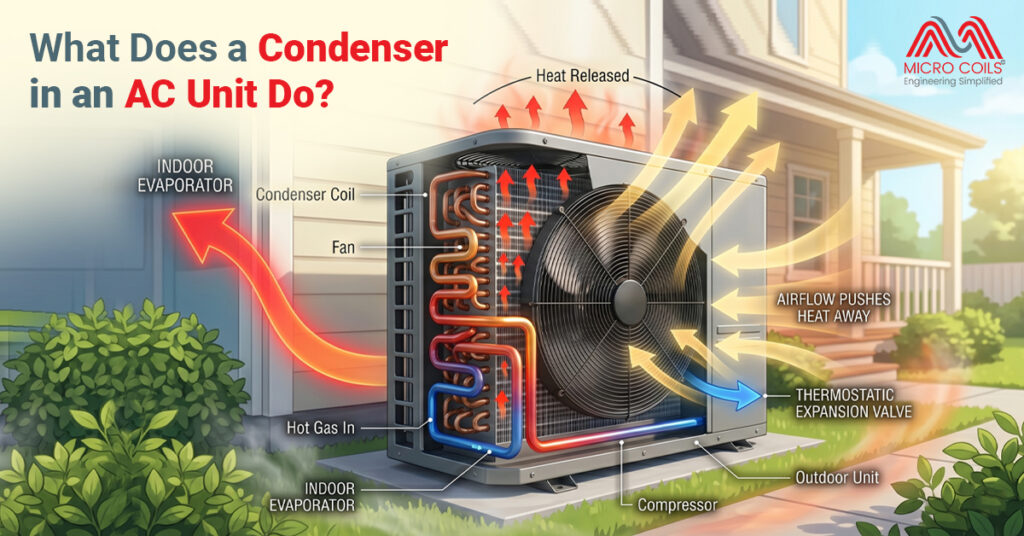
The refrigerant absorbs heat from the warm air inside your home through the evaporator coil (located indoors). It then travels outside to the AC condenser coil, where it releases that heat into the outdoor air. A fan helps push that heat away. The cooled refrigerant then travels back inside, and the cycle repeats.

It’s an elegant system — when it works. But if any part of this process is disrupted, your home stops cooling efficiently. And the condenser coil is often right at the center of the problem.

What Exactly Is the AC Condenser Coil?

The AC condenser coil is located in the outdoor unit of your air conditioning system. It’s a series of thin metal tubes — usually made of copper or aluminum — surrounded by thin fins. Together, they create a large surface area that allows heat to escape into the outdoor air quickly.

Think of it like a radiator in your car. The condenser coil’s entire job is to dissipate heat. When it’s clean and functioning properly, it does this beautifully. When it’s dirty, damaged, or failing, your entire cooling system suffers.

The AC cooling coil (sometimes used interchangeably with the condenser coil) is essentially the heart of the outdoor unit. Without it working at full capacity, your AC has to work twice as hard to achieve half the results.

Why Your AC Isn’t Cooling: The Most Common Causes

1. A Dirty or Clogged Condenser Coil

This is by far the most common reason your AC isn’t cooling properly. The outdoor unit is exposed to the elements year-round. Dust, dirt, grass clippings, pollen, pet hair, and even leaves can build up on the condenser coil over time. This layer of grime acts as an insulating blanket, trapping heat inside instead of allowing it to escape, which makes condenser cleaning extremely important.

When heat can’t escape efficiently, the refrigerant stays warm. Warm refrigerant means the evaporator coil inside can’t absorb as much heat from your home’s air. The result? Warm, stuffy air blowing out of your vents even when the AC is running full blast.

The fix here is cleaning. A professional HVAC technician can thoroughly clean the coil using a specialized coil cleaner and low-pressure water. In some cases, homeowners can carefully clean the exterior fins with a garden hose — but deep cleaning is best left to a professional.

Regular maintenance goes a long way. Cleaning your condenser coil at least once a year — ideally before summer — can dramatically improve your AC’s performance and energy efficiency.

2. Bent or Damaged Fins

Look closely at your outdoor unit and you’ll notice thin metal fins surrounding the coil. These fins are designed to increase airflow and heat transfer. But they’re also incredibly delicate. Lawn equipment, hail, kids playing nearby, or even careless cleaning can bend these fins out of shape.

Bent fins restrict airflow. Less airflow means less heat escaping. Less heat escaping means your AC struggles to cool your home. This problem is more common than most people realize. Fortunately, HVAC technicians have a special tool called a “fin comb” that can straighten bent fins without replacing the entire coil.

3. Refrigerant Leak

If your condenser coil has a crack or pinhole, refrigerant can slowly leak out. Low refrigerant means the system can’t transfer heat effectively. Your AC runs constantly, your energy bill spikes, and your home never quite reaches the temperature you set.

A refrigerant leak is serious. It’s not something you can fix with a DIY approach. It requires a licensed HVAC technician to locate the leak, repair it, and recharge the system with the correct amount of refrigerant. Ignoring a refrigerant leak doesn’t just hurt your comfort — it can permanently damage the compressor, which is the most expensive component in your AC system.

Signs of a refrigerant leak include: ice forming on the coil, hissing or bubbling sounds near the outdoor unit, and a noticeable drop in cooling performance over time.

4. A Failing Condenser Fan

The condenser coil doesn’t release heat on its own. It needs a fan to push air across those coils and carry the heat away. If the fan motor is failing or the fan blades are damaged, airflow across the coil drops significantly.

Without adequate airflow, heat builds up in the outdoor unit. The coil can’t do its job. Eventually, the system may overheat and shut down completely as a safety measure. If you notice the fan spinning slowly, making unusual noises, or not spinning at all — that’s a red flag that needs immediate attention.

5. A Completely Failed or Damaged Condenser Coil

In some cases, the coil itself is simply beyond saving. Severe corrosion, formicary corrosion (caused by a reaction between copper and certain volatile organic compounds in the air), physical damage, or years of neglect can all render a condenser coil unusable.

When this happens, replacement is the only option. And that brings us to one of the most common questions homeowners ask: how much does an AC coil cost?

AC Coil Price: What to Expect?

Let’s be upfront — replacing an AC coil isn’t cheap. But understanding the cost breakdown helps you make an informed decision rather than being caught off guard by a repair bill.

AC condenser coil prices vary based on several factors, including the brand of your unit, the size (measured in tons of cooling capacity), and the type of coil material. Here’s a general breakdown:

Copper coils are generally considered more durable and easier to repair, but they cost more. Aluminum coils are less expensive but more prone to corrosion and harder to repair when damaged — meaning they’re more likely to require full replacement.

If your AC unit is relatively new (under 8-10 years old), replacing the coil makes sense. But if your system is older, it might be worth considering a full unit replacement instead. A new system comes with a warranty, better energy efficiency, and modern refrigerant compatibility.

Always get multiple quotes before committing to a coil replacement. Prices can vary widely between HVAC companies, and a second opinion is always worth it.

Signs Your AC Cooling Coil Needs Attention Right Now!

Not sure if your coil is the problem? Watch out for these warning signs:

  • Your AC runs constantly but barely cools your home. This is a classic sign that heat isn’t being released efficiently outside — pointing directly to a condenser coil issue.
  • Your energy bills have increased noticeably. When the coil is dirty or failing, the system works harder and longer, consuming more electricity in the process.
  • Ice is forming on the outdoor unit or on the refrigerant lines. This can indicate either a refrigerant leak or severely restricted airflow — both related to coil problems.
  • You notice unusual noises from the outdoor unit. Rattling, hissing, or grinding sounds can point to fan issues, refrigerant leaks, or physical damage to the coil.
  • The outdoor unit feels extremely hot to the touch. Some heat is normal, but excessive heat suggests the coil isn’t dissipating it properly.

If you’re experiencing one or more of these symptoms, don’t wait. The longer you let coil problems go unaddressed, the more strain is placed on other components — especially the compressor. Compressor replacement is far more expensive than coil cleaning or even coil replacement.

How to Prevent Condenser Coil Problems?

Prevention is always better — and cheaper — than repair. Here are some simple steps to keep your AC cooling coil in great shape:

  • Schedule annual maintenance. A professional tune-up every spring ensures the coil is cleaned, the refrigerant is at the right level, and everything is working as it should before the heat hits.
  • Keep the area around the outdoor unit clear. Make sure there’s at least two feet of clearance on all sides of the unit. Trim back any plants, shrubs, or grass that might be crowding it.
  • Rinse the coil occasionally. You can gently rinse the exterior fins of the outdoor unit with a garden hose from the inside out. Don’t use a pressure washer — the fins are delicate.
  • Change your indoor air filter regularly. A clogged air filter restricts airflow throughout the entire system, which can contribute to coil problems both inside and outside.
  • Don’t ignore warning signs. If something seems off with your AC, get it checked sooner rather than later. Small problems have a habit of becoming expensive ones.

Final Thoughts

A struggling air conditioner on a hot summer day isn’t just uncomfortable — it’s a sign that something needs attention. More often than not, the AC condenser coil is involved in the problem. Whether it’s simply dirty, damaged, or completely failed, the coil plays an irreplaceable role in your home’s cooling system.

Understanding how the AC cooling coil works, what can go wrong, and what the AC coil price looks like for repair or replacement puts you in a much stronger position as a homeowner. You won’t be caught off guard. You’ll know what questions to ask, what warning signs to watch for, and when it’s worth repairing versus replacing.

Don’t wait until your home becomes unbearable to address AC issues. A little attention now — and a good relationship with a trusted HVAC technician — can keep your system running smoothly for years to come.

Stay cool out there.

Technically, yes — but you shouldn’t. Running your AC with a dirty condenser coil forces the compressor to work under extreme stress. Over time, this shortens the compressor’s lifespan significantly. You’ll also notice higher electricity bills and poor cooling despite the system running constantly. Think of it like driving a car with a clogged radiator — it might move, but something will eventually break. A simple annual cleaning can prevent a much more expensive repair down the line.

Both problems share similar symptoms — weak cooling and the AC running nonstop. However, a refrigerant leak often comes with additional clues: a hissing or bubbling sound near the outdoor unit, ice forming on the copper lines, or your AC suddenly performing worse overnight without any visible dirt buildup. A dirty coil tends to degrade performance gradually over weeks or months. If performance dropped suddenly, suspect a leak and call a technician immediately.

In most cases, yes — and the improvement can be surprisingly noticeable. Homeowners often report their AC reaching the set temperature faster and running for shorter cycles after a professional coil cleaning. However, if cleaning doesn’t improve performance within a day or two, the problem likely goes deeper — such as low refrigerant, a failing fan motor, or internal coil damage. Cleaning is always the right first step before pursuing costlier diagnostics.

Gently rinsing the coil with a regular garden hose is actually fine and can temporarily improve efficiency on extremely hot days. However, never use a pressure washer — the high-pressure stream bends the delicate aluminum fins, restricting airflow and worsening performance. Also avoid spraying directly into electrical components. Some homeowners install misting systems around their outdoor unit for this exact purpose. It’s a helpful trick during heat waves, but it’s not a substitute for proper maintenance.

Very likely, yes. In the morning, outdoor temperatures are lower, making it easier for the condenser coil to release heat. As afternoon temperatures peak, a dirty or partially failing coil can no longer dissipate heat fast enough, causing the system to struggle. This time-of-day cooling pattern is a classic symptom of a condenser coil that needs cleaning or is operating with low refrigerant. If this sounds familiar, schedule a maintenance check before the problem worsens.

Why Is My AC Not Cooling? The Truth About Your Condenser Coil Read More »

Cased vs Uncased Evaporator Coils: Which Is Right for Your Home

Cased vs Uncased Evaporator Coils: Which Is Right for Your Home?

Cased vs Uncased Evaporator Coils: Which Is Right for Your Home

Your air conditioner has stopped cooling effectively, and the HVAC technician delivers the news: you need a new evaporator coil. But then comes the question that catches most homeowners off guard—”Do you want cased or uncased?” You nod uncertainly, wondering what the difference is and whether your choice will cost you hundreds of rupees unnecessarily or leave you with subpar cooling for years to come.

This decision isn’t trivial. The type of evaporator coil you choose affects installation costs, system efficiency, future maintenance accessibility, and how well your air conditioner performs in your specific home setup. Yet most homeowners make this choice with minimal understanding of what distinguishes these two configurations or why it matters for their particular situation.

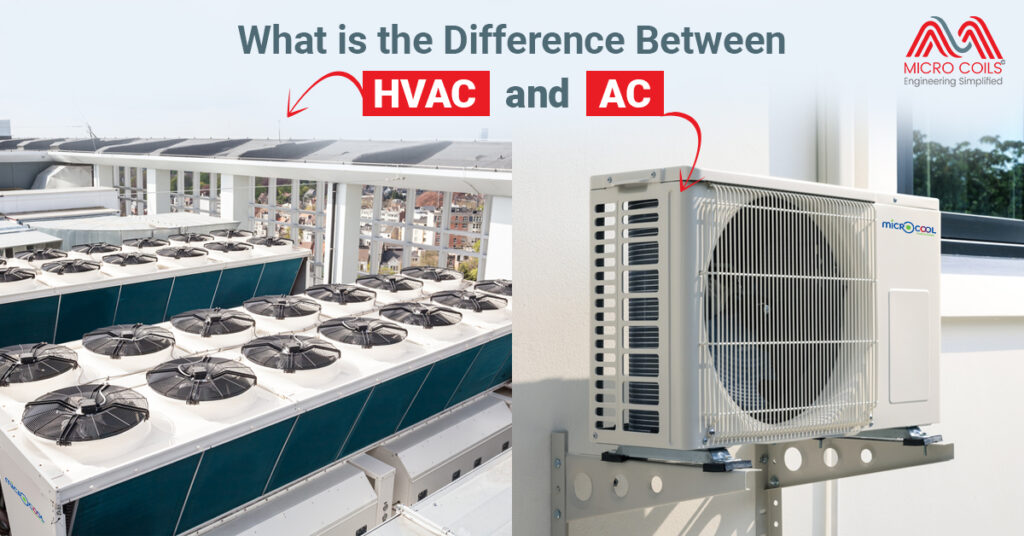
The confusion is understandable. HVAC terminology feels deliberately obscure, and contractors sometimes rush through explanations, leaving you to make expensive decisions based on incomplete information. Some homeowners overpay for cased coils they don’t need. Others choose uncased coils to save money, only to face installation complications that erase any initial savings. HVAC stands for Heating, Ventilation, and Air Conditioning, which is the full form of HVAC.

This comprehensive guide eliminates the guesswork. You’ll discover exactly what cased and uncased evaporator coils are, understand the practical differences that affect your daily life and wallet, learn which situations demand one type over the other, and gain the knowledge to make confident decisions when replacement time arrives. Whether you’re facing an immediate replacement decision or planning ahead for eventual system upgrades, these insights ensure you choose wisely.

What Are Evaporator Coils and Why Do They Matter?

Before comparing cased and uncased versions, understand what evaporator coils actually do. The AC cooling coil sits inside your home’s air handler or furnace, hidden from view but absolutely critical to cooling performance. As warm air from your home blows across this coil, refrigerant inside absorbs the heat, cooling the air that then circulates back through your living spaces.

This heat absorption process is what makes air conditioning possible. Without a functioning evaporator coil, your AC system is just an expensive fan circulating warm air. The coil’s condition directly determines cooling capacity, energy efficiency, indoor air quality, and system reliability.

Most evaporator coils last 10-15 years under normal conditions, though this varies based on maintenance quality, operating hours, and environmental factors. When they fail—typically due to refrigerant leaks, corrosion, or fin damage—replacement becomes necessary. This is when the cased versus uncased decision emerges.

What are Cased Evaporator Coils?

Cased evaporator coils come enclosed in their own metal cabinet or housing. Think of it as a complete, self-contained unit with the coil protected inside a purpose-built enclosure. This enclosure includes an insulated cabinet, connection points for ductwork, a drain pan to collect condensation, and sometimes additional features like built-in filters or access panels.

When you purchase a cased coil, you’re buying a ready-to-install package. The manufacturer has already addressed airflow optimization, condensation management, and structural support. The unit arrives as a complete assembly that connects to your existing ductwork and refrigerant lines.

Key Features of Cased Coils

  • Complete enclosure: The metal housing fully surrounds the coil, protecting it from physical damage, debris, and environmental exposure. This protection extends coil lifespan by preventing accidental damage during maintenance or other work near the air handler.
  • Integrated drain pan: Cased coils include factory-installed drain pans designed specifically for that coil’s dimensions and condensate production. The pan is properly sized, correctly positioned, and includes appropriate drain connections—all engineered together rather than field-adapted.
  • Insulation: Most cased coils feature insulation built into the cabinet walls. This insulation prevents condensation from forming on the exterior cabinet surface when cold refrigerant circulates through the coil. Without proper insulation, moisture dripping from the cabinet exterior creates water damage and promotes mold growth.
  • Easier installation: The self-contained nature simplifies installation. Technicians connect ductwork to the cabinet’s inlet and outlet openings, attach refrigerant lines, and connect the drain—significantly faster than custom-fitting an uncased coil.
  • Better air distribution: The enclosure is engineered to distribute airflow evenly across the coil’s entire surface. This optimized airflow improves heat transfer efficiency and prevents hot spots where air bypasses the coil without adequate cooling.

Advantages of Cased Evaporator Coils

  • Faster installation time: Pre-assembled components mean technicians spend 2-4 hours on installation instead of 4-6+ hours building custom enclosures. Reduced labor time translates directly to lower installation costs despite higher equipment prices.
  • Reduced installation errors: Factory assembly eliminates field construction mistakes. There’s no risk of improper insulation installation, inadequate drain pan sizing, or airflow restrictions from poorly designed custom enclosures.
  • Cleaner appearance: The finished cabinet looks professional and intentional rather than improvised. For systems visible in basements, utility rooms, or closets, aesthetic considerations might matter.
  • Enhanced protection: The sturdy enclosure shields the delicate coil fins from accidental damage during routine maintenance, filter changes, or other work in the mechanical room.
  • Warranty considerations: Some manufacturers offer better warranty terms on cased coils since installation variables are controlled. The factory assembly ensures the coil operates within designed parameters.

Disadvantages of Cased Evaporator Coils

  • Higher upfront cost: Cased coils typically cost more than equivalent uncased coils. This premium pays for the cabinet, insulation, integrated components, and factory assembly labor.
  • Larger physical footprint: The enclosure adds several inches to the overall dimensions. Tight installation spaces might not accommodate cased coils that would fit without the cabinet.
  • Limited customization: The fixed cabinet dimensions and connection points might not align perfectly with existing ductwork, requiring additional transition pieces or modifications.
  • Replacement challenges: If your existing system uses an uncased coil in a custom or OEM air handler, replacing with a cased coil might require significant ductwork modifications to accommodate the different configuration.

What are Uncased Evaporator Coils?

Uncased evaporator coils are bare coil assemblies without surrounding cabinets. They consist of the refrigerant tubing, aluminum or copper fins for heat transfer, and connection points for refrigerant lines—nothing more. The AC evaporator coil arrives as just the coil itself, requiring installers to provide all enclosure, insulation, and drainage components.

Installation of uncased coils involves placing the bare coil inside an existing air handler cabinet or furnace, or building a custom enclosure to house it. Technicians must fabricate or adapt all surrounding infrastructure including insulation, drain pans, ductwork connections, and structural support.

Key Features of Uncased Coils

  • Minimal packaging: The coil ships without cabinet, insulation, or accessories. You’re purchasing purely the heat exchange component.
  • Installation flexibility: Without predetermined dimensions from an enclosure, uncased coils can fit into spaces where cased versions won’t. Technicians can orient and position them to match existing configurations.
  • Lower equipment cost: Without the expense of factory cabinets, insulation, and assembly, uncased coils cost significantly less to manufacture and purchase.
  • Compatibility with existing systems: When replacing coils in established air handlers or furnaces, uncased coils often match original equipment better since they can install directly into existing enclosures.

Advantages of Uncased Evaporator Coils

  • Cost savings: The lower equipment cost appeals to budget-conscious homeowners or situations where multiple units need replacement simultaneously.
  • Space efficiency: Without added cabinet dimensions, uncased coils fit into tighter spaces. For cramped mechanical rooms, attics, or closet installations, this compactness proves essential.
  • Perfect for existing air handlers: If your current system has a well-designed air handler with proper insulation and drainage, simply replacing the coil inside that existing enclosure makes logical and economic sense.
  • Customizable configurations: Technicians can orient uncased coils to accommodate unusual ductwork layouts, non-standard ceiling heights, or unique architectural constraints that standardized cased coils can’t address.

Disadvantages of Uncased Evaporator Coils

  • Complex installation: Building proper enclosures, installing insulation, fabricating drain pans, and ensuring adequate airflow requires skilled technicians and significant labor time. Poor installation negates any equipment cost savings.
  • Higher labor costs: The additional 2-4 hours of installation labor often costs more, potentially exceeding the equipment savings from choosing uncased over cased.
  • Installation quality variability: Final performance depends heavily on installer skill and thoroughness. Rushed or inexperienced installation creates problems including condensation leaks, inadequate drainage, poor insulation, and restricted airflow.
  • Potential warranty issues: Some manufacturers void warranties if uncased coils aren’t installed according to strict specifications. Field-built enclosures might not meet these requirements.
  • Maintenance accessibility challenges: Depending on how enclosures are constructed, accessing uncased coils for cleaning or inspection might be difficult. Poorly designed access panels complicate routine maintenance.

Installation Scenarios: Which Type Makes Sense When

Replacing a Coil in an Existing Air Handler

Best choice: Uncased

When your air handler cabinet is in good condition with functional insulation, proper drainage, and adequate space, installing an uncased coil inside this existing enclosure makes perfect sense. You’re leveraging infrastructure that’s already paid for and working correctly.

This scenario is common with newer systems (less than 10 years old) where the air handler remains in excellent condition but the coil has failed prematurely due to refrigerant leaks or manufacturing defects. Replacing just the coil component costs less and avoids discarding a perfectly functional cabinet.

Complete System Replacement

Best choice: Cased

When replacing both outdoor condenser unit and indoor components, cased coils typically prove superior. The complete installation allows contractors to design the entire system from scratch without working around existing constraints.

The integrated design of cased coils ensures all components work together optimally. Modern cased coils match current efficiency standards and incorporate advanced features like enhanced dehumidification or variable-speed compatibility that uncased coils might lack.

Upgrading Older Systems with Custom Installations

Best choice: Depends on existing setup quality

Older homes often have custom HVAC installations built by long-gone contractors using non-standard configurations. If the existing custom enclosure is well-built with quality insulation and drainage, an uncased coil makes sense. If it’s deteriorated, poorly designed, or inadequate, investing in a cased coil provides a fresh start with known quality.

Evaluate the existing enclosure critically. Signs of good quality include intact insulation without moisture damage, functioning drain pans without rust or cracks, secure mounting, and easy access for maintenance. Poor quality indicators include water stains, rust, inadequate insulation, difficult access, or makeshift construction.

Tight Space Installations

Best choice: Uncased

Attics, crawlspaces, closets, and other confined areas sometimes can’t accommodate cased coils’ larger dimensions. Uncased coils’ compact footprint enables installation where cased versions simply won’t fit.

However, tight space installations demand experienced technicians who can build proper enclosures despite limited working room. Poor workmanship in confined spaces creates long-term problems difficult and expensive to correct.

New Construction or Major Renovations

Best choice: Cased

When building new homes or completely renovating HVAC systems, cased coils deliver better long-term value. The controlled quality, faster installation, and optimized performance justify slightly higher costs when you’re investing in systems meant to last 15-20 years.

New construction allows proper planning around cased coil dimensions, eliminating space constraints. The cleaner installation and professional appearance align with the quality expectations of new construction.

Making Your Decision: Key Questions to Ask

Before choosing between cased and uncased evaporator coils, answer these critical questions:

  1. What’s the condition of my existing air handler or furnace?

If excellent, consider uncased. If poor or outdated, lean toward cased or complete replacement.

  1. How much space is available for installation?

Measure carefully. Cased coils need several additional inches clearance. Tight spaces might require uncased options.

  1. What’s my budget for total installation, not just equipment?

Get quotes for both options including labor. Sometimes the “cheaper” uncased option costs more installed.

  1. How skilled and reputable is my HVAC contractor?

Top-tier contractors can install uncased coils beautifully. Less experienced technicians might struggle, making cased coils safer choices.

  1. How long do I plan to keep this system?

For 10+ year ownership, the quality and reliability advantages of cased coils justify minimal cost differences. For short-term (5-7 years), economical uncased installations make sense.

  1. Are there any warranty implications?

Check manufacturer requirements. Some warranties depend on specific installation types.

  1. Do I value easier future maintenance?

Cased coils with proper access panels simplify future cleaning and inspection, reducing long-term maintenance hassles.

Conclusion

The cased versus uncased evaporator coil decision ultimately comes down to your specific situation rather than one option being universally superior. Cased coils excel in new installations, complete system replacements, and situations where installation quality and long-term reliability justify modest cost premiums. Uncased coils make sense when existing air handlers are sound, space is limited, or budget constraints are paramount—provided you have access to skilled installers.

Don’t let initial equipment price differences drive your decision exclusively. Consider total installed costs, contractor expertise, existing system condition, space constraints, and long-term maintenance implications. 

Yes, but it’s not always straightforward. Replacing cased with uncased requires building or adapting an enclosure to house the bare coil—adding significant labor cost and complexity. Replacing uncased with cased often requires ductwork modifications to accommodate the different dimensions and connection points. Both conversions are possible but may cost more than like-for-like replacement. Consult with your HVAC contractor about the specific requirements and costs for your system.

Both types have similar lifespans when properly installed and maintained—typically 10-15 years. The coil type matters less than installation quality, maintenance frequency, operating conditions, and refrigerant chemistry. Cased coils might last slightly longer due to better protection from physical damage and more consistent installation quality, but well-installed uncased coils in quality enclosures perform equally well. Factors like refrigerant leaks, corrosion, and fin damage affect both types similarly.

Not inherently. Cooling performance depends on coil size, design, airflow, and refrigerant charge—not whether it’s cased or uncased. However, cased coils’ engineered enclosures often provide better airflow distribution across the coil surface, potentially improving heat transfer efficiency. Poorly installed uncased coils with airflow restrictions will cool less effectively than properly installed cased coils. When both are correctly installed, comparable-sized coils deliver similar cooling performance regardless of casing.

Generally yes, if they include proper access panels. Quality cased coils feature removable panels that expose coil surfaces for cleaning without disassembling ductwork or surrounding components. Uncased coils’ accessibility depends entirely on how the custom enclosure was built—some provide excellent access, others require extensive disassembly. When purchasing cased coils, verify they include adequate access panels for maintenance. When installing uncased coils, insist contractors include proper access points.

While technically possible for mechanically skilled homeowners with proper tools, professional installation is strongly recommended for both types. Installation requires refrigerant handling (requiring EPA certification), proper brazing techniques, vacuum pumps, refrigerant recovery equipment, and detailed knowledge of airflow, drainage, and safety codes. Improper installation voids warranties, creates safety hazards, and often costs more to fix than professional installation would have cost initially. Save DIY efforts for maintenance tasks like filter changes and drain line flushing.

Cased vs Uncased Evaporator Coils: Which Is Right for Your Home? Read More »

Heat Load Calculations for Telecom Equipment Rooms: A Step-by-Step Guide

Heat Load Calculations for Telecom Equipment Rooms: A Step-by-Step Guide

Heat Load Calculations for Telecom Equipment Rooms: A Step-by-Step Guide

Critical infrastructure demands precision. Telecom equipment rooms house millions of dollars in sensitive electronics that keep our connected world running smoothly, yet many facilities operate with cooling systems based on guesswork rather than scientific calculation. The result? Equipment failures that cascade into network outages, energy waste that drains operational budgets, and unnecessary capital expenditure on oversized systems.

Heat load calculations form the foundation of effective thermal management. Without them, you’re essentially gambling with your infrastructure’s reliability.

Why Accurate Heat Load Assessment Matters?

Temperature-sensitive telecommunications equipment operates within narrow thermal parameters—typically between 64°F and 80°F for optimal performance. Exceed these limits, and you’re courting disaster. Processors throttle performance to prevent damage. Hard drives experience increased failure rates. Network switches malfunction unpredictably.

The financial implications extend beyond equipment replacement costs. Consider the revenue impact of a cell tower going offline during peak usage hours. Think about the reputational damage when enterprise customers experience service interruptions. Every degree matters, which is why proper heat load calculations aren’t optional—they’re essential for business continuity.

Modern telecom unit configurations generate substantially more heat than legacy systems, particularly with the deployment of 5G infrastructure and edge computing nodes. Equipment density continues increasing as operators maximize the use of limited floor space, compounding the thermal management challenge.

Identifying Heat Sources in Your Facility

Multiple contributors generate the thermal burden your cooling system must overcome.

Active telecommunications equipment represents the primary heat source. Servers hum with activity, their CPUs converting electrical energy into computational work and waste heat. Routers process millions of packets per second. Base station equipment maintains constant communication with mobile devices. Each component dissipates heat proportional to its power consumption, creating a cumulative effect that can overwhelm inadequate cooling infrastructure.

But equipment loads tell only part of the story. Building envelope characteristics significantly influence your cooling requirements. Solar radiation penetrates through roofing materials and poorly insulated walls. Heat conducts through concrete floors. Windows become thermal liabilities during summer months when external temperatures soar.

Don’t overlook the human element. Personnel accessing the facility introduce metabolic heat, though this typically represents a minor contribution in unmanned or rarely-accessed sites. Lighting systems add their own thermal burden—older fixtures waste substantial energy as heat rather than useful illumination.

Comprehensive Heat Load Calculation Framework

Gathering Equipment Data

Start with a complete inventory. Every switch, every server, every piece of active equipment requires documentation. Manufacturer nameplates provide rated power consumption values, typically expressed in watts or kilowatts. Technical specification sheets offer additional detail, including typical operating loads versus maximum theoretical consumption.

Real-world operation rarely matches nameplate ratings. Equipment operates at varying utilization levels throughout the day, presenting a moving target for thermal analysis. Direct measurement using power monitoring equipment provides empirical data superior to manufacturer estimates alone, capturing actual consumption patterns over representative time periods.

Environmental Heat Gain Analysis

Critical Factors Demanding Detailed Evaluation:

  • Solar radiation through building envelope components: External walls, roofing membranes, windows, and doors all permit heat transfer from outdoor environments into your conditioned space. Calculate the surface area of each building element exposed to outdoor conditions or adjacent unconditioned zones. Apply appropriate U-values (thermal transmittance coefficients) specific to your construction materials—concrete, insulated metal panels, brick, or composite assemblies each conduct heat differently. Multiply surface area by U-value and by the temperature differential between outside and desired inside conditions to determine conductive heat gain through each surface. Don’t forget that solar radiation adds substantial thermal loading beyond simple conduction, particularly on south and west-facing surfaces in northern hemisphere locations.
  • Infiltration and ventilation air requirements: Air leakage through imperfect seals around doors, cable penetrations, and construction joints introduces unconditioned outdoor air that your cooling system must process. Calculate infiltration based on room volume, air changes per hour (typically 0.5-1.5 for telecom facilities), and the enthalpy difference between outdoor and indoor air. Required ventilation for equipment or personnel compounds this load. Fresh air introduction, while necessary for certain applications, carries both sensible heat (temperature) and latent heat (moisture content) that demand removal.
  • Lighting system thermal contribution: Legacy fluorescent or high-intensity discharge fixtures convert 70-90% of electrical consumption directly into heat within the conditioned space. Modern LED systems dramatically reduce this burden but still contribute some thermal load. Calculate total lighting wattage, apply the 3.41 conversion factor, and include appropriate usage factors reflecting actual operating schedules rather than continuous 24/7 operation if lights operate on occupancy sensors or schedules.
  • Occupancy patterns and metabolic heat generation: Each person generates approximately 400-500 BTUs per hour through metabolic processes, varying with activity level. Sedentary office work produces less heat than active maintenance tasks. Multiply expected occupancy by individual heat generation rates and by occupancy duration factors. Unmanned facilities can largely ignore this component, while sites with continuous staffing must account for it.

The AC condenser coil location influences system efficiency and indirectly affects sizing requirements. External condensers exposed to direct sunlight or inadequate airflow operate less efficiently, requiring larger capacity to deliver equivalent cooling output. Shading and proper placement optimize performance.

Specialized Cooling Technologies

Traditional vapor-compression systems aren’t your only option. Adiabatic cooling leverages evaporative principles to pre-cool incoming air or reduce condenser temperatures, dramatically improving efficiency in dry climates. This approach reduces electrical consumption while maintaining adequate cooling capacity.

Heat exchanger technologies from pillow plate manufacturers offer innovative solutions for liquid cooling applications, particularly in high-density computing environments where air cooling reaches practical limits. These devices provide efficient thermal transfer with minimal pressure drop and compact footprints.

Implementing Your Findings

Armed with accurate heat load data, you can confidently specify cooling equipment appropriately sized for your application. Neither wastefully oversized nor dangerously undersized—your system matches actual requirements. Energy efficiency improves. Equipment reliability increases. Operating costs decrease.

Regular recalculation remains essential as equipment changes, occupancy patterns shift, or facility modifications alter building envelope characteristics. Treat heat load analysis as a living document, updated whenever significant changes occur. Your infrastructure deserves nothing less than precision-engineered thermal management based on solid calculations rather than hopeful guesses.

You should recalculate heat loads whenever you make significant changes to your facility—typically when adding or removing equipment racks that alter power density by more than 20%, upgrading to newer technology generations, modifying building insulation or sealing, or changing the facility’s operational profile. Additionally, conduct annual reviews even without major changes to catch incremental equipment additions that cumulatively impact cooling requirements. Seasonal variations may also warrant reassessment if your facility experiences dramatically different external temperature ranges throughout the year.

Humidity management is crucial for preventing condensation that causes corrosion and static electricity buildup that damages sensitive electronics. Most telecom equipment requires relative humidity between 40-60%. Dehumidification adds latent heat removal to your cooling system’s workload beyond just temperature reduction (sensible cooling). In humid climates, latent loads can represent 20-30% of total cooling capacity requirements, meaning your system must be sized larger than calculations based solely on temperature would suggest. Conversely, extremely dry environments may require humidification to prevent static discharge issues.

Outdoor cabinets face unique challenges requiring modified calculation approaches. Direct sun exposure creates substantially higher solar loads—surface temperatures can reach 140-160°F in summer. Wind effects, precipitation, and extreme temperature swings demand different safety factors. Outdoor units also typically use different cooling technologies like thermoelectric cooling or heat pipes rather than traditional air conditioning. You’ll need to account for cabinet construction materials, color (light colors reflect more solar radiation), orientation relative to the sun’s path, and whether the cabinet sits on heat-absorbing asphalt versus grass or gravel.

Redundancy requirements significantly influence total installed capacity despite not changing the actual heat load. An N+1 configuration requires installing capacity for one additional cooling unit beyond what’s needed to handle the calculated load, ensuring operation continues if one unit fails. 2N redundancy doubles the required equipment. However, operational strategies matter—if running all units simultaneously in shared-load mode, each operates at partial capacity with improved efficiency. Size calculations must consider whether units operate in standby mode (full capacity available instantly) or active sharing mode, and account for the transition period during failover events.

Poor cable management can reduce cooling effectiveness by 15-40% even when installed capacity theoretically matches heat load calculations. Cables blocking perforated floor tiles disrupt planned airflow patterns, creating hot spots where heat accumulates. Densely packed cable bundles under raised floors act as dams, preventing cool air from reaching equipment intakes. Similarly, gaps in blanking panels allow conditioned air to bypass equipment entirely, short-circuiting your cooling strategy. This means you might need to oversize cooling systems to compensate for airflow inefficiencies, or invest in proper cable routing, containment systems, and sealing gaps to ensure calculated cooling capacity translates into actual thermal management performance.

Heat Load Calculations for Telecom Equipment Rooms: A Step-by-Step Guide Read More »

Tolerance, Welding Quality, and Inspection Standards for Pillow Plates

Tolerance, Welding Quality, and Inspection Standards for Pillow Plates

Tolerance, Welding Quality, and Inspection Standards for Pillow Plates

Pillow plates are no longer viewed as simple heat transfer surfaces. They now play a critical role in high-pressure, high-temperature, and hygienic industrial processes. This shift has pushed manufacturing precision to the center of performance expectations. Buyers increasingly evaluate suppliers on consistency, not just design capability.

In global markets, dimensional accuracy directly impacts plant uptime and efficiency. Small deviations can cascade into uneven flow, pressure imbalance, and premature failure. This is why engineering teams scrutinize tolerance data during procurement. Precision has become a defining benchmark for serious pillow plate manufacturers.

Understanding Dimensional Tolerances in Pillow Plates

Dimensional tolerances govern parameters such as plate thickness, dimple height, weld pitch, and panel flatness. These variables control internal channel geometry and fluid velocity. Even minor inconsistencies can disrupt heat transfer uniformity. Over time, this leads to localized fouling and reduced thermal effectiveness.

From a manufacturing standpoint, tighter tolerances demand better tooling and process control. Laser welding and controlled inflation techniques help achieve repeatable results. Design tolerances are often customized based on pressure class and duty cycle. This capability differentiates advanced pillow plate manufacturers in India from low-cost fabricators.

How Tolerance Directly Influences Heat Transfer Efficiency?

Heat transfer efficiency depends heavily on predictable flow paths inside the pillow plate. When tolerances drift, channel cross-sections vary across the surface. This creates uneven flow distribution and temperature gradients. The result is lower overall thermal performance.

Consistent tolerances ensure stable turbulence and optimized heat exchange. This is especially important in applications involving phase change or viscous fluids. Engineers rely on dimensional accuracy to model performance accurately. Without it, design calculations lose reliability in real-world operation.

Mechanical Integrity and Pressure Resistance

Pillow plates often operate under cyclic pressure and thermal loading. Dimensional variations introduce stress concentrations at weld seams and dimple peaks. Over time, these stresses can cause fatigue cracking or deformation. Mechanical integrity is therefore closely linked to tolerance control.

Uniform plate expansion ensures balanced stress distribution during operation. This is critical for high-pressure evaporators and cooling jackets. Manufacturers must validate tolerances against pressure ratings. Failure to do so compromises safety margins and regulatory compliance.

Welding Quality as the Structural Backbone

Welding defines both the strength and functionality of a pillow plate. Poor weld quality leads to leakage, uneven inflation, and weak structural zones. These defects are often hidden until the system is under load. By then, corrective action is expensive and disruptive.

High-quality welding ensures consistent dimple formation and load-bearing capability. Laser welding has become the preferred method due to its precision and repeatability. It produces narrow heat-affected zones and strong metallurgical bonds. Welding quality is therefore a non-negotiable evaluation parameter for industrial buyers.

Laser Welding vs Conventional Welding Methods

Laser welding offers superior control over weld depth and pattern geometry. This allows manufacturers to maintain tight tolerances even on thin plates. Conventional welding methods often introduce distortion due to excessive heat input. Distortion compromises flatness and channel uniformity.

From a production perspective, laser welding improves consistency across batches. It also reduces post-weld corrections and rework. This directly impacts delivery timelines and cost predictability. Buyers increasingly demand laser-welded pillow plates for mission-critical applications.

Common Welding Defects and Their Industrial Impact

Welding defects in pillow plates are not merely cosmetic issues. Porosity can weaken weld seams and reduce pressure resistance. Incomplete fusion leads to weak load-bearing zones. Undercutting creates stress risers that accelerate fatigue.

These defects compromise both performance and safety. They also shorten service life and increase maintenance frequency. Early-stage inspection is the only effective way to prevent downstream failures. Welding quality must therefore be verified, not assumed.

Inspection Standards: The First Line of Quality Assurance

Inspection standards exist to validate manufacturing integrity before deployment. They ensure pillow plates meet both design and regulatory requirements. Inspection is not a single step but a layered process. Each stage targets specific risks.

Manufacturers typically follow a combination of dimensional, visual, and pressure-based inspections. Documentation of inspection results builds buyer confidence. It also supports traceability for critical installations. Strong inspection protocols are a hallmark of reliable suppliers.

Key Inspection Methods Used in Pillow Plate Manufacturing

Inspection techniques vary depending on application severity and industry standards. Each method addresses a different failure mode. When combined, they provide a comprehensive quality picture. Below are commonly used inspection methods with practical relevance:

  • Dimensional inspection: Confirms plate thickness, dimple height, and weld pitch consistency. This ensures predictable flow geometry and heat transfer behavior.
  • Visual weld inspection: Detects surface defects such as cracks, undercuts, and misalignment. It serves as the first screening layer before advanced testing.
  • Non-destructive testing: Techniques like dye penetrant testing reveal subsurface weld flaws. These flaws may not be visible but can cause leakage under pressure.
  • Hydrostatic pressure testing: Validates pressure resistance and weld integrity under simulated operating conditions. This test confirms structural reliability before shipment.

Role of International Standards and Certifications

Global buyers often demand compliance with international standards. These include pressure vessel codes and welding qualifications. Certification ensures consistent quality across suppliers and regions. It also simplifies regulatory approvals during installation.

Standards provide a common language between manufacturers and buyers. They define acceptance criteria and testing methods. Compliance reduces ambiguity and dispute risk. Certified processes are particularly important for export-oriented heat exchanger manufacturer operations.

Inspection Documentation and Traceability

Inspection data is valuable only when it is traceable. Serial numbers, weld maps, and test reports link each pillow plate to its manufacturing history. This traceability supports root cause analysis if issues arise. It also enables preventive maintenance planning.

For large industrial projects, documentation is often audited. Buyers expect transparency throughout the supply chain. Complete inspection records reduce approval delays. They also strengthen long-term supplier relationships.

Relevance to Integrated Systems and Dry Cooling Applications

Pillow plates are frequently integrated into complex thermal systems. In such systems, one weak component affects overall efficiency. Dimensional and welding accuracy ensure seamless integration. This is especially important in air-cooled and hybrid systems like dry cooler assemblies.

In these applications, uniform heat transfer is critical for energy efficiency. Poor manufacturing quality increases fan power consumption and thermal imbalance. Precision manufacturing therefore supports both performance and sustainability goals. Buyers increasingly factor this into supplier evaluation.

What Industrial Buyers Should Evaluate Before Finalizing Suppliers?

Procurement teams must look beyond price when selecting pillow plate suppliers. Manufacturing tolerances, welding methods, and inspection standards reveal true capability. These factors determine operational reliability and lifecycle cost. Ignoring them increases project risk.

A thorough supplier audit should include process documentation and sample inspection reports. Site visits provide insight into quality culture and capability. Reliable suppliers welcome this scrutiny. It signals confidence in their manufacturing discipline.

Conclusion: Precision as a Competitive Advantage

Tolerance control, welding quality, and inspection standards define the true value of a pillow plate. They influence performance, safety, and longevity across industries. Manufacturers who invest in precision build long-term trust. This trust translates into repeat business and global competitiveness.

For industrial buyers, understanding these parameters enables smarter sourcing decisions. It shifts focus from short-term cost to long-term value. In an increasingly performance-driven market, precision is no longer optional. It is the foundation of reliable heat transfer solutions.

Tight and consistent tolerances enable smooth integration with automated cutting, bending, and assembly systems. Variations can cause misalignment, tooling wear, and production downtime. For OEMs using automation, tolerance consistency directly influences throughput, reject rates, and overall manufacturing efficiency.

Weld patterns control internal fluid routing and structural load distribution. Even with strong welds, poor pattern geometry can create stagnant zones or uneven expansion. Optimized patterns ensure uniform fluid residence time, predictable pressure behavior, and consistent thermal response across the plate surface.

Corrosive applications demand additional verification of material integrity near weld zones. Inspection focuses on microcracks, surface contamination, and metallurgical compatibility. Specialized testing helps identify early-stage corrosion risks that standard inspections may overlook, protecting long-term operational reliability.

Inflation pressure reveals inconsistencies that dimensional checks alone may not detect. Uneven expansion highlights weak welds or geometric irregularities. Controlled inflation testing acts as a functional validation step, ensuring the pillow plate behaves as designed under real operating stresses.

Suppliers with in-house inspection and testing capabilities reduce dependency on third-party verification. This minimizes scheduling delays and accelerates approvals. For large-scale projects, faster inspection cycles translate into predictable delivery timelines and reduced project risk.

Tolerance, Welding Quality, and Inspection Standards for Pillow Plates Read More »

Counter-Flow vs. Parallel-Flow Heat Exchangers Explained

Counter-Flow vs. Parallel-Flow Heat Exchangers Explained

Counter-Flow vs. Parallel-Flow Heat Exchangers Explained

You’re standing in front of your engineering team, ready to approve specifications for a new heat exchange system. The technical drawings show two different flow configurations, and everyone’s waiting for your decision. Counter-flow or parallel-flow? The terms sound simple enough, but the implications stretch far beyond basic terminology. Choose wrong, and you’ll sacrifice thermal efficiency, waste energy, and potentially compromise your entire process operation.

This decision troubles engineers and plant managers across industries daily. Both configurations move heat from one fluid to another, yet their performance characteristics differ dramatically. Many businesses make choices based on initial cost or installation convenience without understanding the long-term operational implications. What seems like a minor technical detail during design becomes a permanent limitation affecting efficiency, operating costs, and system capacity for decades.

The stakes are higher than most people realize. A parallel-flow heat exchanger might cost less upfront but deliver 20-30% lower efficiency than its counter-flow equivalent in the same application. That efficiency gap translates directly into higher energy consumption, larger equipment sizes, and increased operational expenses. Understanding these fundamental differences empowers you to make informed decisions that optimize both performance and cost-effectiveness. Let’s break down exactly how these configurations work and when each design makes the most sense for your specific needs.

Understanding Flow Direction Fundamentals

Flow configuration determines how hot and cold fluids move relative to each other inside the heat exchanger. In parallel-flow designs, both fluids enter at the same end and travel in the same direction through the unit. Hot fluid enters one side while cold fluid enters the opposite side, and they flow together toward the common exit end. This arrangement creates a specific temperature profile that limits the ultimate heat transfer potential.

Counter-flow configurations reverse this relationship completely. Hot fluid enters one end while cold fluid enters from the opposite end, creating flows that move in opposite directions. They pass each other throughout the entire heat exchanger length, maximizing the temperature difference between fluids at every point. This seemingly simple directional change produces profound effects on thermal performance and efficiency.

Temperature profiles reveal the key performance differences between these designs. In parallel-flow heat exchangers, the temperature difference between fluids starts high at the inlet and decreases progressively toward the outlet. Both fluids approach a common intermediate temperature as they exit, limiting how much heat can transfer. The outlet temperature of the cold fluid can never exceed the outlet temperature of the hot fluid in this configuration.

Counter-flow arrangements maintain higher average temperature differences throughout the exchanger length. The coldest portion of the cool fluid contacts the coolest section of the hot fluid, while the warmest cool fluid meets the hottest section of hot fluid. This arrangement allows the cold fluid outlet temperature to approach—and theoretically even exceed—the hot fluid outlet temperature, dramatically improving heat recovery potential.

Thermal Efficiency: The Critical Performance Difference

Effectiveness ratings quantify how well heat exchangers approach their theoretical maximum performance. Counter-flow designs consistently achieve higher effectiveness ratings than parallel-flow units of identical size and construction. A well-designed counter-flow heat exchanger might reach 85-90% effectiveness, while a comparable parallel-flow unit typically maxes out around 50-60% under similar conditions.

This efficiency advantage translates directly into practical benefits. When you need to cool a hot process stream to a specific temperature, counter-flow configuration accomplishes this with less heat transfer surface area. Alternatively, given identical physical dimensions, counter-flow designs transfer significantly more heat than parallel-flow alternatives. Every heat exchanger manufacturer understands these fundamental thermodynamic principles when designing systems for demanding applications.

Temperature approach limitations constrain parallel-flow performance permanently. The closest temperature approach between outlet streams in parallel flow exceeds the approach possible in counter-flow significantly. If your process requires tight temperature control or maximum heat recovery, parallel-flow simply cannot deliver the required performance regardless of how large you make it. Physics imposes hard limits that no amount of additional surface area can overcome.

Energy consumption differences compound over years of operation. A less efficient heat exchanger requires more energy input to achieve the same process results. In applications involving pumping, heating, or cooling, this inefficiency multiplies operational costs continuously. Calculate the energy cost difference over a twenty-year equipment life, and you’ll discover that initial savings on cheaper parallel-flow units evaporate quickly compared to lifetime operational expenses.

Key Differences at a Glance

Understanding the practical distinctions helps you make better equipment selections:

  • Temperature Potential: Counter-flow allows cold fluid outlet to approach or exceed hot fluid outlet temperature, while parallel-flow limits cold outlet to always stay below hot outlet temperature
  • Efficiency Rating: Counter-flow achieves 80-90% effectiveness typically, compared to 40-60% for parallel-flow designs under comparable conditions
  • Size Requirements: Counter-flow needs 30-50% less heat transfer surface area to achieve identical thermal performance as parallel-flow configurations
  • Temperature Profile: Counter-flow maintains more uniform temperature difference throughout, while parallel-flow shows dramatically decreasing temperature difference from inlet to outlet
  • Heat Recovery: Counter-flow recovers significantly more waste heat, making it ideal for energy conservation applications where maximum recovery matters
  • Exit Temperature Control: Counter-flow provides tighter control over outlet temperatures, critical for processes requiring precise thermal management
  • Installation Complexity: Parallel-flow offers simpler piping arrangements sometimes, particularly in compact spaces with limited connection options
  • Thermal Stress: Parallel-flow experiences lower thermal stress since maximum temperature difference occurs only at inlet, not throughout entire length
  • Cost Consideration: Parallel-flow units cost less initially due to smaller size requirements for equivalent effectiveness levels
  • Application Suitability: Counter-flow excels in heat recovery and high-efficiency applications, while parallel-flow works adequately for less demanding cooling tasks

When Parallel-Flow Makes Sense?

Certain applications actually benefit from parallel-flow characteristics despite lower efficiency. When thermal stress concerns outweigh efficiency considerations, parallel-flow’s gentler temperature gradients prevent damage to sensitive materials. The reduced temperature differential throughout most of the exchanger length minimizes expansion and contraction cycles that can fatigue metal components over time.

Space constraints sometimes favor parallel-flow configurations. The inlet and outlet connections on the same end simplify piping in tight installations where bringing pipes to opposite ends proves difficult or impossible. Manufacturing facilities retrofitting heat exchangers into existing process lines occasionally choose parallel-flow purely for installation convenience.

Lower precision requirements make parallel-flow acceptable in many applications. If you’re simply removing excess heat without targeting specific outlet temperatures, the reduced efficiency might not matter practically. Cooling solutions in telecom unit installations sometimes use parallel-flow for basic equipment cooling where maintaining temperatures below critical thresholds matters more than achieving maximum efficiency.

Cost-sensitive projects with moderate performance needs benefit from parallel-flow economics. When capital budget constraints exceed operational efficiency concerns, parallel-flow delivers adequate performance at lower initial investment. Small-scale applications where the absolute energy cost difference amounts to only dollars monthly rather than thousands might reasonably choose parallel-flow for budget reasons.

Why Counter-Flow Dominates Industrial Applications?

Maximum heat recovery drives most industrial heat exchanger selections toward counter-flow. Process industries constantly seek ways to recapture waste heat and reduce energy consumption. Counter-flow configuration extracts the maximum possible thermal energy from hot streams before discharge, directly reducing fuel costs and improving process economics. Every degree of additional heat recovery translates into measurable cost savings compounding over years of continuous operation.

Precise temperature control requirements mandate counter-flow in many chemical and pharmaceutical processes. When reactions depend on maintaining specific temperatures or product quality demands tight thermal management, counter-flow’s superior temperature approach capability becomes essential rather than optional. These applications cannot compromise efficiency for cost savings without risking product specifications or process stability.

Environmental regulations increasingly favor high-efficiency heat recovery. Waste heat discharge limits and energy efficiency standards push facilities toward maximum thermal recovery. Counter-flow heat exchangers help companies meet regulatory requirements while simultaneously reducing operating costs. Any reputable heat exchanger manufacturer in India or globally recognizes this trend and designs industrial systems around counter-flow principles primarily.

Compact installations benefit from counter-flow’s superior thermal performance. When physical space limits equipment size, achieving required heat transfer in minimal footprint demands maximum efficiency. Counter-flow delivers more thermal performance per square foot of heat transfer area, allowing smaller equipment that fits tight spaces while meeting full process requirements.

Material and Construction Considerations

Flow configuration influences material selection and construction methods. Counter-flow designs experience higher temperature differentials between adjacent fluid streams, creating greater thermal stress on separating walls. This necessitates materials with better thermal expansion characteristics and sometimes thicker construction to handle stress cycles. Premium materials increase costs but prevent premature failure in demanding applications.

Tube arrangement in shell-and-tube heat exchangers affects achievable flow patterns. True counter-flow requires careful baffle design and tube passes that maintain opposing flow directions throughout. Multiple tube passes can complicate achieving pure counter-flow, sometimes creating mixed flow patterns that reduce theoretical efficiency advantages. Working with experienced engineers ensures design execution matches theoretical performance expectations.

Plate heat exchangers naturally lend themselves to counter-flow configurations. The alternating plate arrangement channels fluids in opposite directions automatically, making counter-flow the default rather than an added complexity. This inherent design advantage explains why plate heat exchangers achieve such impressive thermal effectiveness despite compact sizes.

Cleaning and maintenance access varies between configurations. Parallel-flow units with connections on one end sometimes allow easier disassembly and cleaning access. Counter-flow shell-and-tube designs with connections on opposite ends might require more clearance and piping disconnection for maintenance. These practical considerations influence total cost of ownership beyond pure thermal performance.

Real-World Application Examples

Power plant condensers almost universally employ counter-flow principles for maximum efficiency. Cooling water flows opposite to condensing steam, extracting maximum heat and improving overall cycle efficiency. The massive scale of power generation makes even small percentage efficiency improvements economically significant, easily justifying counter-flow complexity.

HVAC systems frequently use counter-flow heat exchangers in energy recovery ventilators. Exhaust air transfers heat to incoming fresh air with minimal temperature loss, reducing heating and cooling loads substantially. Building energy codes increasingly mandate such recovery systems, making counter-flow selection standard practice rather than premium option.

Oil refineries depend on counter-flow heat exchangers throughout distillation and processing. Crude oil preheat trains use counter-flow to recover heat from hot product streams, reducing fired heater fuel consumption dramatically. These applications showcase counter-flow’s economic value in continuous high-volume industrial operations where efficiency directly impacts profitability.

Food processing applications balance efficiency against sanitary requirements. Counter-flow provides better heat recovery for pasteurization and sterilization processes, but cleaning accessibility sometimes favors simpler parallel-flow designs. Each manufacturer weighs these competing factors based on specific process needs and regulatory requirements.

Making the Right Choice for Your Application

Evaluate your actual performance requirements before defaulting to either configuration. Calculate required heat duty, desired outlet temperatures, and acceptable temperature approaches. These specifications reveal whether parallel-flow can meet your needs adequately or counter-flow becomes necessary. Don’t over-specify efficiency if your application truly doesn’t require maximum performance.

Consider lifetime operating costs versus initial capital investment. Model energy consumption under both configurations across expected equipment life. Include energy price escalation assumptions and maintenance cost differences. This comprehensive financial analysis often justifies higher upfront investment in counter-flow for its superior long-term economics.

Consult with engineering experts who understand your specific industry and application. Generic advice fails to account for unique process requirements, space constraints, or operational preferences that influence optimal configuration selection. Experienced professionals help navigate tradeoffs and identify solutions balancing performance, cost, and practical considerations.

Request detailed performance guarantees from manufacturers. Specify exactly what thermal performance you require and hold vendors accountable for delivering it. Reputable manufacturers stand behind their designs with performance guarantees that protect your investment and ensure equipment meets process needs.

Conclusion

Flow configuration represents a fundamental design choice affecting heat exchanger performance for its entire operational life. Counter-flow delivers superior thermal efficiency, tighter temperature control, and better heat recovery than parallel-flow alternatives. These advantages make counter-flow the preferred choice for most industrial applications where efficiency and performance matter. However, parallel-flow retains value in specific situations where simplicity, lower cost, or reduced thermal stress outweigh efficiency considerations.

Your optimal choice depends on carefully evaluating application requirements against configuration strengths and limitations. Don’t let initial cost differences drive decisions without considering lifetime operational economics. The most efficient heat exchanger isn’t always the most expensive one—it’s the configuration that delivers required performance at the lowest total cost of ownership. Understanding these fundamental principles empowers you to make informed decisions that optimize both immediate and long-term value for your specific thermal management needs.

Counter-flow heat exchangers deliver higher thermal effectiveness, reducing required surface area and energy consumption. This lowers operating costs and long-term energy spend. Parallel-flow designs may have lower upfront complexity but often result in higher lifecycle costs due to reduced efficiency.

Counter-flow exchangers scale more efficiently for high-duty applications because they maintain a consistent temperature driving force along the length. This enables compact designs at higher capacities. Parallel-flow exchangers typically require increased length or surface area, limiting scalability in space-constrained plants.

Counter-flow exchangers provide tighter outlet temperature control, which is critical for downstream process consistency. The gradual temperature gradient improves predictability. Parallel-flow exchangers experience rapid initial heat transfer, making precise control more challenging in continuous industrial operations.

Parallel-flow exchangers reduce thermal stress at the inlet, extending component life in temperature-sensitive systems. Counter-flow designs operate with higher gradients but fewer required units. B2B buyers must balance durability versus efficiency based on operating cycles and maintenance strategies.

For energy-intensive sectors, counter-flow exchangers maximize heat recovery and reduce utility dependence, supporting sustainability targets. Parallel-flow units suit applications prioritizing material safety or rapid heating. Procurement decisions should align exchanger selection with process efficiency goals and long-term energy optimization.

Counter-Flow vs. Parallel-Flow Heat Exchangers Explained Read More »

How Blocked Condenser Coils Cause High Head Pressure

How Blocked Condenser Coils Cause High Head Pressure

How Blocked Condenser Coils Cause High Head Pressure

High head pressure is one of the most common yet misunderstood issues in air conditioning systems. It often develops gradually, without immediate system shutdown or alarm. Many facility teams notice symptoms but miss the root cause. Blocked condenser coils are frequently responsible for this silent strain.

The condenser coil plays a critical role in rejecting heat absorbed indoors. When its surface is compromised, the entire refrigeration cycle is affected. Pressure builds where it should not. Over time, this imbalance shortens equipment life and increases operating cost.

What Head Pressure Really Means in Practical Terms?

Head pressure refers to the pressure on the high side of the refrigeration system. It reflects how easily heat can be released from the refrigerant. When heat rejection is restricted, pressure rises quickly. This rise forces compressors to work harder than designed.

High head pressure is not just a technical metric. It directly translates into higher energy consumption and mechanical stress. Components experience elevated temperatures continuously. Left unaddressed, this condition leads to frequent breakdowns and costly repairs.

The Role of the AC Condenser Coil in Heat Rejection

The AC condenser coil is responsible for releasing heat from the refrigerant into the surrounding air. This process depends on unrestricted airflow and clean heat transfer surfaces. When air passes freely across the coil, heat dissipates efficiently. Pressure remains within safe operating limits.

Any obstruction disrupts this balance immediately. Heat accumulates instead of dispersing. The refrigerant exits the condenser at higher temperatures and pressures. This sets off a chain reaction across the system.

How Condenser Coil Blockages Develop Over Time?

Condenser coils are exposed to outdoor conditions throughout the year. Dust, pollen, leaves, grease, and industrial pollutants settle gradually. In coastal or industrial areas, corrosion accelerates surface degradation. These deposits restrict airflow and insulate the coil surface.

Unlike sudden failures, coil blockages grow quietly. Performance drops slowly, making the issue harder to detect. Maintenance teams often focus elsewhere until alarms appear. By then, pressure levels are already excessive.

The Direct Link Between Blocked Coils and High Head Pressure

When airflow across the condenser coil is reduced, heat rejection efficiency drops sharply. The refrigerant remains hotter for longer periods. To compensate, system pressure rises to force heat transfer. This pressure increase is the system’s response to resistance.

As head pressure rises, compressors draw more power. Electrical load increases even though cooling output does not improve. This inefficiency compounds daily. The system becomes expensive to operate without delivering better comfort.

Impact on Compressor Performance and Reliability

Compressors are designed to operate within specific pressure limits. Persistent high head pressure pushes them beyond safe thresholds. Oil viscosity breaks down faster under high temperature conditions. Internal components experience accelerated wear.

Short cycling may also occur as safety controls attempt to protect the system. Each restart adds mechanical stress. Over time, compressor lifespan reduces significantly. Replacement becomes inevitable sooner than expected.

Why Cleaning Alone Is Sometimes Not Enough?

Routine cleaning helps but does not always restore original performance. Bent fins, corrosion, and internal fouling reduce effective surface area permanently. In such cases, airflow may improve while heat transfer remains limited. Pressure issues persist despite visible cleanliness.

This is where many systems struggle silently. Operators assume the problem is solved. However, performance data tells a different story. Pressure levels remain elevated, indicating deeper coil degradation.

Common Conditions That Worsen Condenser Coil Blockage

Certain operating environments accelerate blockage and pressure buildup. These conditions should be evaluated carefully during system planning and maintenance.

  • High dust or industrial pollution
    Fine particles settle deep within coil fins and are difficult to remove completely.
  • Coastal or chemical exposure
    Salt and corrosive agents damage coil surfaces, reducing heat transfer efficiency.
  • Restricted installation clearance
    Poor airflow around outdoor units traps hot air near the coil.
  • Lack of maintenance access
    Inaccessible coils are cleaned less frequently, increasing blockage risk.

Each of these factors increases resistance to heat rejection. Together, they dramatically elevate head pressure. Preventive design and maintenance planning are essential.

Energy Consumption Effects of Elevated Head Pressure

High head pressure forces compressors to consume more electricity for the same cooling output. This inefficiency shows up clearly in energy bills. Peak demand charges also increase due to higher electrical draw. Over time, operating costs rise substantially.

This inefficiency often leads to misguided corrective actions. Thermostat setpoints are lowered to compensate for poor cooling. This worsens energy use further. The underlying coil issue remains unresolved.

Relationship Between Condenser Coils and Other System Components

A blocked condenser coil affects more than just the compressor. Expansion valves receive refrigerant at higher pressure and temperature. This disrupts proper metering and superheat control. Evaporator performance becomes unstable as a result.

Even indoor components suffer indirectly. The AC cooling coil may experience reduced heat absorption due to system imbalance. Comfort levels fluctuate unpredictably. Occupants perceive inconsistent cooling across zones.

High Head Pressure and Long-Term Maintenance Costs

Sustained pressure imbalance accelerates wear across the system. Bearings, seals, and electrical components degrade faster. Maintenance frequency increases noticeably. Spare part consumption rises year after year.

These costs often exceed expectations set during system procurement. Budget planning becomes difficult. What began as a simple airflow issue evolves into a financial burden. Preventive attention to condenser coils avoids this escalation.

Why Condenser Coil Design and Selection Matter?

Not all condenser coils perform equally under real-world conditions. Coil geometry, fin spacing, and material selection influence fouling resistance. Designs optimized for laboratory conditions may fail outdoors. Selection must account for environment, not just capacity.

In some cases, supplemental methods like adiabatic cooling are introduced to reduce condenser temperature. While effective, these systems still rely on clean coil surfaces. Blocked coils limit their benefit significantly. Proper design and maintenance must work together.

Misinterpretation of Cost During Replacement Decisions

When condenser coils fail, replacement decisions often focus on upfront expense. The AC coil price becomes the dominant factor. This short-term view ignores durability, material quality, and fouling resistance. Lower-cost coils may degrade faster.

Lifecycle cost should guide replacement decisions. A coil that maintains performance longer delivers better value. Reduced downtime and stable pressure levels justify a higher initial investment. Cost clarity prevents repeated failures.

Monitoring and Early Detection of Coil-Related Pressure Issues

Modern systems allow pressure and temperature monitoring. Trending this data reveals gradual performance loss. Rising head pressure under similar ambient conditions is a clear warning sign. Early intervention prevents severe damage.

Visual inspection alone is not enough. Pressure behavior tells the real story. Combining data with physical inspection improves decision-making. This proactive approach extends system life.

Conclusion: Why Condenser Coil Health Cannot Be Ignored?

Blocked condenser coils are not a minor maintenance issue. They directly trigger high head pressure and system stress. The effects ripple across energy use, reliability, and operating cost. Ignoring early signs invites expensive consequences.

Maintaining clear, efficient condenser coils protects the entire HVAC system. Proper design, regular cleaning, and performance monitoring work together. Addressing airflow and heat rejection early prevents pressure escalation. This attention ensures long-term stability and predictable operation.

FAQs

High head pressure usually occurs when the condenser cannot reject heat effectively. Blocked or dirty condenser coils restrict airflow, causing heat to remain trapped. As refrigerant temperature rises, system pressure increases, forcing the compressor to work harder and operate under stressful conditions.

A blocked condenser coil increases head pressure, which raises compressor operating temperature and electrical load. This continuous stress degrades internal components and lubrication quality. Over time, the compressor experiences accelerated wear, leading to frequent failures and a significantly reduced service life.

Yes, condenser coil blockage increases electricity usage. Higher head pressure forces compressors and condenser fans to draw more power without improving cooling output. This inefficiency results in higher energy bills and increased peak demand, especially during periods of high ambient temperature.

Condenser coils should be inspected quarterly in clean environments. In dusty, coastal, or industrial locations, monthly inspections are recommended. Regular monitoring helps identify fouling, corrosion, or airflow restriction early, preventing excessive head pressure and unexpected equipment damage.

Cleaning is effective when blockage is limited to surface dirt or debris. However, if fin damage, corrosion, or internal fouling is present, cleaning alone may not restore performance. In such cases, coil repair or replacement is required to permanently resolve pressure issues.

How Blocked Condenser Coils Cause High Head Pressure Read More »

Costly Cooling Coil Errors Made During HVAC Upgrades

Costly Cooling Coil Errors Made During HVAC Upgrades

Costly Cooling Coil Errors Made During HVAC Upgrades

HVAC upgrades are often driven by rising energy costs, aging equipment, or changing building usage. In the middle of these upgrades, cooling coils are frequently treated as secondary components rather than performance drivers. This oversight creates long-term inefficiencies that surface only after commissioning. Once operational issues appear, correcting them becomes expensive and disruptive.

Cooling coils sit at the intersection of airflow, heat transfer, and moisture control. Any mismatch between coil design and system requirements affects the entire HVAC chain. Many upgrade projects focus heavily on chillers or compressors while assuming coils will adapt automatically. That assumption leads to performance gaps that are difficult to diagnose later.

Treating Cooling Coils as Standard, Interchangeable Components

One of the most common mistakes during HVAC upgrades is assuming all cooling coils behave the same. Engineers sometimes replace coils based solely on size compatibility, ignoring thermal and airflow requirements. This shortcut appears efficient during procurement but creates performance mismatches during operation. Over time, these mismatches show up as poor cooling consistency and higher power usage.

Cooling coils must be selected based on actual load conditions rather than catalog ratings. A coil that physically fits the air handling unit may still fail thermally. This error is especially costly in retrofit projects where ducting and fan capacity remain unchanged. The result is an HVAC system that technically works but never performs optimally.

Ignoring Changes in Building Heat Load

Building usage often changes long before HVAC upgrades are initiated. Office spaces become denser, operating hours increase, and equipment loads grow quietly over time. When cooling coils are replaced without reassessing heat load, the system becomes undersized by design. The coil then operates continuously near its limits.

An undersized coil leads to longer run times and uneven cooling across zones. Occupants compensate by lowering setpoints, which further strains the system. This cycle accelerates wear while inflating energy costs. The upgrade, instead of improving performance, locks inefficiency into the system.

Overlooking Airflow Compatibility During Coil Replacement

Cooling coil performance depends as much on airflow as it does on surface area. During upgrades, airflow assumptions from the original design are often reused without verification. Fan curves change, filters evolve, and duct resistance increases over time. These changes alter the airflow reaching the coil.

When airflow is lower than required, heat transfer drops sharply. The coil may appear adequate on paper but underperform in real conditions. Excessive pressure drop can also overload fans, increasing maintenance frequency. This hidden mismatch quietly erodes system efficiency.

Selecting the Wrong Fin Density for Real Conditions

Fin density is often chosen based on thermal efficiency targets alone. In practice, environmental conditions should guide this decision more strongly. High fin density coils perform well in clean environments but struggle in dusty or industrial settings. They clog faster and become maintenance liabilities.

Low fin density coils may appear less efficient initially but maintain performance longer in harsh conditions. Ignoring this trade-off leads to rapid fouling and airflow restriction. Maintenance teams then face frequent cleaning cycles. The operational cost soon outweighs the perceived efficiency gain.

Misjudging Moisture Removal Requirements

Cooling coils do more than lower air temperature. They also play a critical role in dehumidification. During upgrades, latent load requirements are often underestimated or ignored. This leads to coils that cool air but fail to control humidity effectively.

Poor humidity control causes discomfort, condensation, and indoor air quality issues. In commercial spaces, it can damage equipment and finishes. Occupants respond by adjusting thermostats, which worsens energy consumption. A properly selected evaporator coil balances sensible and latent cooling without compromise.

Focusing on First Cost Instead of Lifecycle Cost

Budget pressure during upgrades often drives teams toward the lowest upfront option. Cooling coils are no exception to this pattern. A cheaper coil may meet basic specifications but lack durability or corrosion resistance. Over time, repair and replacement costs exceed the initial savings.

Lifecycle cost analysis reveals these trade-offs clearly. Coils designed for longevity reduce downtime and maintenance frequency. They also sustain performance over years rather than months. Ignoring lifecycle considerations turns short-term savings into long-term losses.

Overlooking Coil Material Compatibility

Material selection is frequently reduced to availability rather than suitability. In corrosive or coastal environments, standard materials degrade rapidly. When coil materials fail prematurely, refrigerant leaks and capacity loss follow. These failures are costly and disruptive.

Material compatibility should align with air quality, humidity, and chemical exposure. Protective coatings and specialized alloys extend coil life significantly. During upgrades, this decision is often rushed or delegated without analysis. The cost of rework later is far higher.

Failing to Validate Coil Performance Under Part Load

HVAC systems rarely operate at full load for extended periods. Yet many coil selections focus on peak conditions only. Under part-load operation, mismatched coils cycle inefficiently and struggle with humidity control. This inefficiency dominates annual energy consumption.

Modern cooling solutions must perform consistently across load variations. Coil geometry, circuiting, and surface area all influence part-load behavior. Ignoring these factors locks inefficiency into daily operation. The system appears upgraded but behaves unpredictably.

Common Cooling Coil Errors During HVAC Upgrades

The following mistakes repeatedly appear across commercial and industrial projects. Each error seems minor during design or procurement, but becomes costly during operation.

  • Reusing old coil specifications without revalidation
    This approach ignores changes in load, airflow, and operating conditions. What worked years ago may no longer be suitable.
  • Ignoring pressure drop limitations
    Excessive pressure drop strains fans and reduces airflow. This reduces heat transfer and increases energy use.
  • Choosing coils without considering maintenance access
    Poor access leads to deferred cleaning. Dirty coils lose capacity faster than most components.
  • Overlooking corrosion protection requirements
    Environmental exposure shortens coil life significantly when materials are mismatched.

These errors are avoidable with proper evaluation and coordination. Each one compounds operational cost over time. Addressing them early protects system performance and budget integrity.

Misalignment Between Coil and Refrigerant Characteristics

Refrigerant properties directly influence coil design requirements. During HVAC upgrades, refrigerant changes are common due to regulations or efficiency goals. When coils are not optimized for the new refrigerant, heat transfer efficiency drops. This mismatch forces compressors to work harder.

An AC evaporator coil must align with refrigerant pressure, temperature glide, and flow characteristics. Reusing coils designed for older refrigerants creates subtle inefficiencies. These inefficiencies often go unnoticed during commissioning. Over time, they inflate energy bills and reduce equipment lifespan.

Ignoring Installation Quality During Tight Upgrade Schedules

Even a well-selected coil fails if installation quality is poor. Upgrade timelines are often compressed, increasing the risk of misalignment or air bypass. Improper sealing allows air to escape around the coil rather than through it. This reduces the effective heat transfer area.

Installation errors also create uneven airflow distribution across the coil face. Portions of the coil remain underutilized while others overload. Performance drops without obvious mechanical faults. Correcting these issues later requires system shutdowns.

Underestimating the Impact of Coil Fouling Over Time

All cooling coils foul gradually due to airborne contaminants. During upgrades, fouling rates are rarely modeled or discussed. Coil designs that look efficient initially may degrade rapidly in real environments. Performance loss accumulates quietly.

Designing for fouling tolerance improves long-term reliability. Allowing margin for dirt loading preserves airflow and heat transfer. Maintenance intervals become more predictable. Ignoring fouling leads to unexpected efficiency loss and rising service costs.

Assuming Controls Can Compensate for Poor Coil Selection

Modern HVAC systems rely heavily on automation and controls. This creates a false sense of security during upgrades. Controls can optimize operation, but they cannot fix fundamental hardware mismatches. A poorly selected ac cooling coil limits performance regardless of software sophistication.

When coils underperform, controls respond by increasing run time or adjusting setpoints. These compensations mask the root problem while increasing energy use. Over time, the system becomes expensive to operate. Hardware decisions must support control strategies, not undermine them.

Conclusion: Getting Cooling Coil Decisions Right the First Time

Cooling coil errors during HVAC upgrades rarely announce themselves immediately. They reveal their cost slowly through inefficiency, discomfort, and maintenance burden. Each overlooked detail compounds over years of operation. The true cost often exceeds the upgrade budget itself.

Successful upgrades treat cooling coils as performance-critical components. Selection must reflect real loads, airflow, environment, and operating patterns. When done correctly, coils enhance system reliability and efficiency. Getting this right once prevents years of avoidable expense.

FAQs

Cooling coils often fail after upgrades because load conditions, airflow, or refrigerant characteristics change. When coils are selected using old specifications, they struggle to transfer heat efficiently. This leads to longer run times, uneven cooling, and higher energy consumption across the HVAC system.

An incorrectly selected cooling coil forces the HVAC system to work harder to achieve desired temperatures. Fans consume more power due to higher pressure drop, compressors run longer, and humidity control suffers. Over time, these inefficiencies significantly raise electricity bills and maintenance expenses.

Cooling coils are designed to operate within a specific airflow range. If airflow is too low or uneven, heat transfer drops sharply. This results in poor cooling performance and possible coil icing. Matching coil design to actual airflow ensures stable operation and consistent cooling output.

Controls can adjust setpoints and run times, but they cannot fix hardware mismatches. A poorly selected cooling coil limits heat transfer regardless of control logic. The system may appear stable initially, but energy use increases and comfort issues persist, making the upgrade ineffective.

Before approval, verify heat load calculations, airflow availability, pressure drop limits, material suitability, and maintenance access. The coil should also be compatible with refrigerant type and operating conditions. These checks prevent performance gaps and reduce long-term operational risks.

Costly Cooling Coil Errors Made During HVAC Upgrades Read More »

Evaporator Coil vs Condenser Coil Replacement: Which One Costs More and Why

Evaporator Coil vs Condenser Coil Replacement: Which One Costs More and Why?

Evaporator Coil vs Condenser Coil Replacement: Which One Costs More and Why

When an air conditioner stops cooling the way it should, most people immediately assume the refrigerant is low or the thermostat is faulty. But in many cases, the real issue lies in one of the two most important parts of the system the evaporator coil or the condenser coil. And replacing either one can feel like a major decision, especially when you’re unsure which one is more expensive and why.

In India, where ACs run for long hours through humid summers, both coils undergo significant wear. Still, the replacement cost of each coil differs for very practical reasons. Let’s break down the differences in a clear, easy way so you can understand where your money actually goes when a coil fails.

First, What Do These Two Coils Do?

Even though both coils work with refrigerants, their jobs are completely different.

Evaporator Coil – The Cooling Side

Placed inside the indoor unit, the ac evaporator coil absorbs heat from your room. It stays cold, collects moisture, and cools the air that your fan pushes over it.

Condenser Coil – The Heat Removal Side

Located in the outdoor unit, the condenser coil throws heat into the outside environment. It works under higher pressure and deals with dust, rain, sunlight, and outdoor pollution.

Both coils are part of a closed refrigerant cycle. If one struggles, the entire system loses efficiency.

So, Which One Usually Costs More to Replace?

Generally, replacing a condenser coil often ends up costing more than replacing an indoor coil. But this is not a fixed rule — it depends on several factors. Some evaporator coils, especially advanced or imported ones, can also turn out expensive depending on design and compatibility.

Still, when you look at typical situations across Indian households, condenser coil replacement tends to be the heavier expense.

Let’s understand the reasons.

Reason 1: Material and Construction Complexity

Outdoor coils face harsher conditions. Heat, humidity, rain, chemical pollutants, and constant exposure push manufacturers to use stronger materials or special designs.

Some units use microchannel coils, some use copper tubing, and others use aluminium fins. This complexity in construction often reflects in the final price because producing these coils demands precision processes often handled by a heat exchanger manufacturer.

Indoor coils, on the other hand, mostly follow simpler geometries and are shielded from external weather. That generally reduces material complexity.

Reason 2: Labour and Installation Difficulty

Replacing the indoor coil is usually straightforward. It involves opening the indoor unit, removing the panel, unsoldering the old coil, installing the new one, sealing the joints, and recharging the refrigerant.

Replacing the outdoor coil is a different story.

It may require removing the entire outdoor cover, disconnecting multiple pipes, carefully lifting components, cleaning the surrounding system, and sometimes even dismantling the outdoor unit from its mount. This takes more time, more skill, and more effort — and naturally the labour cost increases.

Also, outdoor units mounted on high-rise balconies or external walls need extra safety equipment, which adds to the final billing.

Reason 3: Pressure Levels and System Sensitivity

The condenser coil works under higher refrigerant pressure.
This means:

  • More care during installation
  • More precision while brazing joints
  • More thorough vacuuming
  • Additional leak testing

Because the coil handles high pressure, even a minor installation error can cause leakage, noise, or reduced cooling. The level of accuracy required adds to both labour effort and replacement complexity.

Indoor coils, though important, are less stressed and therefore slightly simpler to replace.

Reason 4: Design Differences Between Brands

Indian AC brands use different coil structures.
Some coils:

  • Use U-bend designs
  • Have denser fin configurations
  • Include special protective coatings
  • Are designed for high-humidity regions

These variations influence the final replacement cost. Condenser coils often have more complex engineering because they deal with heat rejection and exposure to environmental factors.

Reason 5: Location and Accessibility

Indoor units are easy to reach. Outdoor units are not.

An outdoor AC unit placed:

  • On a terrace
  • Outside a window
  • On a narrow balcony
  • Or mounted high on an exterior wall

…can make replacement more complicated .Indoor coil changes rarely involve such challenges, which is why they commonly cost a little less.

Why Do Evaporator Coils Fail More Often?

Even though the condenser coil can be expensive to replace, the indoor coil usually fails more frequently in India. The reason is simple: indoor air is loaded with dust, cooking fumes, moisture, and chemical vapours from cleaners, perfumes, paints, and adhesives.

These contaminants accumulate on the surface and create an environment that slowly degrades the evaporator coil. Sometimes, formicary corrosion or micro-leaks appear, causing gradual refrigerant loss.

And once the coil has deep internal corrosion, replacement becomes unavoidable.

Why Do Condenser Coils Fail?

Outdoor units face their own set of threats:

  • Pollution in cities
  • Salt air in coastal regions
  • High heat during summers
  • Debris blocking airflow
  • Heavy rain and moisture

Metals weaken over time, fins get clogged, and corrosion begins. Over the years, these factors lead to reduced heat rejection and system strain, eventually pushing homeowners toward coil replacement.

Replacement Decision: Repair or Replace?

Before choosing replacement, many people ask a common question:

Can a coil be repaired instead of replaced?

Minor leaks in indoor coils can sometimes be repaired temporarily, but these fixes rarely last. Once corrosion begins, new leaks appear elsewhere.

Outdoor coil leaks can be more challenging because of difficult access and thicker tubing. Repairs are possible but not always practical.

This is why technicians usually recommend replacement when the coil structure has weakened or when leak points are too many.

At this stage, homeowners start searching for the cost to change ac coil, and that’s when the difference between evaporator and condenser coil pricing becomes clear.

Practical Tips Before Replacing a Coil

1. Match the Coil to the System

Never install a mismatched coil. It reduces efficiency and shortens system life.

2. Ensure Proper Refrigerant Procedures

Vacuuming, pressure testing, and correct charging are essential.

3. Check Warranty

Some brands cover coil failures separately. Always confirm before paying.

4. Inspect the Entire System

A failing coil may indicate other issues like airflow obstruction, poor maintenance, or compressor stress.

5. Ask About Coil Coatings

Anti-corrosion coatings can help in coastal or polluted areas.

Which Coil Should You Replace First If Both Are Weak?

If the indoor and outdoor coils are both in poor condition, prioritize the evaporator coil.

Why?

Because your AC depends on heat absorption to cool the room. A weak indoor coil immediately affects comfort, efficiency, and humidity control.

However, if the outdoor coil is severely damaged, clogged, or corroded, then replacing it becomes equally important to protect the compressor. In many older AC units, replacing both coils together ensures better long-term performance.

Final Thoughts: Choosing Smart and Saving More

Both coils play crucial roles. Both can fail. And both require careful attention.

But understanding why one coil may cost more than the other helps you make informed decisions — especially in India, where operating conditions are tough and AC usage is heavy. Indoor coils fail more often, but outdoor coils usually cost more to replace. 

The difference comes from complexity, labour effort, outdoor exposure, and system sensitivity. If your AC technician suggests coil replacement, don’t decide instantly. Ask the right questions, confirm the diagnosis, and choose high-quality parts from trusted suppliers.

A well-installed coil, whether indoor or outdoor, can restore cooling performance, reduce electricity use, and help your AC run smoothly for years.

Yes, in many cases. Older coils are not always compatible with modern refrigerants because of differences in pressure levels and lubrication requirements. Using an incompatible coil can reduce cooling efficiency or damage the compressor.

It can, depending on age and compatibility. A new coil paired with an old one may create imbalance in heat exchange, airflow, or system pressure. While it usually works, the AC might not achieve peak efficiency unless both coils are designed to match each other.

Absolutely. When airflow drops due to clogged filters, blocked ducts, or dirty blowers, the coils operate under abnormal temperature conditions. This stress accelerates wear, increases moisture buildup, and makes coil failure more likely.

Yes, especially in coastal or industrial areas. Protective coatings help resist salt, acidic pollutants, and chemical vapours. They don’t make the coil indestructible, but they significantly slow down corrosion and improve long-term reliability.

With regular maintenance, balanced airflow, and clean indoor air, most coils can last several years without major issues. Their actual lifespan depends on usage conditions, environmental exposure, and the quality of materials used in manufacturing.

Evaporator Coil vs Condenser Coil Replacement: Which One Costs More and Why? Read More »

Formicary Corrosion Explained: Why Modern Evaporator Coils Fail Faster

Formicary Corrosion Explained: Why Modern Evaporator Coils Fail Faster

Formicary Corrosion Explained: Why Modern Evaporator Coils Fail Faster

Walk into any home or commercial building and you’ll find the air conditioner quietly doing its job. It cools the space, reduces humidity, and keeps people comfortable. But behind this familiar comfort lies a part that often fails far earlier than it should: the evaporator coil. And one of the biggest culprits behind premature failure is something tiny, slow, and almost invisible — formicary corrosion.

Most people have never heard the term. Many technicians struggle to diagnose it. Homeowners only discover it when the AC stops cooling. And manufacturers continue to refine designs as they try to keep the problem under control.

So what exactly is formicary corrosion, and why does it cause modern coils to fail faster than expected? Let’s break it down in a simple, practical way.

What Exactly Is Formicary Corrosion?

Formicary corrosion refers to a very specific type of copper corrosion that looks like tiny ant-nest tunnels inside metal. The word “formicary” itself comes from “formica,” meaning ants. When this form of corrosion attacks a copper tube, it creates micro-tunnels too small to see with the naked eye.

Unlike regular corrosion, which creates visible damage on the surface, formicary corrosion works from the inside. It digs small pathways through the copper wall and eventually leads to pin-sized leaks. These leaks cause refrigerant loss, weak cooling, and eventually AC failure.

This means a coil can look perfectly normal on the outside while quietly failing from within.

Why Is Formicary Corrosion More Common Today?

Older air conditioners rarely faced this issue. So why do modern coils seem more vulnerable? Several industry changes come together to create the perfect environment for this problem.

1. Thinner Copper Tubing

To improve energy efficiency and reduce manufacturing costs, modern AC units use copper tubing that is much thinner than older generations.
Thinner metal corrodes faster. It’s easier for a tiny tunnel to break through the wall. And it means fewer years of reliable service.

2. More Chemical Exposure Indoors

Today’s buildings have more synthetic materials. Adhesives, cleaning sprays, furniture varnish, plywood, paints, disinfectants, and room fresheners all release organic acids into the air.

When these vapors circulate through the AC system, they cling to the coil’s moisture and slowly begin attacking the copper.
This environment simply did not exist a decade or two ago in the same intensity.

3. High Efficiency Units Run Colder and Longer

Energy-efficient units cycle more frequently and maintain lower coil temperatures.
Lower temperatures mean more condensation.
More condensation means a moist, acidic environment — the perfect breeding ground for formicary corrosion.

4. Tight Indoor Spaces and Poor Ventilation

Modern homes and buildings are sealed tightly for insulation. While great for saving energy, this traps chemicals and pollutants indoors. With nowhere to escape, these vapors settle around the coil and accelerate corrosion.

How Does Formicary Corrosion Actually Start?

The process begins with three common acids:

  • Formic acid
  • Acetic acid
  • Carbon dioxide mixed with moisture

These acids are released from everyday household products and materials.

Over time, these vapors mix with moisture that naturally forms on the coil. The combination slowly forms microscopic channels in the copper. They grow unpredictably. They don’t follow a straight line. And they spread silently.

Eventually, one of these tunnels reaches the outer surface of the copper tube and creates a leak so tiny it may take months before the AC shows noticeable symptoms.

This is why formicary corrosion is often called a “hidden” AC killer.

Symptoms in an AC That Hint at Formicary Corrosion

Since the damage doesn’t show on the surface, you need to look for performance clues. Here are the most common signs:

1. AC takes longer to cool

Because the system is slowly losing refrigerant, it has to work harder to reach the desired temperature.

2. Higher electricity bills

A struggling system consumes more power.

3. Ice forming on the coil

Low refrigerant can cause freezing.

4. Hissing or subtle bubbling sounds

This is a rare but possible sign of micro-leaks.

5. Frequent refrigerant top-ups

If you’re repeatedly adding refrigerant, the problem is almost certainly a leak — and formicary corrosion is a strong suspect.

6. Reduced airflow (indirect sign)

This happens when the coil becomes too cold due to insufficient refrigerant.

Most homeowners think the problem is low gas. The real issue is the coil itself.

Why Formicary Corrosion Matters for Homeowners and Technicians?

A leaking coil is more than just an annoyance. It creates multiple long-term issues.

1. It drastically reduces the AC’s lifespan.

Modern coils should last 10 years or more, but formicary corrosion can kill them in as little as 3–5 years.

2. Frequent breakdowns increase maintenance costs.

Gas refills, inspections, cleaning — it all adds up.

3. It wastes energy.

An AC running on low refrigerant uses far more electricity.

4. Leaks can damage other components.

Low refrigerant puts additional strain on the compressor, which is the most expensive part to replace.

5. Environmental impact.

Refrigerant leaks contribute to greenhouse emissions.

In short, ignoring corrosion doesn’t just damage your AC — it damages your wallet.

How Technicians Diagnose Formicary Corrosion in an AC?

Since the corrosion happens inside the copper, visual inspection is not enough. Technicians use several methods:

1. Electronic leak detectors

These tools sniff refrigerant in the air to pinpoint tiny leaks.

2. UV dye tracing

A dye is added to the system and glows under UV light when it leaks.

3. Nitrogen pressure test

This test pressurizes the coil and detects drops in pressure.

4. Soap solution

Bubbles form where leaks exist.

However, because formicary corrosion creates micro-tunnels, sometimes the leak is so tiny that even these tools struggle to detect it. In those cases, the coil may need to be removed for lab testing or replaced directly.

Can Formicary Corrosion Be Prevented?

While you can’t eliminate the risk completely, the problem can be greatly reduced with proper care. Here are practical steps that genuinely make a difference:

1. Improve indoor ventilation

Allow fresh air to circulate. Use exhaust fans when using chemicals, cleaning solutions, or paints.

2. Reduce chemical vapors

Avoid overusing sprays, deodorants, and strong cleaners near the AC unit.

3. Keep the coil clean

Dust holds contaminants. A clean coil reduces corrosion risk.

4. Use high-quality air filters

Filters trap particles and chemical vapors before they reach the coil.

5. Maintain humidity levels

Too much moisture accelerates corrosion.

6. Schedule annual AC service

Regular inspections help identify issues early.

While these steps won’t stop formicary corrosion entirely, they slow it down significantly and extend the coil’s lifespan.

Copper vs Aluminium: Does Material Matter?

Manufacturers have shifted from copper coils to aluminium and mixed-metal designs. This change happened partly because aluminium is more resistant to formicary corrosion.
However, aluminium coils come with their own challenges — mainly difficulties in repair.

Both materials have pros and cons. But the trend toward mixed-metal or microchannel coils aims to reduce corrosion while balancing cost and performance.

When Replacement Is the Only Option?

If formicary corrosion is confirmed, replacing the coil is usually the best long-term solution. Repairing micro-leaks is difficult, temporary, and often not worth the effort.
Replacing the coil restores system efficiency, protects the compressor, and prevents repeated service visits.

When replacing, ensure the technician checks:

  • Coil compatibility
  • Correct tonnage
  • Proper airflow
  • Clean refrigerant lines
  • Quality insulation

A well-installed coil can give you a decade or more of reliable cooling.

How Formicary Corrosion Impacts the Entire Cooling System?

A damaged coil affects more than just one part.
Once micro-leaks begin, the effects spread quickly across the AC system:

  • Compressor overworks
  • System overheating increases
  • Indoor air quality drops
  • Moisture control becomes poor
  • Cooling becomes uneven
  • Running costs rise

This is why a small leak often becomes an expensive repair if ignored.

Is It Just the Evaporator Coil?

No. While the indoor coil is more exposed to chemical vapors, other parts can also be affected. The ac condenser coil, located outdoors, faces different threats — pollution, humidity, and salts — but rarely faces formicary corrosion to the same extent.

Some systems also show wear in the ac cooling coil located in packaged or split systems. However, the evaporator coil remains the most vulnerable component.

Final Thoughts: Tiny Corrosion, Big Consequences

Formicary corrosion is a small problem that creates massive damage. It hides inside the copper, works silently, and reveals itself only when your AC suddenly struggles. Modern coils, though more efficient, are also more delicate. Thinner copper, chemical-rich indoor environments, and long operating cycles all make them more susceptible.

But awareness is the first step. With better ventilation, cleaner indoor air, regular maintenance, and the right materials, you can significantly delay corrosion and extend the life of your AC.

If you’ve been dealing with repeated gas top-ups or unexplained cooling loss, it might not be just a minor issue — it may be the early signs of formicary corrosion. And the sooner it’s addressed, the better your system will perform in the long run.

Repeated gas loss usually means there is a refrigerant leak, and one of the most common causes is formicary corrosion. These leaks are extremely tiny, so they often go unnoticed during regular service. Until the leaking coil is repaired or replaced, the gas will continue to escape.

You won’t see it with the naked eye. Instead, you will notice symptoms — longer cooling time, weak airflow, higher electricity bills, or ice on the coil. A technician can perform a leak test using nitrogen, UV dye, or an electronic detector to confirm the issue.

Only in very early stages. Once the tunnels in the copper become deep, repairs become temporary or ineffective. In most practical cases, coil replacement is the long-term solution because new leaks can appear even after patching one spot.

It mainly occurs due to organic vapors released from cleaning sprays, plywood, varnishes, glue, paints, perfumes, aerosol fresheners, and disinfectants. When these fumes mix with moisture on the coil, they create corrosive acids that attack copper from the inside.

Improve ventilation, use high-quality air filters, avoid heavy use of chemical sprays, keep indoor humidity in check, and ensure yearly servicing. These steps reduce chemical buildup around the coil and slow down the corrosion process.

Formicary Corrosion Explained: Why Modern Evaporator Coils Fail Faster Read More »

What Is a Condenser and Evaporator in a Refrigeration System

What Is a Condenser and Evaporator in a Refrigeration System?

What Is a Condenser and Evaporator in a Refrigeration System

Refrigeration systems support modern life by preserving food, medicines, and temperature-sensitive products. They operate continuously in homes, supermarkets, factories, and hospitals without drawing much attention. At the core of these systems are components that manage heat movement rather than creating cold directly. Among them, the condenser and evaporator play the most critical roles.

To understand refrigeration, it helps to think of cooling as heat removal. Heat is taken from one place and released into another using a circulating refrigerant. This refrigerant changes pressure and physical state as it moves through the system. The condenser and evaporator are the stages where this heat transfer actually takes place.

Many people confuse the functions of these two components because both involve coils and refrigerant flow. However, they serve opposite purposes in the refrigeration cycle. One removes heat from the cooled space, while the other releases that heat outside. Knowing how they work makes it easier to understand system efficiency and performance.

A refrigeration system depends on balance. If either the condenser or evaporator does not work correctly, cooling becomes inefficient. Energy consumption increases and equipment stress rises. That is why these components are considered the backbone of refrigeration technology.

Basics of the Refrigeration Cycle

The refrigeration cycle follows a closed loop that repeats continuously. It includes compression, condensation, expansion, and evaporation of a refrigerant. Each step prepares the refrigerant for the next stage. Together, they enable consistent and controlled cooling.

The refrigerant enters the evaporator at low pressure and low temperature. It absorbs heat from the surrounding space and evaporates into a gas. This heat absorption is what creates the cooling effect. The refrigerant then moves toward the compressor.

Inside the compressor, the refrigerant gas is pressurized. This increases both its temperature and pressure significantly. The hot, high pressure gas then flows into the condenser. At this stage, the refrigerant is ready to release heat.

After releasing heat in the condenser, the refrigerant turns into a liquid. It then passes through an expansion device, where pressure drops suddenly. This prepares the refrigerant to absorb heat again in the evaporator. The cycle continues as long as cooling is needed.

What Is a Condenser in a Refrigeration System?

The condenser is responsible for rejecting heat absorbed from the cooled space. It receives high temperature refrigerant vapor from the compressor. The condenser allows this heat to escape into the surrounding environment. As heat is released, the refrigerant changes from vapor to liquid.

In simple terms, the condenser in the refrigeration system acts as a heat disposal unit. It ensures that unwanted heat does not remain trapped inside the system. Without proper heat rejection, the refrigerant cannot condense fully. This directly affects cooling efficiency.

Condensers are typically located outside the area being cooled. This placement allows heat to be released into open air or water sources. In domestic refrigerators, the condenser is often visible at the back. In air conditioners, it is usually placed outdoors.

Efficient condenser operation depends on proper airflow or water flow. Dust, debris, or scaling can reduce heat transfer. When this happens, system pressure rises and energy use increases. Regular maintenance helps keep the condenser functioning properly.

Types of Condensers Used in Refrigeration

Condensers come in different types based on how they release heat. The most common varieties are air cooled, water cooled, and evaporative condensers. Each type suits specific environments and system sizes. Choosing the right one improves performance and reduces operating costs.

  • Air cooled condensers use fans to move air across condenser coils. Heat is transferred from the refrigerant to the air and released outside. These systems are simple and widely used. They are common in residential and small commercial applications.
  • Water cooled condensers rely on water to absorb heat from the refrigerant. The heated water is then cooled through cooling towers or external systems. These condensers are efficient for large installations. However, they require more infrastructure and water management.
  • An evaporative condenser is used when both air and water cooling benefits are needed together. Water sprayed over the coils evaporates and removes heat effectively. This reduces energy consumption compared to air cooled systems. Such condensers are often used in industrial refrigeration plants.

Construction and Working of Condenser Coils

The condenser is built using tubes and fins that maximize surface area. Refrigerant flows through the tubes while air or water removes heat from the outside. This design ensures efficient heat transfer. Materials like copper and aluminum are commonly used.

The refrigeration condenser coil is where heat exchange primarily occurs. Hot refrigerant vapor enters the coil and gradually cools down. As heat leaves the refrigerant, it condenses into liquid form. This phase change is essential for completing the refrigeration cycle.

Coils may be straight, serpentine, or finned depending on design needs. Fins increase surface area and improve airflow contact. Proper coil spacing prevents airflow restriction. Clean coils maintain consistent system performance.

If condenser coils become dirty, heat transfer efficiency drops. This forces the compressor to work harder. Over time, this leads to higher energy bills and equipment wear. Routine cleaning helps prevent these issues.

What Is an Evaporator in a Refrigeration System?

The evaporator is the component where actual cooling takes place. It absorbs heat from the space or product being cooled. The refrigerant enters the evaporator at low pressure and low temperature. As it absorbs heat, it evaporates into a gas.

The evaporator in the refrigeration system acts as a heat absorber. It pulls warmth out of air, water, or stored products. This process lowers the temperature of the surrounding environment. The absorbed heat is later rejected by the condenser.

Evaporators are placed inside the cooled space. In refrigerators, they are inside the cabinet walls. In air conditioners, they are located indoors. Their placement ensures direct heat absorption from the desired area.

Efficient evaporator performance depends on airflow and proper refrigerant distribution. Ice buildup or dirt can reduce heat transfer. When heat absorption drops, cooling becomes uneven. Regular defrosting and maintenance help avoid these problems.

Design and Types of Evaporators

Evaporators are designed to match the cooling load of the system. They come in different shapes such as plate, finned tube, and shell and tube designs. Each type suits specific applications. Proper sizing ensures stable temperature control.

  • Finned tube evaporators are common in air cooling applications. The fins increase surface area for better heat absorption. Fans help circulate air across the coils. This design is widely used in refrigerators and air conditioners.
  • Plate evaporators are often used in compact systems. They provide uniform cooling across flat surfaces. These are commonly found in freezers and cold storage units. Their simple design allows efficient heat transfer.
  • Shell and tube evaporators are used in industrial refrigeration. They handle large volumes of refrigerant and cooling medium. These evaporators offer durability and efficiency. They are suitable for process cooling and large scale applications.

Heat Transfer Role of Condenser and Evaporator

The condenser and evaporator work together to move heat through the system. The evaporator absorbs heat from the cooled space. The condenser releases that heat into the environment. This continuous transfer keeps temperatures stable.

Heat transfer depends on temperature difference. The evaporator works at lower temperatures than the cooled space. The condenser operates at higher temperatures than the surrounding air or water. This temperature gradient drives heat movement.

If either component fails to maintain proper heat transfer, system performance drops. Cooling becomes slow and inconsistent. Energy consumption rises as the compressor works harder. Balanced operation ensures efficiency and reliability.

Both components rely on clean surfaces and proper airflow. Obstructions reduce heat exchange. This affects system pressure and refrigerant flow. Preventive maintenance keeps heat transfer efficient.

Key Difference Between Condenser and Evaporator

  • The difference between condenser and evaporator lies mainly in how they handle heat within the refrigeration cycle.
  • The condenser releases heat from the refrigerant to the surroundings, while the evaporator absorbs heat from the space being cooled.
  • The condenser works with high pressure refrigerant, whereas the evaporator functions under low pressure conditions.
  • Together, they maintain balance by removing heat from one area and releasing it into another.

Common Problems and Maintenance Considerations

Condensers often face issues related to airflow blockage. Dust and debris reduce heat rejection efficiency. This causes higher operating pressures. Regular cleaning helps prevent such problems.

Evaporators commonly suffer from ice buildup. This restricts airflow and heat absorption. Poor defrost cycles worsen the issue. Proper temperature control helps avoid freezing.

Refrigerant leaks affect both components. Low refrigerant levels reduce cooling capacity. This forces longer operating cycles. Leak detection and repair are essential.

Maintenance ensures longer system life. Clean coils, proper airflow, and correct refrigerant charge matter. Neglect leads to higher costs. Preventive care improves reliability.

Importance of Condenser and Evaporator in System Efficiency

System efficiency depends heavily on these two components. The evaporator determines how effectively heat is absorbed. The condenser determines how efficiently heat is rejected. Both influence energy consumption.

Poor condenser performance raises system pressure. This increases compressor workload. Energy usage rises as a result. Efficient heat rejection reduces operating costs.

A poorly performing evaporator leads to uneven cooling. Products may not reach desired temperatures. This affects storage quality. Proper evaporator design ensures consistent cooling.

Together, they define system performance. Balanced operation improves reliability. Energy efficiency improves overall sustainability. This makes them critical in refrigeration design.

Conclusion

The condenser and evaporator are the foundation of every refrigeration system. They manage heat movement through controlled absorption and release. Without them, cooling would not be possible. Their roles are distinct yet deeply interconnected.

Understanding how these components work helps improve system usage. It also highlights the importance of proper maintenance. Efficient heat transfer saves energy and extends equipment life. This knowledge is valuable for both users and professionals.

Whether in homes or industries, refrigeration relies on these components daily. Their design and performance affect comfort and safety. Reliable cooling depends on their efficiency. That is why they remain central to refrigeration technology.

By appreciating the function of the condenser and evaporator, we better understand cooling itself. Heat movement becomes clearer and more logical. This insight helps in better system care. Ultimately, it leads to smarter and more efficient refrigeration use.

Both components are essential because refrigeration works by moving heat, not creating cold. The evaporator absorbs heat from the cooled space, while the condenser releases that heat outside. If either component fails, the heat transfer process breaks, and effective cooling cannot occur.

No, an inefficient condenser prevents proper heat rejection. This causes high system pressure, increased compressor load, and poor cooling performance. Over time, it can lead to higher energy consumption, frequent breakdowns, and reduced equipment lifespan, making efficient condenser operation critical.

Frequent evaporator freezing restricts airflow and reduces heat absorption. This leads to uneven cooling and longer running cycles. Causes may include low refrigerant levels, poor airflow, or incorrect temperature settings. Regular defrosting and maintenance help prevent repeated freezing issues.

Airflow plays a major role in heat transfer. In the evaporator, good airflow helps absorb heat efficiently. In the condenser, proper airflow helps release heat effectively. Blocked or weak airflow reduces efficiency, increases energy use, and puts additional strain on the compressor.

Coil cleaning frequency depends on usage and environment. In dusty or industrial settings, cleaning may be needed every few months. For residential systems, annual cleaning is often sufficient. Clean coils improve heat transfer, reduce energy consumption, and help maintain consistent cooling performance..

What Is a Condenser and Evaporator in a Refrigeration System? Read More »

Scroll to Top